
Little by little, the consequences of government policies on citizens will come into clearer view, especially in relation to public services and living conditions. These issues are increasingly urgent, yet they are often pushed aside by renewed talk of Syria’s internal conflicts, which today serve to divert attention from the daily hardships people face. This raises unavoidable questions: Is the right person truly in the right position? Is the legacy of destruction inherited from the Assad era alone responsible for today’s conditions? And could things realistically be better than they are?
Ahmed al-Sharaa brings no formative experience within Syrian society. He never learned a trade or worked in a professional sector, nor was he part of the world of commerce, markets, or private enterprise. He did not complete a university education and move on to public or private employment. He never advanced through any position in the state, did not undergo compulsory military service, and was neither an officer nor a non-commissioned officer in the army. More fundamentally, during the most decisive years in which individuals typically separate from their families and build independent lives, he did not live an ordinary life within Syrian society. He did not share in the routines that shape social experience: using public transport, dealing with state institutions, maintaining family ties, forming friendships, shopping, travelling, or navigating the healthcare system.
Despite this absence of lived and institutional experience, al-Sharaa chose to abolish the post of prime minister and to head the Syrian government himself, even though he has no familiarity with the workings of Syria’s state institutions.
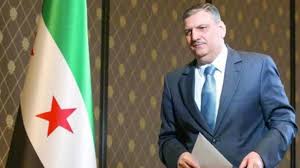
By contrast, Riad Hijab represents an entirely different professional trajectory. An engineer with a doctorate in agricultural engineering from Damascus University, he hails from Deir ez-Zor and spent part of his life studying and living in the capital. He served as governor of two Syrian provinces, Quneitra and Latakia, and later as minister of agriculture in a country whose social fabric is deeply rural. He then became prime minister until his defection from the regime. After that, he served as general coordinator of the opposition’s Negotiations Committee. Throughout this period, he remained largely untouched by the petty rivalries, public squabbles, and personal exhibitionism that have plagued some opposition figures. He also maintained constructive relations with regional powers aligned with the new authorities, notably Saudi Arabia, Qatar, and Turkey.
Given the multitude of positions held by al-Sharaa – president, commander-in-chief of the army and armed forces, and head of the National Security Council – it is self-evident that he cannot devote sufficient time to running the government. In fact, the cabinet appears to meet only rarely. When al-Sharaa travels abroad on diplomatic visits, there is no deputy prime minister to act in his stead. This occurs at a moment of severe economic and living crises that demand urgent, hands-on responses across multiple sectors, from agriculture and the environment to health, education, and electricity.
Within Syria’s political tradition, the post of prime minister has never posed a threat to the presidency, especially when the president already controls the military and security apparatus.
Finally, as a Sunni figure who defected from the regime, Hijab enjoys broad acceptance within Sunni Arab constituencies. He is, of course, only one example among many figures well suited to assume the role of prime minister.
Yet despite all these considerations, the authorities have chosen to fuse the head of state with the head of government – another indication of monopolisation, hubris, and political failure.
This article was translated and edited by The Syrian Observer. The Syrian Observer has not verified the content of this story. Responsibility for the information and views set out in this article lies entirely with the author.