
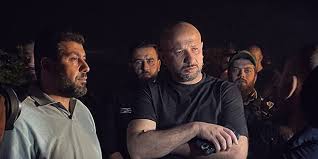
In an exclusive interview with Ultra Syria, Minister of Emergency and Disaster Management Raed al-Saleh revealed that landmines are severely obstructing firefighting operations in Syria’s western forests, where massive wildfires have raged for six consecutive days. Over 10,000 hectares of forest have been destroyed so far, marking what Saleh called a “national environmental disaster.”
The wildfires, primarily affecting the Lattakia governorate, have coincided with smaller blazes across various regions of the country. The most recent major fire broke out near the village of Foro in the mountainous area overlooking the Al-Ghab Plain in rural Hama.
Speaking from the field, Saleh highlighted that the firefighting teams—composed of Syrian Civil Defense (White Helmets) units and local fire brigades—faced exceptional danger in Foro due to unexploded ordnance and landmines left behind from previous conflicts. “The mines posed a direct threat to our personnel and significantly slowed down operations,” he said.
Thousands of Fires, Limited Resources
Since June, emergency teams have responded to more than 1,579 fires—1,400 of them classified as wildfires. Since the formation of the new government, they have tackled over 3,500 blazes across the country. “We are working around the clock with what limited resources we have,” said Saleh. “Last night alone, we worked until 3 a.m. renting bulldozers and cutting firebreaks to contain the flames.”
International Support and Local Challenges
The minister expressed gratitude for international aid, noting that Turkey had sent 16 teams and Jordan had dispatched ground units. Lebanon offered to send helicopters, but dense airspace traffic prevented their deployment. “This level of regional solidarity is deeply appreciated,” he said.
However, criticism has surfaced regarding slow response times. Saleh pushed back, saying: “We don’t have a magic wand. We’re working in extremely complex conditions, and so far, we haven’t lost a single civilian. That’s a major achievement.”
The minister also addressed reports of chaotic food distribution during operations. He described a situation where over 200 Syrian and Turkish responders were encircled by fire, while more than 300 volunteers arrived at the same location to distribute food and water. “Pre-prepared meals left out for hours can cause food poisoning,” he warned. “We welcome support—but it must be safe and well-coordinated.”
Recovery and Public Responsibility
The loss of more than 10,000 hectares of forest has prompted urgent discussions about restoration. Saleh said short-, medium-, and long-term recovery plans are being developed in coordination with relevant ministries and international partners. The Ministry of Social Affairs and Labour is set to begin damage assessments and offer compensation to affected communities.
Saleh ended the interview with a message to the public: “We ask for your trust and your help. Report any suspicious activity or deliberate fires. Let’s work together as one hand. I extend my deepest thanks to our people and to every organization on the ground giving their all.”
This article was translated and edited by The Syrian Observer. The Syrian Observer has not verified the content of this story. Responsibility for the information and views set out in this article lies entirely with the author.