
Syrian government sources said on Monday, 5 January 2026, that a high-level Syrian delegation has travelled to Paris for a new round of negotiations with Israel, under direct US coordination and mediation, in what Damascus portrays as an effort to revive the 1974 Disengagement Agreement and roll back recent Israeli military advances.
The Syrian delegation is headed by Foreign Minister Asaad Hassan al-Shibani and includes Hussein al-Salama, head of the General Intelligence Directorate, according to the Syrian Arab News Agency (SANA). The talks are described as the fifth round in an ongoing track and the first after a pause of nearly two months.
A Syrian government source told SANA that the negotiations reaffirm Damascus’s commitment to restoring “full sovereignty”, demanding that Israeli forces withdraw to positions held before 8 December 2024, the date Syria says Israel advanced into the UN-monitored buffer zone after the fall of Bashar al-Assad’s regime. The source added that any security arrangement must be “equitable”, must place Syrian sovereignty “above all considerations”, and must include guarantees against interference in Syria’s internal affairs.
On the Israeli side, Hebrew media – including Maariv – reported that the Israeli delegation includes senior security officials and is headed by Yechiel Leiter, Israel’s ambassador to Washington. The reports said Israel is seeking security stabilisation rather than a comprehensive diplomatic breakthrough, with the emphasis on Israel’s security interests on its northern front.
The negotiations are being driven by Washington, with US envoy Tom Barrack mediating, as the Trump administration presses for de-escalation and a framework that reduces the likelihood of border escalation while addressing Israeli security demands and Syria’s insistence on restoring the pre-December 2024 status quo.
Axios was first to report
The Paris round follows reporting by Axios, which said senior Syrian and Israeli officials were expected to meet in the French capital for a two-day session focused on security arrangements, with Barrack mediating. Axios cited an Israeli source as saying the talks resumed at the direct request of President Donald Trump during his meeting with Prime Minister Benjamin Netanyahu last week, and that Israel’s team would be led by Leiter rather than Strategic Affairs Minister Ron Dermer, and would include Netanyahu’s military adviser.
Axios also reported that Israel has proposed establishing buffer security zones south-west of Damascus and imposing a no-fly zone on Syrian aircraft near the border, in exchange for an Israeli withdrawal from territory it recently entered – while retaining what the report described as a strategic presence in specific locations, including Mount Hermon.
The renewed diplomatic push comes days after Trump said the United States and Israel had reached what he called an “understanding” regarding Syria, telling a joint press conference with Netanyahu at the White House that he believed Israel and Syrian President Ahmed al-Sharaa could reach an agreement, and that Washington would work to facilitate it. Netanyahu, for his part, argued that Israel’s interest requires a “border of peace” with Syria that is “secure and free of terrorists”, while also ensuring protection for the Druze community and other minorities.
A tense military backdrop
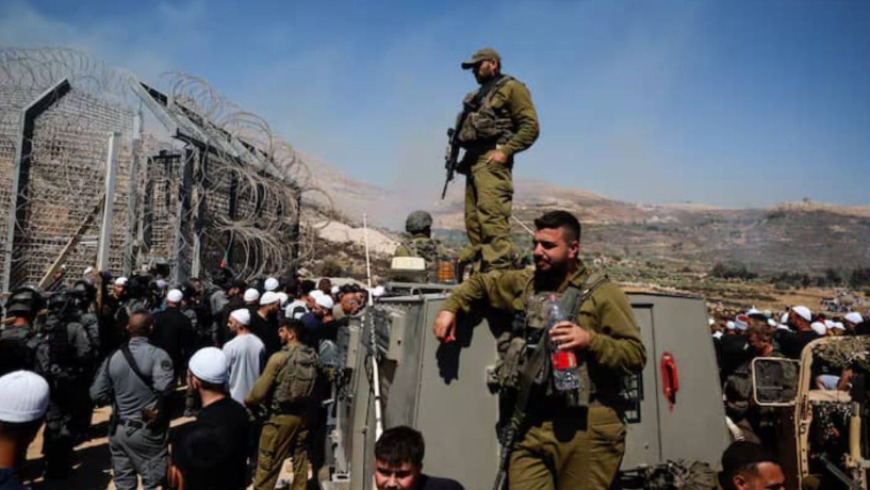
The talks are taking place against the backdrop of Israel’s occupation of the Golan Heights since 1967, and an expanded Israeli military presence in southern Syria since the fall of the Assad regime. Israel has moved into the buffer zone and onto Mount Hermon after declaring the collapse of the 1974 Disengagement Agreement.
Previous rounds of Syrian–Israeli discussions have sought a security understanding that would curb Israeli strikes and stabilise the frontier, but have failed to produce a breakthrough amid Israeli insistence on maintaining positions taken after 8 December 2024. Meanwhile, despite Trump’s calls for de-escalation, Israeli strikes and incursions have continued, particularly in Quneitra province in southern Syria, keeping the border track under intense pressure as the Paris round begins.
This article was translated and edited by The Syrian Observer. The Syrian Observer has not verified the content of this story. Responsibility for the information and views set out in this article lies entirely with the author.