
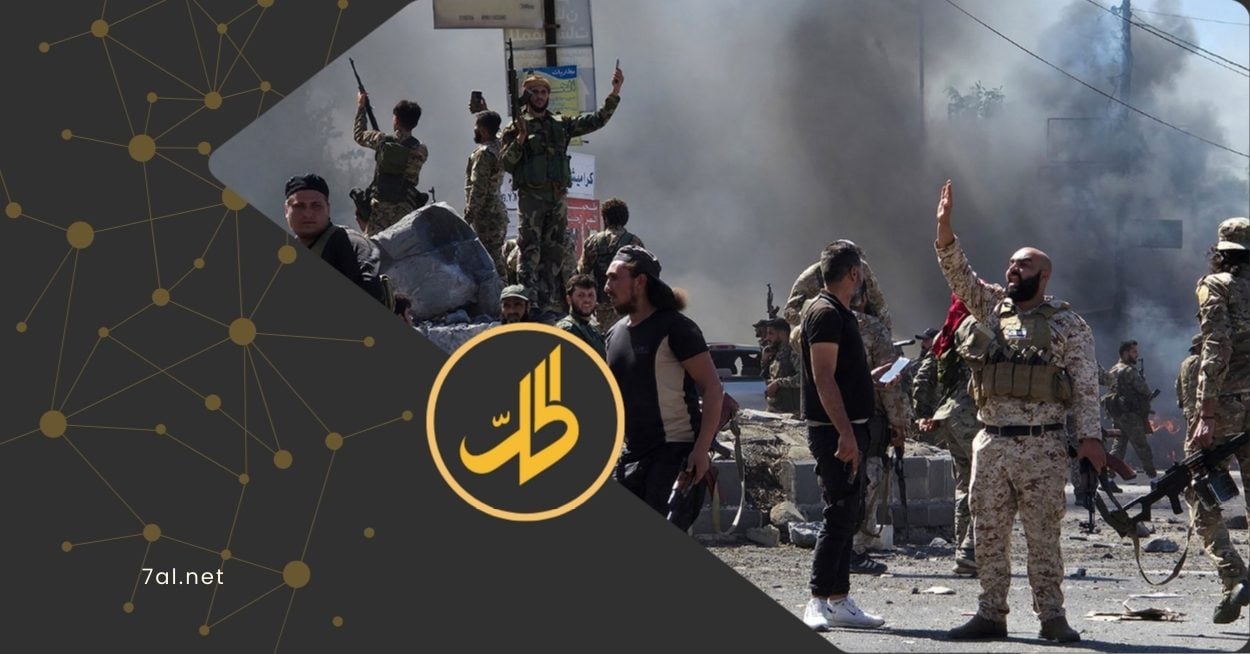
Nine months after the fall of Bashar al-Assad’s regime on 8 December 2024 and the formation of an interim administration led by Ahmed al-Sharaa, Syria remains plagued by widespread human rights violations reminiscent of the former regime. The Syrian Observatory for Human Rights (SOHR) reported on 7 September 2025 that Syrian security forces and affiliated armed factions have carried out more than 3,000 extrajudicial executions since the transition began.
Documented Massacres and Sectarian Violence
According to SOHR’s findings, a total of 10,672 people have been killed across Syria between 8 December 2024 and 6 September 2025 as a result of violence and abuses perpetrated by both local and foreign actors. Among these, 3,020 individuals were victims of extrajudicial executions described as “brutal” in nature. The report highlights 8,180 civilian deaths, including 438 children and 620 women, reflecting the indiscriminate character of the violence.
The deadliest wave occurred in March 2025, when 1,726 extrajudicial killings were documented, particularly during coordinated attacks on security checkpoints in Syria’s coastal region on 6 March. Approximately 1,600 Alawite civilians were executed by security forces and allied militias across 55 sites in the provinces of Latakia and Tartus—areas historically associated with Assad’s Alawite minority. These killings, often sectarian in motive, targeted Alawites and Druze communities perceived by extremist factions within Sharaa’s security apparatus as loyalists or “apostates”.
Amnesty International corroborated these claims, presenting “compelling evidence” of extrajudicial executions of Druze civilians in Suwayda on 15 and 16 July 2025. Verified video footage showed armed men in security and military uniforms, some bearing official insignia, executing unarmed civilians inside homes, public squares, schools, and hospitals. The organisation emphasised the systematic nature of the violence and called for immediate accountability.
Systematic Violations and Security Chaos
SOHR asserted that many of these abuses appear intended to deepen societal fractures and derail efforts to establish a democratic, inclusive Syria. The report pointed to a sharp rise in politically and sectarian-motivated assassinations and massacres, driven by unprecedented levels of security chaos following Assad’s removal. Dozens have also reportedly died under torture in detention centres operated by the new government, echoing the Assad regime’s most notorious practices.
Reporting by The Cradle indicated that a large proportion of the victims belonged to religious minority groups, particularly Alawites and Druze, targeted in coastal areas and in Suwayda. Extremist elements within Sharaa’s forces are believed to view these communities as enemies, exacerbating longstanding sectarian tensions. The Syrian Archive for Justice noted that no perpetrators have been prosecuted, and that sectarian killings of Alawites continue on a daily basis.
A Legacy of Impunity
Despite promises from Sharaa to hold those responsible to account—including the announcement of an “independent committee” to investigate civilian killings—there has been no tangible progress. The United Nations, Arab League, United States, United Kingdom and other international actors have condemned the violence. UN High Commissioner for Human Rights Volker Türk has called for an immediate end to the killings. However, the lack of a robust legal framework, coupled with continued reliance on hardline factions within the interim government, raises serious doubts over the prospects for justice.
The massacres—including the discovery of dozens of bodies dumped in a hospital car park in Suwayda—reflect a grim continuity with Syria’s violent past. As security forces now face attacks from remnants of Assad-era loyalists, the cycle of retaliation and impunity remains unbroken, casting a long shadow over Syria’s fragile transition and its aspirations for a just, inclusive future.
This article was translated and edited by The Syrian Observer. The Syrian Observer has not verified the content of this story. Responsibility for the information and views set out in this article lies entirely with the author.