
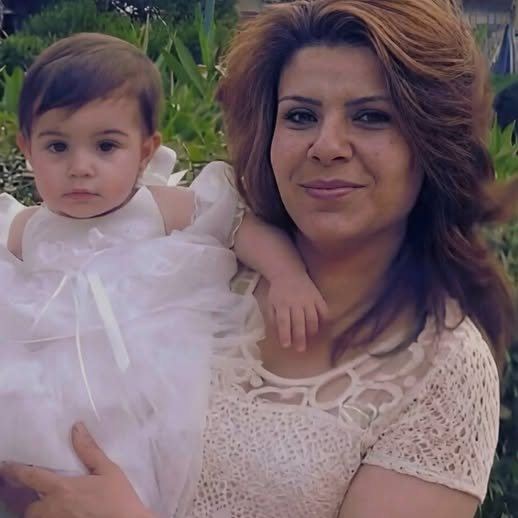
Outrage swept Syrian social media after the killing of schoolteacher Iman Matanious Jarrous, who was shot dead on Monday evening, February 23, 2026, by unidentified assailants on a motorcycle in the Akrama neighborhood of Homs.
As of publication, security authorities in Homs have issued no official statement on the incident.
Sectarian Concerns Emerge
A voice recording attributed to Homs Police Chief Brigadier General Mouhafad al-Naasan circulated online shortly after the killing. In it, he allegedly tells the victim’s family that the attack occurred on an Alawite-majority street and that the perpetrators may have targeted her under the mistaken belief that she was Alawite. The recording intensified fears of renewed sectarian targeting in a city still struggling with fragile security.
The Media Office of the Ministry of Interior in Homs denied the recording’s authenticity, calling any sectarian interpretation “inaccurate” and urging the public to rely on official statements rather than rumors aimed at provoking chaos and inflaming communal tensions.
Online Smear Campaign Targets the Victim
Following news of her death, Jarrous became the subject of a coordinated smear campaign on social media. Posts circulated attempting to justify her killing through unfounded and defamatory claims, reframing the crime in ways that observers described as an effort to rationalize violence and tarnish the victim’s reputation.
Analysts note that this pattern has become increasingly common in Homs: each new killing is followed by narratives attacking the victim’s character—often without evidence—shifting attention away from the perpetrators and deepening public anxiety. Such narratives, they warn, normalize violence and erode prospects for accountability.
Second Fatal Attack in the Same Neighborhood
Jarrous’s killing came less than a week after a similar attack in Akrama. An unidentified gunman on a motorcycle shot Khudr Karakit and his fiancée Nada al-Salem, both in their early twenties and members of the Alawite community. Karakit died instantly; al-Salem succumbed to her wounds shortly afterward.
In response, a group of young Christians held a silent vigil after mass at the Mariamite Cathedral in Damascus, calling on the Patriarch to issue a clear condemnation of Jarrous’s killing.
Civil Society: A Failure of Security and Governance
The Homs-based organization Sein for Civil Peace issued a statement describing the recurring attacks as a “security failure” that carries both legal and political responsibility. The group documented 68 casualties—killed and wounded—since the start of the year, including women and children, calling the situation a “critical protection gap.”
The organization rejected any justification for the killings, calling them a blatant violation of international law that entrenches impunity and obstructs pathways to justice.
This article was translated and edited by The Syrian Observer. The Syrian Observer has not verified the content of this story. Responsibility for the information and views set out in this article lies entirely with the author.