
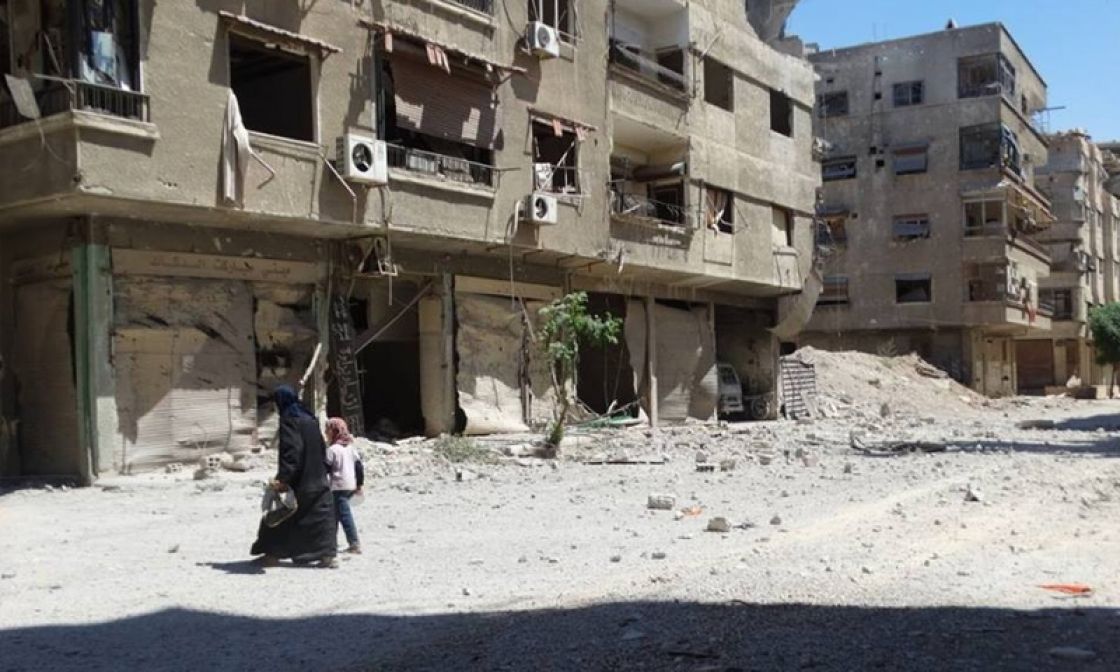
A surge of anger swept through the Damascus suburb of Ain Tarma on Wednesday after reports emerged that a detained man was severely beaten and verbally abused inside a local police station. The incident has reignited deep public fears that the systematic torture once synonymous with the former Assad regime’s security apparatus may be resurfacing under the transitional authorities.
Witnesses and local activists say the man was subjected to a violent assault and degrading insults while in custody at the Ain Tarma police station. Images and accounts circulating on social media show the victim with visible bruises and injuries. The reports prompted residents and families of other detainees to gather outside the station, demanding transparency and accountability.
The uproar comes at a moment of growing tension between the Syrian public and the transitional government, which is already under scrutiny for its shortage of trained security personnel and its failure to enforce accountability for misconduct.
“This incident, if confirmed, is not an isolated case but an early warning of a slide toward a new form of tyranny,” lawyer Aref al-Shaal wrote on Facebook. He stressed that such abuses strike at the core principles of the revolution and undermine the foundations of a state built on law and institutions. “Torture does not produce security, nor does it achieve justice. It breeds fear and destroys trust between citizens and state institutions,” he added, calling for a transparent investigation and criminal prosecution of those responsible.
Human rights lawyer Michel Shammas echoed these concerns, describing the alleged assault as a “dangerous incident” that demands a clear and decisive response from the authorities. “A governing power is judged by higher standards because it holds authority, and because people turn to it for protection—not to be subjected to physical and moral violence,” he wrote. Shammas warned that a state unable to shield its citizens from such abuses risks losing its very raison d’être.
The Ain Tarma incident has revived painful memories of the Assad regime’s notorious detention centers, which became global symbols of torture and extrajudicial killing. It also follows a series of troubling reports documenting deaths in custody under the transitional government.
In January, the Syrian Observatory for Human Rights reported that five detainees died under torture in facilities run by the new authorities. The victims included four men from the Sheikh Maqsoud and Ashrafieh neighborhoods in Aleppo, arrested during late-January clashes, and an Alawite man who died in a Homs detention center earlier that month.
These cases add to earlier incidents that sparked public outrage, including the June 2025 death of young Shadi Lubad at a General Security facility in Damascus, just two days after his arrest. According to a 2025 report by the Syrian Network for Human Rights, 16 people were killed under torture by government forces last year.
The protest outside the Ain Tarma police station underscores a growing public demand for the new Syria to break decisively with the brutal practices of the past—and a rising fear that it may already be failing to do so.
This article was translated and edited by The Syrian Observer. The Syrian Observer has not verified the content of this story. Responsibility for the information and views set out in this article lies entirely with the author.