
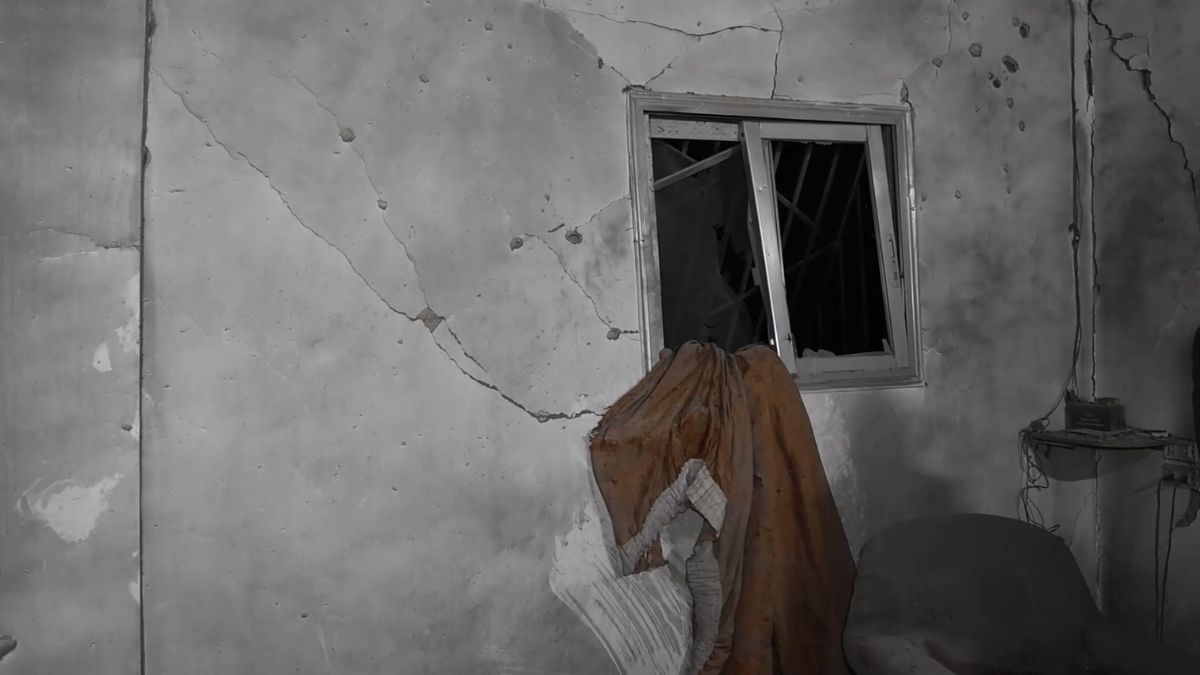
The Syrian Ministry of Defence has confirmed the identification of the site from which rockets were launched towards the Mezzeh 86 district in Damascus during the early hours of 15 November.
Asim Ghalioun, head of the Ministry’s Media and Communication Directorate, announced that a specialised military team had determined the launch site by analysing impact angles and the grouping of the rockets.
In a Facebook statement, Ghalioun confirmed the discovery of the firing position responsible for the rockets that struck the Mezzeh district, which resulted in civilian injuries. He added that the area is now secured to support an ongoing investigation.
Footage broadcast by the official Al-Ikhbariya channel showed electrical circuits, which the cameraman claimed were used in launching the rockets, along with a valve cap from one of the munitions.
A map displayed in the same broadcast indicated that the rockets were launched from the Lawan area in Kafr Sousa, on the outskirts of Damascus.
The map showed one rocket landing in Mezzeh 86, while another struck the road leading to the People’s Palace.
Katyusha Rockets and Civilian Impact
At least one woman was injured in the twin blasts caused by Katyusha rockets that rocked the capital on the evening of Friday, 14 November.
The explosions were heard across Damascus, according to Enab Baladi correspondents.
The Defence Ministry’s Media and Communication Directorate informed the Syrian Arab News Agency (SANA) that Damascus was the target of what it described as a “treacherous aggression” involving the firing of two Katyusha rockets from the city’s outskirts towards residential areas in Mezzeh and its surroundings.
Both the Defence and Interior Ministries launched investigations into the incident, pledging to collect evidence, trace the trajectory of the rockets, and determine their origins.
A heavy security presence was reported in Mezzeh 86, with access to the affected area restricted, according to local testimonies gathered by Enab Baladi. The outlet also documented the closure of roads in several parts of Mezzeh and the deployment of numerous ambulances.
The Mezzeh 86 district is a densely populated area with a significant number of informal housing units. It is located near the Mezzeh Villas neighbourhood, which hosts multiple security and diplomatic installations.
The area lies less than 1.5 kilometres from the People’s Palace—the primary seat of the Syrian presidency—and approximately four kilometres from the rocket launch site, according to Enab Baladi’s estimate based on Google Maps.
Mezzeh: Flashpoint for Conflict and Airstrikes
The Mezzeh district has previously come under Israeli airstrikes and bombardments, largely due to the presence of Iranian military personnel and affiliated militias in the area and neighbouring quarters.
One of the most devastating of these incidents occurred on 8 October 2024, when three apartments in Mezzeh’s 14th building complex were struck, killing 19 civilians and injuring 11 others.
Following the collapse of the regime, the area has also witnessed sporadic security disturbances, particularly in the early days, involving clashes with factions described by the government as remnants of the former establishment.
On 3 September this year, an improvised explosive device detonated in Mezzeh 86, although no casualties were reported.
Brigadier General Osama Mohammed Khair Atka, head of internal security in Damascus Governorate, later confirmed the explosion targeted an internal security officer.
Mezzeh District: A Persistent Target
The Mezzeh area remains a focal point of regional tensions, serving both as a strategic stronghold for security forces and a recurrent target for hostile operations. Its proximity to the centres of power, combined with its complex demographic and political history, continues to make it a flashpoint in the broader Syrian conflict.
This article was translated and edited by The Syrian Observer. The Syrian Observer has not verified the content of this story. Responsibility for the information and views set out in this article lies entirely with the author.