
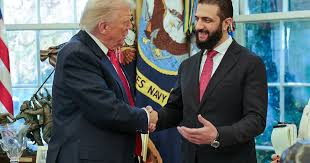
The White House has imposed comprehensive restrictions on the entry of Syrian nationals into the United States, as part of a presidential proclamation that expands the existing travel ban to cover additional countries. The decision, announced on Tuesday, marks a significant escalation in the administration’s immigration and national security policies, according to a report by Reuters citing an official U.S. government statement.
Full Ban to Take Effect Early Next Year
The measure introduces a full ban on entry for citizens from seven countries, now including Syria, along with Burkina Faso, Mali, Niger, and South Sudan. The restriction also applies to individuals travelling with documents issued by the Palestinian Authority.
Laos and Sierra Leone, previously subject to partial travel limitations, have also been added to the list of countries facing full entry bans.
The White House confirmed that the new restrictions will come into effect on 1 January, stating that the countries listed suffer from “persistent and severe deficiencies” in screening, vetting, and information-sharing protocols—failures which the administration considers threats to U.S. national security and public safety.
According to Reuters, the move comes in spite of President Donald Trump’s pledge to “do everything in his power” to support Syria’s recovery, following what were described as landmark talks in November with Syrian President Ahmed al-Sharaa. Al-Sharaa, a former al-Qaeda commander who was until recently subject to U.S. sanctions as a designated foreign terrorist, met Trump at the White House in a controversial diplomatic overture.
The administration cited Syria’s high visa overstay rates and structural weaknesses in its passport and civil documentation systems as justification for its inclusion in the expanded ban.
Security Concerns and Conflicting Signals
“Syria is emerging from a long period of civil unrest and internal conflict,” the White House stated. “Although the country is working closely with the United States to address its security challenges, it still lacks a central authority capable of issuing reliable passports or civil documentation, and does not maintain appropriate screening and vetting systems.”
Reuters noted a noticeable shift in the administration’s tone following an attack last Saturday that left two American soldiers and a civilian interpreter dead. The suspected ISIS attacker reportedly ambushed a joint convoy of American and Syrian forces before being shot and killed.
In a post on his “Truth Social” platform, Trump vowed a “very serious retaliatory response,” describing the incident as “horrific” during remarks to the press.
American Casualties Raise Questions About Control of Syrian Security Forces
The fatal attack, reportedly carried out by a member of the Syrian security apparatus, has raised fresh questions regarding President al-Sharaa’s control over his forces and the coherence of Syria’s transitional military structure.
The expanded travel ban reflects the broader tightening of U.S. immigration policy under the current administration. Measures adopted since the start of the year have included more restrictive asylum procedures and the extension of entry bans, in a policy environment that increasingly links immigration to national security concerns, Reuters reported.
This article was translated and edited by The Syrian Observer. The Syrian Observer has not verified the content of this story. Responsibility for the information and views set out in this article lies entirely with the author.