
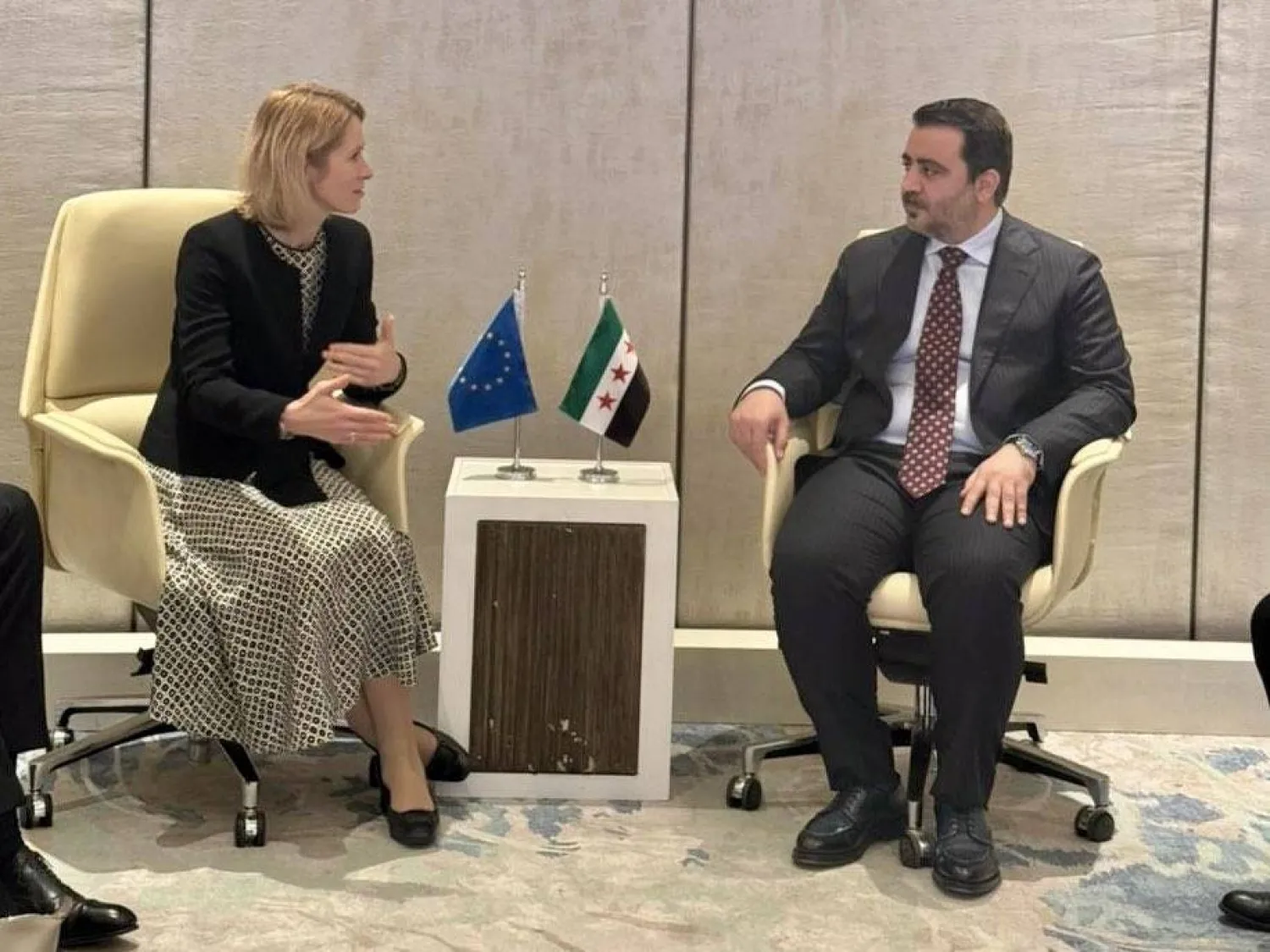
As Syria deepens its engagement within its regional and Arab environment and regains a notable level of international participation across various institutions, organisations, and partnerships, Europe now re-emerges as a potential and active counterpart in this evolving context. What was long obstructed by past policies may be redefined by a new political direction—underpinned by Syria’s immutable geography—which asserts itself again with compelling force. This resurgence reflects the imperatives of the present stage and the mutual interests of all stakeholders.
In the aftermath of war, Syria requires new, substantial, and expansive partnerships. It needs support across multiple sectors, especially in the economic sphere, amid a comprehensive reconstruction phase. Yet, this does not diminish the fact that others also have much to gain from Syria’s return to the global stage, both politically and economically. This is due not only to its role in regional balances but equally to its strategic geopolitical location and the opportunities it affords.
Specialist energy platforms suggest that Saudi Arabia’s green hydrogen project may traverse Syrian territory en route to Europe, offering Damascus heightened geopolitical importance and the opportunity to earn transit revenues.
Against this backdrop, discussions surrounding a Syrian–European partnership within the Euro-Mediterranean framework are resurfacing. The goal is to redefine the relationship along lines of balanced cooperation and shared responsibility in key areas such as development, energy, climate, migration, and economic integration. This is particularly significant as Syria reorients itself towards establishing the foundations of stability—an enduring priority for the European Union, which views security and prosperity along the southern Mediterranean as essential to its own wellbeing.
A Role in Regional Dialogue
After a 14-year suspension of the partnership agreement through which the European Union once sought to enhance political and economic life in Syria, the country has re-entered the European arena. This was formalised through the restoration of its full membership in the Union for the Mediterranean last July, followed by its participation in the Tenth Regional Forum held late last month. The EU officially welcomed Syria’s reinstatement, viewing it as a step towards renewing its role in regional dialogue and enhancing broad-based cooperation.
Syria’s presence at the Forum—coinciding with the launch of the New Mediterranean Charter—formed part of a wider strategy to recalibrate relations with regional partners after years of diplomatic isolation.
The Charter aims to establish a comprehensive cooperation framework that includes development, energy, climate, migration, and connectivity, thus redefining relations between EU members and southern partner states.
According to media reports, Syria’s return to the Union is not merely symbolic. It is regarded as an opportunity to strengthen its position in regional strategic dialogue and to demonstrate its readiness to embark on practical joint projects.
Syria could play a pivotal role in land-based trade connectivity, particularly as infrastructure rehabilitation advances. It serves as a strategic natural corridor linking Europe with Asia and the Gulf, granting it considerable logistical leverage.
Prior to 2011, the European Union was Syria’s largest trading partner, with trade valued at approximately €7.18 billion, according to Squire Patton Boggs. By 2023, this had declined to €396 million due to sanctions imposed during the war.
Indicators for Reviving the Syrian–European Partnership
Economic researcher Ihab Asmandar, in comments to Al-Thawra, highlighted several indicators that suggest the possibility of reviving the partnership. These include the EU’s partial lifting of sanctions on sectors such as energy and transport, the removal of certain Syrian banks from blacklists, the return of diplomatic missions (such as Germany reopening its embassy in Damascus), high-level diplomatic visits, and Syria’s readmission to the Union for the Mediterranean.
Asmandar noted that the EU’s primary interests in a renewed partnership with Syria include addressing mutual concerns such as combating terrorism, managing migration, and curbing refugee flows. The Union also seeks to preserve geopolitical influence amid growing competition from other international powers active in the region.
If realised, the partnership could yield both short and long-term benefits. In the short term, these may include the resumption of banking operations and international transfers, the end of Syria’s economic isolation, reactivation of ports such as Latakia and Tartus, and revenues from transit if Syria emerges as a reliable corridor.
In the longer term, the country could witness a greater influx of European goods and access to European finance and technology for reconstruction—particularly in energy, infrastructure, and water sectors. These projects are estimated to cost hundreds of billions of dollars.
Despite its strategic location as a natural bridge between three continents and its potential role in overland trade, Asmandar pointed to existing challenges—including the extensive damage sustained by Syria’s road networks, railways, and ports.
Outlines of Economic Opportunities
European nations, driven by their own strategic calculations, aim to foster stability in Syria—recognising the country’s wealth of natural and human resources. They are considering lifting sanctions to facilitate economic recovery and growth.
Dr Osama Bitar, in comments to Al-Thawra, stressed the importance of establishing normalised economic relations with Syria. This, he argued, would open avenues for significant economic partnerships grounded in mutual interest. It would also protect investor rights and support education at both general and higher levels, seen as essential to domestic and international development.
He added that Europe sees Syria as a sizeable market with considerable investment potential in various sectors. Developing these opportunities could strengthen Syria politically, economically, and strategically.
According to Bitar, the most prominent prospects for partnership lie in reconstruction, infrastructure, energy, and support for productive sectors. A prior study estimated the cost of rebuilding Syria at approximately $400 billion—representing a major opportunity for European firms, particularly in construction.
Syria is also seen as a potential investment and trade hub, especially if its economic recovery progresses, enhancing its appeal to global investors.
Bitar noted that agreements have already been signed in the energy sector with countries such as Saudi Arabia and Qatar for technical services related to gas and oil fields.
In the productive sectors, Syria faces an urgent need to address gaps in essential goods and services. This, Bitar suggested, presents an opportunity for the domestic private sector to invest in agriculture and industry, in potential competition with European enterprises entering the market.
As for institutional and technical support, the EU offers assistance through training programmes for technical centres aligned with European standards. A recent meeting with the International Monetary Fund aimed to draw on Europe’s vision in preparing Syria’s public budget in accordance with international accounting norms.
Bitar concluded that the overarching aim of the Syrian–European partnership is to reintegrate Syria into the global economy, revitalise its key sectors, attract large-scale investment for reconstruction, create employment, and mitigate the effects of sanctions. This would be achieved through structured agreements providing reduced tariffs, technical aid, and, crucially, revitalisation of the banking sector—paving the way for sustainable national growth.
The Union’s Interest
EU Commissioner for Foreign Policy Kaja Kallas confirmed on Monday that promoting stability and progress in Syria aligns with the Union’s strategic interests. She stated that Syria remains a central topic in ongoing EU discussions regarding the Middle East.
Speaking through a post by the European External Action Service on the platform “X”, Kallas noted that the upcoming Brussels meeting would assess developments in Syria and Lebanon.
Following the EU’s decision to lift certain sanctions last May, the European Commission proposed allocating €175 million to support Syria’s social and economic recovery. The new funding aims to assist Syrian public institutions—drawing on both local and international expertise—and to support grassroots initiatives across rural and urban areas. It will also enhance access to finance for vulnerable groups while promoting transitional justice, accountability, and human rights.
During the years of conflict, over a million Syrian refugees were received by European countries—with Germany hosting the largest number, and Austria taking the highest per capita share.
Stages of the Relationship Prior to 2011
Before the outbreak of conflict in 2011, Syrian–European relations progressed through several phases. In 1977, the two sides signed a cooperation agreement forming the foundation of their partnership. In 1995, Syria joined both the Barcelona Process and the European Neighbourhood Policy, initiatives through which the EU aimed to elevate Damascus to an advanced status politically and economically.
Between 2004 and 2008, additional bilateral agreements were signed, culminating in Syria’s accession to the Union for the Mediterranean. In 2009, a draft partnership agreement was formally signed and poised to open a new chapter—until relations were frozen with the onset of the Syrian crisis in 2011.
The Euro–Mediterranean Partnership—also known as the Barcelona Process or Euromed—was launched in 1995 via a conference in Barcelona, initiated by Spain and supported by the EU to enhance cooperation with Mediterranean nations in North Africa and West Asia. It encompassed policies promoting regional stability, democracy, good governance, human rights, and mutually beneficial trade. This partnership laid the foundation for the Union for the Mediterranean and its institutions, without supplanting the original Euro–Mediterranean framework.
This article was translated and edited by The Syrian Observer. The Syrian Observer has not verified the content of this story. Responsibility for the information and views set out in this article lies entirely with the author.