
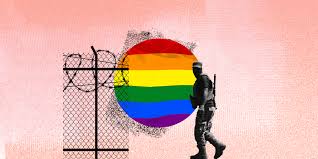
Following the ousting of Bashar al-Assad in December 2024, many Syrians envisioned a nation founded on freedom and equality. Yet for queer Syrians in exile—particularly those in Europe—that dream remains out of reach. They argue that genuine change must stem from within Syria: through the gradual recognition of their rights, the dismantling of stigmas that portray their existence as “demonic” or “unnatural”, and the implementation of laws that shield them from violence and discrimination.
The fall of Assad’s regime on 8 December 2024 sparked optimism among Syrians worldwide. For many, the authoritarian government had long been the chief obstacle to progress. However, this hope has clashed with a harsher reality shaped not only by the jihadist factions that brought down the regime—forces that had already derailed the peaceful, civilian-led uprising of 2011—but also by Syria’s deeply conservative society, which often rejects fundamental human rights or applies them selectively.
Legal Criminalisation and Societal Rejection
This tension is acutely felt by LGBTQ+ individuals in Syria. Under Assad, Article 520 of the Penal Code criminalised “carnal knowledge against the order of nature”, imposing prison sentences of up to three years—a provision that remains in force under the new interim government, led by Ahmed al-Sharaa, former head of Hayat Tahrir al-Sham (HTS). While prosecutions were not always systematic, arrests, extortion, and abuse by “morality police” were widespread. Societal attitudes—shaped by religious texts, inherited customs, and entrenched toxic masculinity—further entrench rejection, enforcing rigid gender and sexual norms.
The Syrian revolution failed to generate meaningful discourse around LGBTQ+ rights, even among moderate opposition groups such as the Syrian National Coalition. Islamist factions, including HTS, have a documented history of atrocities against queer individuals, including public executions by defenestration—a method used in Idlib during the civil war. Human Rights Watch and other organisations have urged that Syria’s post-Assad transition must prioritise accountability for such abuses to build a future grounded in human rights.
An Unsafe Return
Recent events have heightened fears about returning to Syria. In the months following Assad’s fall, limited repatriations from Europe occurred amid escalating violence in regions such as Suwayda, where security forces were implicated in severe abuses against civilians—including a video showing three individuals forced to leap from a balcony to chants of “Allahu Akbar”. Footage of assaults on transgender people in Damascus has also emerged, underscoring the continuing dangers.
One high-profile case involved Yusuf al-Labbad, a young Syrian who returned from Germany in July 2025. He was detained shortly after his arrival and died in custody with signs of torture, despite official claims citing a psychological episode. Conflicting accounts from the Interior Ministry and family sources underscore the enduring brutality of Syria’s security apparatus. These incidents—alongside the reported killings of other returnees—have reignited concerns about safety and civil rights in “post-Assad Syria”, particularly for queer exiles who view threats as emanating not just from the state, but from deeply rooted societal and religious structures that normalise discrimination.
Fears from Society and Authority Alike
Omar, a Syrian-German gay activist based in Berlin who works with a refugee support organisation, expressed deep concern about political and media narratives encouraging repatriation. These often ignore individual risks. “What’s terrifying in Syria isn’t just the tools of power, but society itself,” Omar told reporters. “Extremists feel socially and religiously entitled to enforce what they call ‘forbidding evil’. Now, they have enforcement mechanisms backing them.”
HTS and allied groups have long committed atrocities against LGBTQ+ individuals, broadcasting executions to instil fear. Now in power, their public pledges to respect personal freedoms ring hollow. “When we rose against the regime in 2011, conservatives and religious alliances were part of the power structure,” Omar added. “Today, they remain unchanged—only louder.”
His concerns align with ongoing reports of post-regime violence. In Damascus and other areas, daily killings, abductions, and assaults on transgender individuals have been documented. In early 2025, a video circulated showing dozens of people chasing and verbally assaulting a transgender woman in the capital, with calls for her death—underscoring the risks even short visits pose for queer refugees. Rights groups, including Guardians of the Gem, have reported a surge in such attacks since November 2024, with social media videos documenting targeted campaigns against trans women.
Change Must Start from Within
Western democracies safeguard LGBTQ+ rights not out of charity, but as a matter of equality—ensuring all individuals enjoy the same protections and responsibilities, regardless of religion, ethnicity, sexual orientation, or gender identity. In Syria and much of the Arab world, however, these classifications remain embedded in laws, constitutions, and societal norms, oppressing a range of minorities beyond the queer community.
Queer Syrians stress that true change must be internally driven: by recognising their existence without demonisation and legislating protections. Under Assad, no recognised organisations advocated openly for LGBTQ+ rights; instead, support operated covertly, within tightly knit circles maintained by sympathetic individuals.
Little has changed since the regime’s collapse. Human rights monitors, including the European Union Agency for Asylum, continue to report frequent assaults on transgender people—some filmed by the perpetrators themselves. The new government’s reliance on conservative alliances, including religious hardliners, has intensified fears. Reports indicate that al-Sharaa’s administration has escalated crackdowns on LGBTQ+ individuals, brushing off abuses as “individual errors” amid broader security instability—without establishing legal safeguards.
While some progress has occurred, such as reforms to personal status laws improving women’s rights, LGBTQ+ protections remain conspicuously absent. Amnesty International’s 2024 report underscores the persistence of repression, noting that the systemic violations of the Assad era have not been meaningfully curtailed.
Voices from Exile: Derwish and Alaa
In Berlin—a hub for Syrian queer exiles—personal stories reveal the intricate relationship between identity, safety, and belonging. Derwish, a Syrian oriental dancer who adopted the name in homage to Sufi traditions, uses performance art to explore his queer Syrian identity in exile. What began as a hobby evolved into a profession after his arrival in Germany in 2015. His shows—featuring joyful, eclectic costumes inspired by Berlin’s cultural diversity—challenge gender norms and have made him a target for extremists due to his visible expression.
Although he celebrated Assad’s fall, Derwish remains sceptical about inclusion in the new Syria. “I thought about returning to share the joy, but I don’t know if I can travel. Most Syrians inside wouldn’t welcome me because of my profession and how I dress.” He has received threats from inside and outside Syria, tied to patriarchal views that associate oriental dance with femininity. “Society rejects me and looks down on me,” he said, linking such attitudes to global toxic masculinity, amplified by figures like Donald Trump and Elon Musk.
Despite building a safe life in Germany, Derwish remains hopeful: “We’re not demanding full rights like in advanced societies—just to not be harmed or seen as a threat. Treat us as human beings.” He called on Syrians to reflect: “We’ve proven ourselves abroad—it’s time to value us at home. Rebuilding isn’t just about stones. It’s about all of us, with our differences.” He urged Damascus to safeguard minorities, describing Syria’s beauty as rooted in its diversity.
Alaa, a 30-year-old lesbian who fled to Germany in 2015, shared similar sentiments. Now working for a women-only car rental service, she had sought refuge from war and societal constraints. “In Syria, we lived in hiding as a small community,” she said. “Here, I can be myself without fear.”
The new political era worries her. “We were happy about the regime’s fall, but the reports of assaults and massacres frighten me. I don’t believe the new authorities will tolerate us, even though we supported the revolution.” Now a German citizen, Alaa has ruled out a permanent return but would consider visiting family if conditions improve. Reflecting on the attacks in Damascus, she said: “These documented assaults send a clear message—they don’t want us.”
Her hope is simple: “One day, I wish we have protected rights in Syria. That’s all.”
As Syria navigates its transitional phase, queer exiles such as Omar, Derwish, and Alaa embody a call for inclusive change. Yet with HTS’s jihadist roots and ongoing human rights violations, the road to a safe and inclusive homeland remains fraught, as underscored by recent reports from the U.S. Department of State and Human Rights First. For now, their dreams endure in exile—tempered by caution, but not extinguished.
This article was translated and edited by The Syrian Observer. The Syrian Observer has not verified the content of this story. Responsibility for the information and views set out in this article lies entirely with the author.