
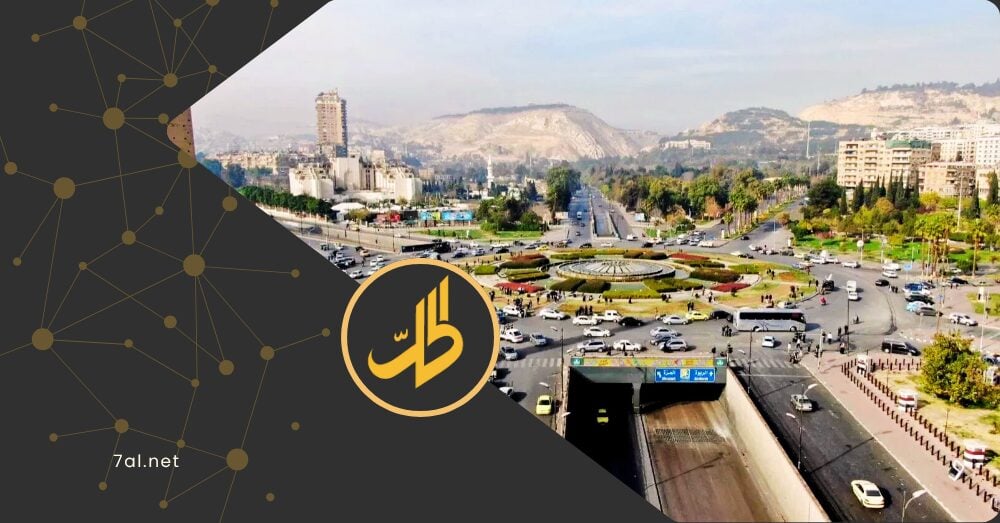
A specialised economic analysis has revealed a striking concentration of new company formations in Syria’s capital and its surrounding countryside during the first half of 2025, raising significant questions about the direction of reconstruction, resource allocation, and the formulation of future economic incentives.
According to data compiled by the team behind The Syria Report newsletter, Damascus and its rural outskirts accounted for over 80% of all limited liability companies registered during this period. In stark contrast, Aleppo—Syria’s industrial and commercial hub prior to 2011—represented just 8% of total registrations, reflecting a marked shift in the country’s internal economic geography.
A Stark Indicator of Developmental Imbalance
Jihad Yazigi, economic analyst and founder of The Syria Report, stressed that the imbalance is not merely a statistical curiosity. “It is a glaring signal of the Syrian capital’s outsized role in the national economy and a reflection of a pronounced trend toward centralizing wealth and opportunities in a narrow geographic area, at the expense of other provinces already reeling from the war’s devastating legacy,” he stated in a Facebook post.
Yazigi explained that the data points to a deeper structural flaw. The capital’s overwhelming share of new investment reveals a developmental disequilibrium between centre and periphery, threatening long-term reconstruction efforts and the formation of a cohesive national economy.
While Damascus benefits from relative stability and proximity to administrative power—factors that continue to attract commercial and service-sector ventures—other provinces remain sidelined, aggravating socio-economic disparities and fueling internal migration toward the capital.
A Call to Policymakers
Yazigi emphasised that Syria’s economic planners bear a historic responsibility to interpret these indicators with gravity. “Crafting balanced economic policies demands paramount attention to investment distribution maps and company registration patterns,” he wrote.
He warned that regional planning, public resource allocation, and financial and tax incentives will be ineffective unless they are grounded in these statistical realities. A concentration of wealth in a single region undermines inclusive development and obstructs the creation of a new social and economic contract rooted in equity and fair opportunity.
Yazigi also challenged the long-held assumption of Aleppo as Syria’s economic capital—an idea that persisted until the onset of the conflict. The current figures, he argued, dismantle this “historical illusion”.
A Warning Sign for the Future
According to Yazigi, the fact that Aleppo accounted for only 8% of new company registrations in the first half of 2025 reflects the deep damage inflicted on its industrial and commercial base over years of war. This decline is compounded by Damascus’s advantage in attracting investment, leveraging its administrative position to consolidate economic activity.
He described the situation as a red flag for Syria’s economic trajectory, urging urgent corrective measures.
The Case for Decentralization
Rebalancing the economy, Yazigi argued, requires genuine political will to enact decentralized economic strategies. These should include targeted incentives for investment in peripheral and war-affected areas, alongside major infrastructure development in sectors such as energy, transport, and communications.
“Any discourse on genuine economic recovery in Syria rings hollow if Damascus alone monopolizes the lion’s share of new companies and activities, while other regions are left without resources or pathways to rise from the war’s ashes,” he concluded.
The recent surge in company formations comes in the wake of major political changes in late 2024 and the collapse of the Assad regime, which raised hopes for an improved investment climate and new regulatory facilitations.
According to the Syrian Ministry of Economy’s Companies Directorate, 5,768 new companies were registered in the first five months of 2025—a 50% increase on the same period in 2024, when roughly 3,850 companies were established.
This article was translated and edited by The Syrian Observer. The Syrian Observer has not verified the content of this story. Responsibility for the information and views set out in this article lies entirely with the author.