
Israeli officials have confirmed that the recent airstrike on Syrian army tanks near Suweida was aimed at preventing what they described as another potential massacre of the Druze community in southern Syria. Contrary to suggestions of diplomatic fallout, the airstrike “will not affect” the ongoing Israeli-Syrian negotiations in Baku, where both sides are reportedly advancing toward a security agreement.
An Israeli official told Channel 12 that the talks are proceeding in a “very positive atmosphere,” and that the issue of Druze protection is at the top of Israel’s negotiating priorities. “Far from derailing the dialogue, the incident underscores the urgency of our security concerns,” the official stated.
According to Israel’s public broadcaster Kan, the strike—carried out near the villages of Sijine and Smee’, close to Suweida—was a defensive measure. “Israel is acting to protect the Druze, who are facing brutal attacks by Bedouin militias,” the report said, noting that Israel feels a moral obligation to act due to familial and communal ties between Druze in Syria and Israel, where tens of thousands of Druze are citizens.
Syrian Druze Call for Action
In a separate radio interview, a senior member of Israel’s Druze community described the situation as a humanitarian emergency. “Our brothers in Suweida are being slaughtered. The new Syrian regime is not protecting them,” he said. The speaker called on the Israeli government to officially intervene, adding that if it fails to act, “we will demand the borders be opened so we can go in and defend our people ourselves—whatever the cost.”
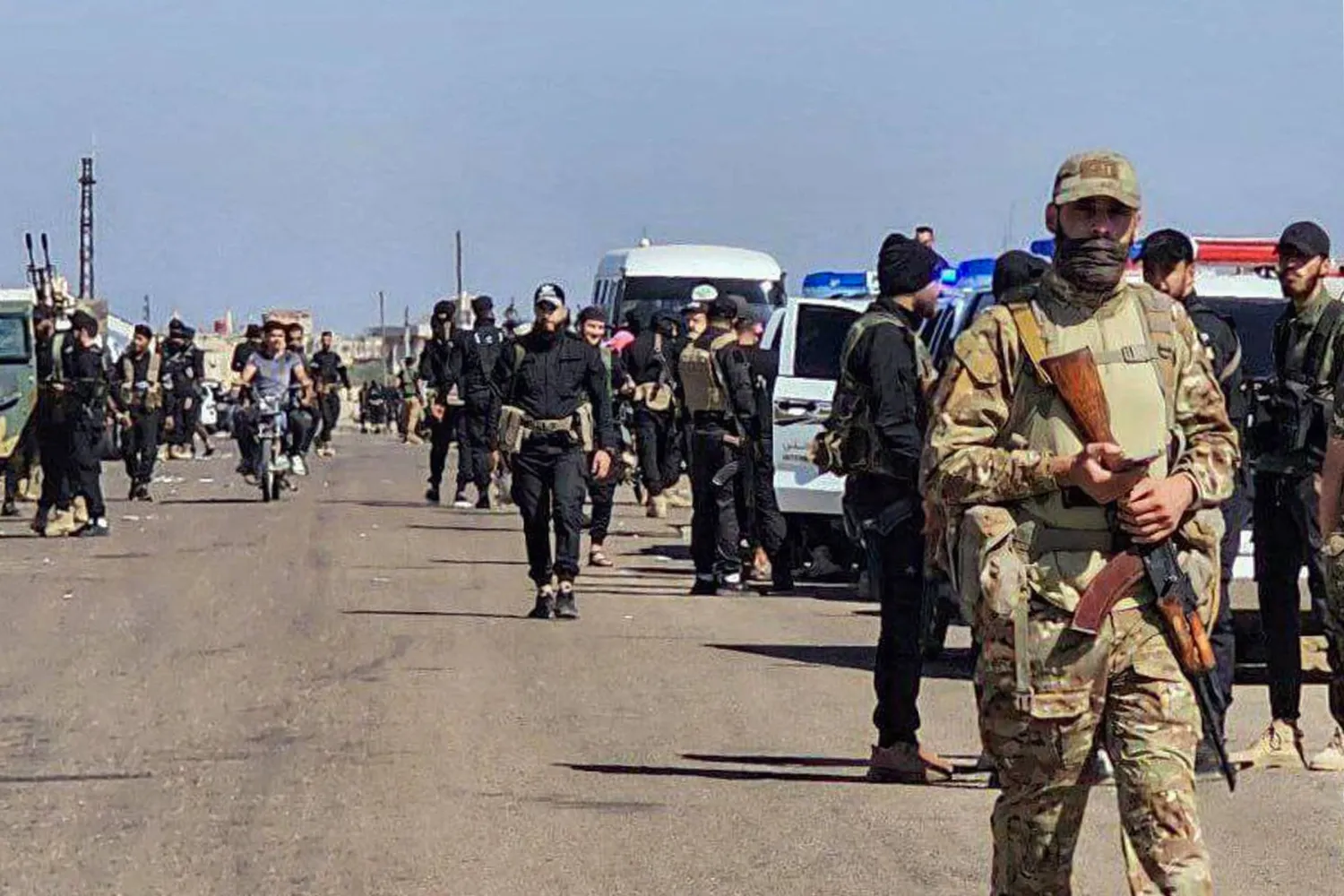
The airstrike follows a spike in violence between Druze factions and Bedouin tribes in southern Syria, where fighting has escalated into heavy clashes over the past 48 hours. The Syrian Ministry of Interior reported at least 30 people killed and over 100 wounded in the most recent wave of violence, which reached the al-Muqawwas district in eastern Suweida and several surrounding villages.
The Syrian Ministry of Defense said it had dispatched additional forces to contain the fighting and prevent further escalation. Meanwhile, Suweida’s Governor Mustafa al-Bakkour issued a public appeal urging residents to exercise restraint and embrace national reconciliation. “The state will not tolerate threats to its citizens,” he declared. “We are committed to protecting the innocent and restoring what has been taken by force. Attempts to ignite the region will not succeed.”
Historical Grievances and Present Fears
Dr. Yusri Khazran, a Druze political scientist and lecturer at the Hebrew University’s Truman Institute, said the Druze-Bedouin conflict in southern Syria is deeply rooted, dating back to the 18th century. “It’s a recurring struggle—quiet for years, then suddenly reignited,” he explained.
He noted that previous Syrian governments had largely managed to contain such conflicts. “But under the new leadership in Damascus, things have become more complicated. The Druze are looking around at what has happened elsewhere in Syria—especially in the coastal regions—and they’re questioning whether the state can protect them. That’s why they refuse to disarm until the government proves it can maintain order.”
Khazran warned that the government’s pressure campaign to force Druze factions to surrender their weapons is backfiring. “These are communities under attack. There have been abductions of Druze youth and women. Even the Syrian tanks meant to separate the warring sides are seen by locals as siding against them,” he said.
A Fragile Ceasefire and Rising Stakes
As clashes continue to engulf Suweida and its surroundings, the prospect of a wider regional entanglement looms. The Israeli airstrike, while officially limited and described as “preventative,” represents a new dimension in an already volatile conflict.
Diplomatic sources indicate that the talks in Baku—reportedly focused on border security, humanitarian access, and community protection—are proceeding cautiously but steadily. The inclusion of Druze concerns in the formal agenda marks a notable development in Israeli-Syrian engagement following the fall of the Assad regime and the rise of transitional leadership under President Ahmad al-Sharaa.
Whether the situation in Suweida stabilizes or escalates further may determine the pace and outcome of these sensitive negotiations.
This article was translated and edited by The Syrian Observer. The Syrian Observer has not verified the content of this story. Responsibility for the information and views set out in this article lies entirely with the author.