
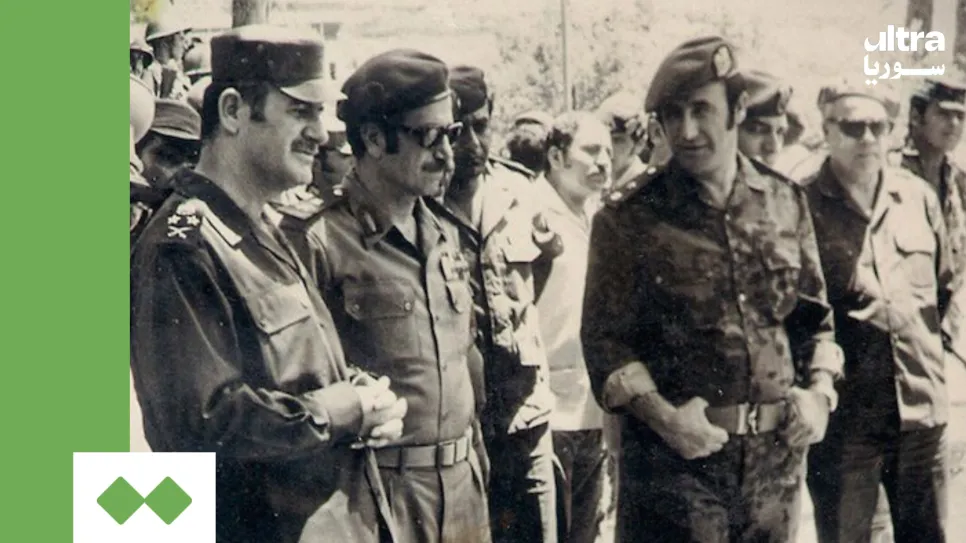
The events of February 1982 in the city of Hama stand among the darkest and most violent chapters in modern Syrian history. For 27 days, forces of the former regime—under the command of President Hafez al-Assad and his brother Rifaat—waged a systematic military campaign that left the city devastated and its people shattered.
Background: Years of Escalating Tension
The Hama Massacre did not erupt in a vacuum. It was the culmination of a long and bloody confrontation between the Assad regime and opposition forces, most prominently the Muslim Brotherhood, which held deep roots in the city.
Tensions date back to 1964 and the “Sultan Mosque events,” the first major clash between the Syrian army and protesters resisting Ba’athist rule. The conflict deepened after Hafez al-Assad seized power in 1970. His 1973 constitution, which consolidated near-absolute authority, triggered widespread demonstrations known as the “Constitution events.”
By the late 1970s, violence had escalated sharply: the “Fighting Vanguard” attack on the Aleppo Artillery School in 1979, an attempted assassination of Assad in 1980, and the regime’s brutal retaliation—most notoriously the Tadmur Prison massacre, where more than a thousand detainees were executed. Law No. 49 soon followed, making membership in the Muslim Brotherhood punishable by death.
The Siege and Assault: A Military Machine Unleashed
In late January 1982, regime forces encircled Hama. This was not a routine security operation but a full-scale military mobilization: Rifaat al-Assad’s Defense Companies, the 47th Armored Brigade, Special Forces, Ba’ath Party militias, and multiple intelligence branches.
Electricity, water, and communications were cut. A strict curfew sealed the city. The objective was unmistakable—complete isolation ahead of a decisive assault.
Days of Terror
At dawn on February 2, the bombardment began. Artillery fire struck indiscriminately—homes, mosques, hospitals, and markets. Entire neighborhoods collapsed under the shelling, the sound of explosions drowning out the screams of civilians.
Two days later, ground forces advanced. Tanks pushed through Hama’s narrow streets; rocket launchers were positioned on rooftops. What followed defied all norms of warfare.
Survivors described scenes of unimaginable horror:
• men rounded up and executed in public squares
• women assaulted in front of their families
• patients killed in their hospital beds
• children mutilated
• pregnant women slaughtered
These accounts, though difficult to comprehend, form part of the collective memory of the city.
“The Friday Incident”: A Final Blow
As the fighting waned and residents began to hope the worst had passed, the regime delivered its final strike. On a Friday, security forces launched sweeping arrest campaigns, detaining thousands of men from mosques, streets, and homes. Most were never seen again. Estimates suggest that between 5,000 and 10,000 people were taken that day alone.
Destruction and Loss
When the massacre ended after 27 days, Hama was unrecognizable. Official figures remain hidden, but estimates place the death toll between 30,000 and 40,000, with roughly 17,000 missing. Entire districts were flattened; others suffered up to 80 percent destruction. Seventy-nine mosques, three churches, and 40 medical clinics were reduced to rubble.
For decades, Hama lived under enforced silence—its trauma buried but never forgotten. When the Arab Spring erupted in 2011, Hama was among the first cities to rise, its chants of “Down with the regime!” echoing the memory of February 1982.
The regime responded with familiar methods: tanks returned to the streets, repression resumed, and the cycle of violence continued. But this time, memory was sharper, the legacy heavier, and the conflict far more complex.
More than forty years later, the Hama Massacre remains an open wound in Syria’s modern history—not merely a historical atrocity, but a stark illustration of the regime’s governing philosophy: rule through fear, coercion, and systematic brutality.
This article was translated and edited by The Syrian Observer. The Syrian Observer has not verified the content of this story. Responsibility for the information and views set out in this article lies entirely with the author.