
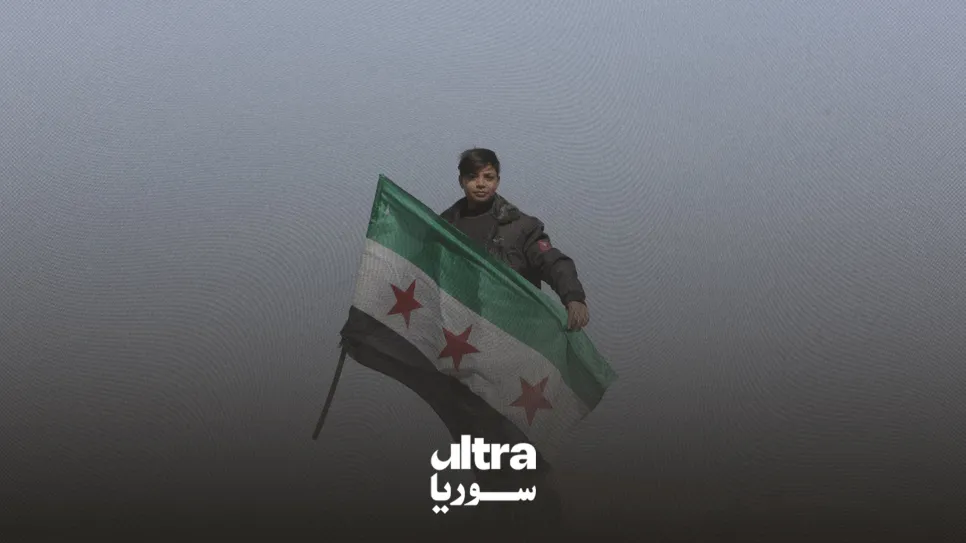
On this fifteenth anniversary of the Syrian Revolution, words flow in abundance. We could compose thousands of celebratory lines, each attempting to capture the weight of the moment. It is the second anniversary since the collapse of the former regime—a day when citizens gather freely in squares once forbidden to them, or return to the very streets where they once demonstrated and watched martyrs fall.
One might say the entire country has become a stage for commemorating a revolution that has, for the second time, affirmed its victory. What was once a distant or deferred dream is now a lived reality. Yet even as the nation navigates a complex transitional phase, and even as the architecture of political institutions demands patience, history offers a sobering warning: in such volatile periods, the greatest danger lies in the quiet entrenchment of authoritarian patterns under the pretext of “necessity”—patterns that later prove nearly impossible to dismantle.
Today, digital platforms will overflow with images, montages, and cinematic tributes. Speeches by presidents and ministers will circulate widely, transforming the anniversary into a vehicle for political branding. The commemoration risks becoming less a testament to the revolution itself and more a celebration of the new authorities, who now claim custodianship over the victory they commemorate.
The Erosion of Political Life
Amid the festivities, a stark truth demands recognition: the near-total absence of genuine political life since the fall of the Assad regime. A deliberate effort is underway to reduce national discourse to fleeting social-media trends, severing “politics” from the “revolution.” The irony is profound, for the revolution began as a rebellion against the suffocation of political life in Syria.
This transformation is inseparable from a constricting regional environment. Syria remains embedded in a sprawling regional conflict, prompting the current authorities to prioritize security and control over political openness. Governance remains dominated by a single faction—Hay’at Tahrir al-Sham—which continues to monopolize representation and decision-making. It imposes an overt guardianship over civil and political life, claiming exclusive ownership of the narrative of “liberation” and the very definition of the “state.”
Yet the crisis extends beyond the identity of the ruling faction. It lies in the governing model itself—a model that gravitates toward centralized authority, deferred representation, and a vertical, elitist relationship between state and society. In practice, the authorities have left Syrians with little more than the pursuit of daily survival and the “right” to celebrate—a celebration choreographed to endure indefinitely through curated imagery and official narratives.
Emerging Fractures and Popular Discontent
These observations are not mere criticism; they are an anatomical description of the current political order. It is a system that obscures essential political questions, leaving society entangled in peripheral disputes that avoid the foundational inquiry: What kind of state are we building, and what future does it promise? This vacuum explains the stagnation of critical files—from transitional justice to the fate of the disappeared—despite eighteen months having passed since the regime’s fall.
As Syrians celebrate the expanding “green zones”—now encompassing all of Raqqa and Deir ez-Zor and parts of Hasakah—one must not overlook the protests that have recently erupted in these regions. Some demonstrations stem from economic marginalization and the failure of the new authorities to address deep-rooted social grievances. Others are explicitly political, such as the widespread rejection of Sipan Hamo’s appointment as Assistant Minister of Defense for the Eastern Region. For many in Raqqa and Deir ez-Zor, Hamo’s name evokes unresolved grievances, and his appointment has become a catalyst for growing alienation between the government and the governed.
A widening tension is emerging between the “legitimacy of victory” claimed by the authorities and the “legitimacy of representation” demanded by society. Without genuine political wisdom, this chasm will only deepen.
The Crisis of the Interior: From Idlib to the Camps
This atmosphere of discontent is not confined to the east. Even in Idlib—often portrayed as the stronghold of the new authorities—popular anger is rising. The deterioration of public services, the indignity of bread and fuel queues, and the soaring cost of housing have turned the city into a landscape of stark inequality. A vast population of the poor lives alongside a small, affluent class tied to the centers of power.
Meanwhile, the displacement camps remain frozen in time. A year after the revolution’s final victory, no meaningful initiatives have addressed their plight, despite the spectacle of fundraising campaigns and the collection of substantial capital for that purpose. From the squalor of the camps to the opacity of controversial decrees, a narrative of denial persists. The authorities appear increasingly detached, distracting the public with trivialities that never touch the core of state-building.
The Question of the Future
The anniversary of the revolution is an occasion worthy of honor. But it also demands a moment of unflinching honesty. We remain under a shadow of authority that avoids transparency about the future political system, struggles to engage society in genuine dialogue, and continues to deny the accumulation of resentment among broad segments of the population.
The central question of our era is no longer how the old regime fell, but rather: What is the nature of the state now being constructed? Who has the right to define its contours? Are we witnessing the birth of a new political life, or merely a sophisticated postponement of it?
The answers to these questions will determine whether we remain within the map of hope—or whether we have already wandered beyond its borders.
This article was translated and edited by The Syrian Observer. The Syrian Observer has not verified the content of this story. Responsibility for the information and views set out in this article lies entirely with the author.