
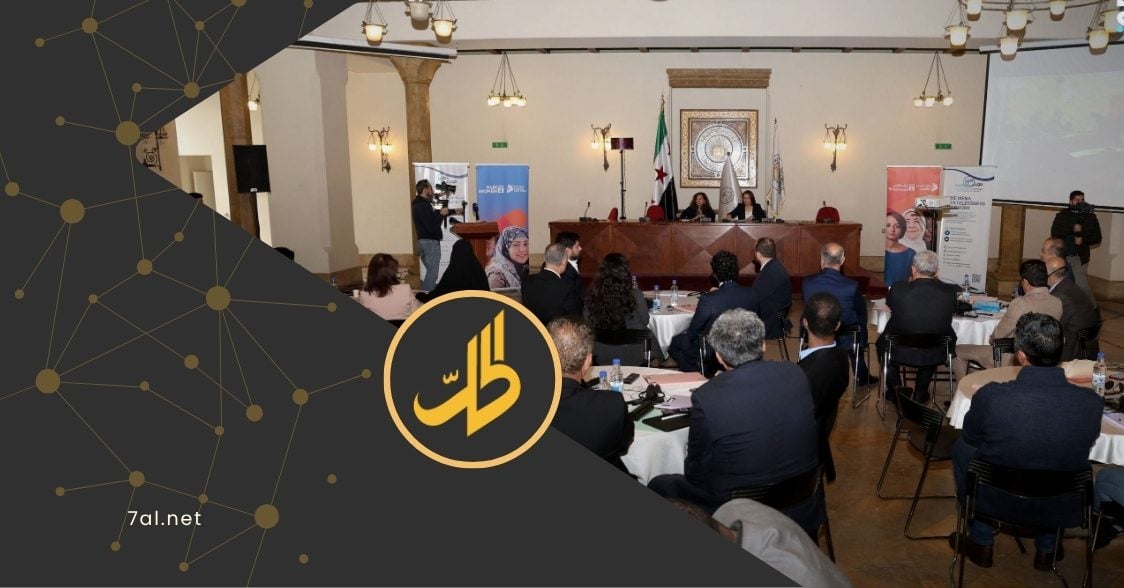
A conference titled “Gaps in the Syrian Nationality Law: Achieving Gender Equality” convened on Monday at the Reda Said Hall at Damascus University, bringing together officials, UN representatives, legal scholars, international organizations, and civil society actors. Organized by the National Authority for Transitional Justice, the event explored the most pressing legal challenges embedded in Syria’s nationality legislation.
The discussions centered on the consequences of discriminatory provisions for mothers and their children, the growing risks of statelessness, and the enduring impact of legal texts that have long denied equal citizenship rights. Participants examined how these provisions shape daily life, restrict access to essential services, and perpetuate structural inequality.
Legal Reform and Comparative Models
Speakers outlined potential pathways for constitutional and legislative reform in line with international law. They reviewed regional experiences from Morocco, Tunisia, and Lebanon, drawing lessons from countries that have already taken steps to close gender-based gaps in nationality laws. According to the state news agency SANA, the sessions highlighted the obstacles facing Syrian mothers and their children and underscored the need for reforms grounded in human rights principles to advance the broader project of justice.
Abdul Basit Abdul Latif, head of the National Authority for Transitional Justice, explained that the current Nationality Law contains loopholes that have entrenched discrimination for decades. Women married to non-Syrians cannot pass their nationality to their children, a restriction that shapes the legal and social status of entire families. Children affected by this provision face barriers to education, healthcare, employment, and freedom of movement.
“Achieving equality in this field requires fundamental legislative amendments within the framework of transitional justice, accompanied by social awareness and sustained advocacy,” Abdul Latif said.
Calls for Structural Change and UN Support
Ajay Madiwale, representing UN Women, emphasized that Syrian women have spent generations fighting for equal rights. He described the present moment as a critical opportunity to address longstanding grievances. Nationality, he noted, is not merely a legal category; it is tied to belonging, dignity, and the full spectrum of fundamental rights. He affirmed UN Women’s readiness to provide technical support to strengthen legal reform and help build a more just and inclusive society.
A Law Rooted in 1969
Syria’s nationality framework is still governed by Legislative Decree No. 276 of 1969, which is built on the principle of paternal descent. Under this system, nationality is transmitted through the father in most cases, leaving mothers with limited legal standing in determining their children’s citizenship.
This approach has produced complex legal and social challenges, particularly for Syrian women married to non-Syrians. Their children often struggle to obtain residency, secure official documents, or enter the labor market. The risk of statelessness grows even more acute in situations of conflict, displacement, and the loss of civil records.
Despite mounting domestic pressure and sustained international advocacy to align the law with global standards—especially the Convention on the Elimination of All Forms of Discrimination Against Women (CEDAW)—no legislative amendments have yet been enacted. The ongoing discussions therefore remain part of a gradual effort to rethink the legal structure and open the door to meaningful reform.
This article was translated and edited by The Syrian Observer. The Syrian Observer has not verified the content of this story. Responsibility for the information and views set out in this article lies entirely with the author.