
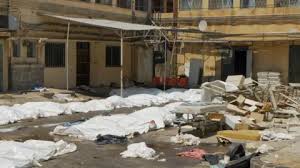
A new report by the United Nations Commission of Inquiry has documented grave violations committed against civilians in Syria’s western coastal region between January and March 2025. The Commission concludes that many of the abuses targeted Alawite communities and may constitute war crimes, while several incidents warrant further examination as potential crimes against humanity. The report centres on a wave of massacres that swept across the coast and western central Syria in March, following months of rising tension after the fall of the former government in December 2024.
According to the Commission, violence surged dramatically on 6 March when attacks attributed to remnants of the former government ignited a wider cycle of killings, reprisals, looting and destruction. Approximately 1,400 people were reported killed, most of them civilians, including around one hundred women. Many perished in coordinated massacres across a broad geographical area. Other violations included torture, pillage, arson and the destruction of homes and property.
The Commission situates the March killings within a broader post-conflict landscape shaped by institutional collapse, entrenched sectarian fear, revenge attacks and the absence of a credible framework for transitional justice. It notes that the failure to establish accountability for earlier atrocities committed during Syria’s long war deepened social fragmentation and created conditions in which new abuses could unfold with impunity.
Responsibility for the violence, the report states, cannot be assigned to a single actor. The Commission attributes serious violations to fighters aligned with the former government, to members of the interim authorities’ forces and to individuals associated with both sides. The documented abuses include killings, torture, enforced disappearance, degrading treatment of the dead, looting and attacks on civilian property, including medical facilities. Several of these acts may amount to war crimes.
In describing its investigative process, the Commission explains that it conducted more than two hundred interviews with victims and witnesses, examined over forty reported incidents and carried out in-depth investigations into fifteen emblematic cases in Latakia, Tartous and Hama governorates. Investigators analysed photographs, videos, documents and satellite imagery, and undertook a field mission to the coastal region in June 2025 after receiving access from the interim government. During that visit, they met officials, security commanders, witnesses and families of victims, and inspected sites of violence, including mass-grave locations.
The report links the coastal violence to the fragile security order that emerged after the collapse of the Assad government on 8 December 2024. The new authorities publicly pledged to uphold the rule of law and protect all Syrians regardless of sect or ethnicity. They also inherited a fractured landscape marked by armed factions, weak institutions, sectarian distrust and unresolved demands for justice. Among the most urgent challenges identified by the Commission were security-sector reform, disarmament, reintegration of fighters and the establishment of a credible transitional justice process.
Although the interim government had largely reasserted control over the coastal region by 10 March, the Commission warns that retaliatory attacks continued beyond the main wave of violence. These ongoing assaults, combined with online disinformation and hate speech, have intensified fear among Syrians and widened communal rifts.
In its conclusions, the Commission calls for clear and impartial accountability for all perpetrators, regardless of rank or affiliation. It urges compensation for victims, guarantees against recurrence and broader efforts to rebuild trust within affected communities. The report stresses that without credible investigations and a functioning justice framework, Syria’s fragile transition remains vulnerable to renewed cycles of revenge and communal violence.