
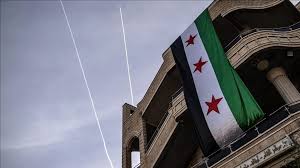
From the first official statements issued by the Political Affairs Directorate on the day the aggression was repelled, through the parliamentary elections, to the moment President Ahmad al-Sharaa entered the Oval Office, the political process in Syria’s new era has developed along two distinct but interconnected tracks — one domestic and the other foreign. While Syrian diplomacy has marked a series of international breakthroughs, the internal track has drawn increasing criticism and encountered considerable obstacles.
A Path of Reconciliation and Peace
The fall of Bashar al-Assad was far more orderly than any scenario previously imagined. The liberation of Syria was accomplished without a single civilian casualty, without aerial bombardments, and without the destruction of urban centres — a result of the leadership’s declared motto during Operation Deterrence of Aggression: “A victory in which none shall taste vengeance.”
Political analyst Dr Basel Orfali observes that the liberation cast a long and beneficial shadow across the political landscape. The leadership’s discourse was national and reconciliatory, entirely distant from sectarianism or retribution. It claimed the victory for all Syrians. President Sharaa’s declaration that the revolution had ended and that the state-building phase had begun marked the start of a new political era. This transition was formalised through the Victory Conference and then the National Dialogue Conference, which, despite its flaws, produced key outcomes. These included the Constitutional Declaration and the establishment of a centralised presidential system.
Dr Orfali notes that the transitional government has remained firm on key red lines — national unity, state monopoly over weapons, and a focus on economic recovery — all essential for enduring peace and security.
The government has allowed an unprecedented degree of political freedom, enabling society to breathe, express itself, and develop political movements and parties. It has chosen to delay resolution on contentious matters such as federalism and decentralisation, preferring to allow these to emerge from societal consensus rather than imposing them through coercion. The most difficult issues have been deferred until a permanent constitution is drafted by an elected parliamentary committee, at which point the Syrian people will determine what suits them.
The Delayed Awakening of Political Life
Political writer Firas Allawi offers a different perspective. He argues that the immediate priority following military victory should have been to accelerate the political process and restore Syria’s role on the international stage after years of isolation.
Two tracks were initiated — internal and external — but one year after the regime’s collapse, Syria’s diplomatic progress far outpaces its domestic political development. While foreign engagement has surged, no comprehensive laws have yet been passed to regulate political or party life. Meaningful political activity remains limited, perhaps in anticipation of the new parliament’s first session, or due to bureaucratic inertia. Allawi expects the coming year to bring a more deliberate and inclusive internal political process, unlike the urgency that shaped earlier milestones such as the National Dialogue Conference.
A Cascade of Diplomatic Triumphs
On the international front, Dr Orfali describes Syria’s diplomatic resurgence as exceeding all expectations. “Syria has re-emerged as a normal state,” he says, “and the government’s balanced discourse has earned it widespread regional support.”
President Sharaa has met his American counterpart three times within a year and has undertaken fourteen international visits. Foreign Minister Asaad al-Shaibani has taken Syria’s new message to capitals across the world. Most Western sanctions — both those inherited from the Assad era and those imposed on former rebel entities — have been lifted. Syria is no longer labelled a state sponsor of terrorism but is now a recognised member of the global coalition against extremism.
Allawi highlights the pragmatic character of Syrian foreign policy. Relations with Washington are warm, with clear support from the United Nations, yet ties with Moscow remain intact. Damascus has avoided alienating any side. Constructive relations have also been maintained with Turkey, Saudi Arabia, Qatar, and other powers that have often stood in opposition to one another.
The Divergence Between External and Internal Legitimacy
Offering a far more critical assessment, Syrian Democratic Alliance politician Mohammed Shukri al-Khalid describes the developments since 8 December as a setback rather than a step forward. He contends that the new government has focused on consolidating its own power, constructing a state in the image of a single faction.
Where the Assad regime once relied on Baathist ideology to justify its rule, today’s leadership, he argues, employs a new religious narrative to similar ends.
Al-Khalid views the Constitutional Declaration as a document crafted to concentrate near-absolute power in the hands of President Sharaa, who he claims has repeatedly violated its provisions alongside his brother Maher. He considers the newly elected parliament a mere formality, and the National Dialogue Conference nothing more than staged theatre with no binding results. Issues of transitional justice and the missing have been systematically sidelined. The General Secretariat for Political Affairs dominates political life, having seized the assets of the former Baath Party and its affiliates, and now prohibits political gatherings without its approval.
In his view, the authorities have prioritised external legitimacy at the expense of national cohesion, focusing on international recognition while neglecting domestic reform.
Syria’s First Year: Agreements Without Implementation and Political Battles That Redraw the Front Lines
In the twelve months since the fall of the Assad regime, Syria has signed two agreements and initiated negotiations on a third. All were designed to address escalating crises across three major theatres, the north-east with the Syrian Democratic Forces, the south in Suwayda, and the frontier with occupied Palestine. Yet none has been meaningfully implemented. All remain suspended amid mutual accusations over the reasons for the deadlock.
The 10 March Agreement
The first of these accords, signed with the Syrian Democratic Forces on 10 March, consists of eight articles. The most significant is Article Four, which mandates the full integration of civil and military institutions in north-eastern Syria — including border crossings, airports, and strategic energy infrastructure — into the Syrian state. Article Eight sets a deadline for implementation before the end of 2025.
Yet as the year draws to a close, virtually none of these provisions has been enacted. Sporadic clashes continue.
Kurdish journalist Baz Baqari told Ultra Syria that placing such a comprehensive agreement on a fixed nine-month timetable was premature. In Syria’s tangled reality of overlapping regional and international interests, any pact of this magnitude requires both time and political stability. Neither party, he argues, is fully prepared. The SDF will not relinquish its gains without guarantees for its political and military distinctiveness, especially in light of developments on the coast and in Suwayda. Meanwhile, Damascus lacks the leverage to overcome Turkish opposition.
Baqari believes the agreement was born of necessity to avert civil war, but gradual implementation may ultimately prove more successful than haste. The real test, he says, lies in how the agreement is carried out, not how quickly.
Researcher Bassam al-Suleiman offers a different view. He attributes the impasse to hardline factions within the SDF who reject any integration into a unified Syrian state after years spent fighting for autonomy. While SDF commander Mazloum Abdi supports the agreement, he is under pressure from internal elements, knowing that renewed conflict would drive his forces back into the hills.
The Amman Agreement
The second agreement, brokered by Jordan and the United States following intense clashes in Suwayda, was designed as a roadmap. It called for the withdrawal of irregular fighters, the deployment of regular state forces, the creation of a pluralist national project, and the establishment of a local police force drawn from all communities and headed by a provincial commander.
This agreement too remains frozen. Many observers believe its fate is linked to a broader but stalled security arrangement with Israel, which is said to be seeking a supply corridor into Suwayda. Political activist Rawad Bulan describes the Amman roadmap as a bargaining chip in a wider geopolitical game, noting that Damascus appears unwilling to resolve the southern file without extracting concessions from Tel Aviv.
The Security Arrangement with Israel That Never Materialised
The long-discussed security arrangement with Israel, repeatedly affirmed by President Sharaa, Foreign Minister Shaibani, and United States envoy Thomas Barrack, appears to have collapsed. According to Israeli sources, the recent Beit Jann operation in western rural Damascus — which left fifteen Syrians dead and six Israelis wounded — has only deepened the crisis.
Israeli affairs expert Jaafar Khudur argues that the regional balance of power has shifted decisively. Israel, he claims, has moved from managing risks to demanding strategic concessions on the Golan and on a new buffer zone it has unilaterally established. Some Israeli factions still view Syria as an extension of the northern front and a reservoir of potential threats.
Khudur contends that Israel is exploiting Syria’s fragility to maintain a state of controlled instability that justifies its own military doctrine. Recent operations, population controls, and so-called cleansing measures suggest Tel Aviv intends to maintain a permanent presence in the south.
Despite these setbacks, Khudur believes President Sharaa’s visit to Washington reinforced his commitment to the 1974 Disengagement Line, indicating that a principled agreement remains possible, even if the path forward is currently blocked.
A Year of Progress and Paralysis
Syria’s first post-Assad year closes with an impressive portfolio of diplomatic achievements, many argue, secured at the cost of domestic stagnation. Landmark agreements remain largely unenforced. The internal political scene remains fragile. And while Syria now occupies a seat on the world stage, the risk of renewed fragmentation and unresolved internal conflict continues to cast a long shadow.