
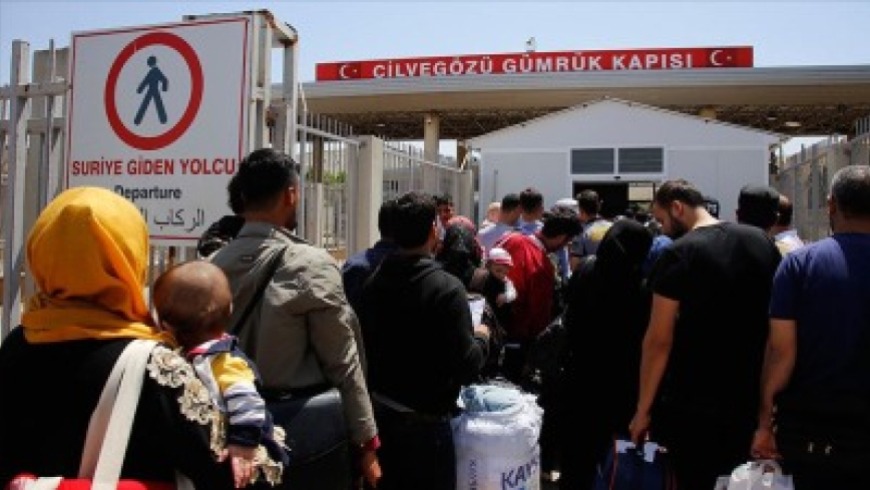
The United Nations High Commissioner for Refugees (UNHCR) expects that around one million additional Syrian refugees may return to their country in 2026, amid the gradual recovery taking shape following the fall of the Bashar al-Assad regime on December 8, 2024.
In an interview with Turkey’s Anadolu Agency, UNHCR’s representative in Syria, Gonzalo Vargas Llosa, said that approximately 1.3 million Syrian refugees have already returned since December 2024. Nearly two million internally displaced persons have also gone back to their original areas, bringing the total number of returnees to more than three million in a short period.
Llosa explained that this large-scale return is unfolding in a country exhausted by war at the economic, structural, and service levels. Yet the fear that once dominated Syrian society has receded rapidly after the political transition, replaced by a widespread sense of hope.
He noted that during a visit to the Lebanese border on December 9, 2024, he witnessed thousands of Syrians returning spontaneously after more than fourteen years of displacement. Many, he said, expressed their joy by kissing the ground upon arrival.
Up to Four Million Returnees Within Two Years
According to Llosa, most returnees have come from Turkey, Lebanon, and Jordan, with smaller numbers returning from Egypt and Iraq. UNHCR estimates suggest that more than four million Syrians may return within the next two years, making international financial support essential to ensure stability and prevent new humanitarian crises.
He praised Turkey’s role, noting that Ankara’s long-term hosting of refugees and its support for the new Syrian government after December 2024 have helped create a positive climate for recovery. He also pointed to the first visits by Turkish investors exploring opportunities in Syria, describing them as signs of a new phase of reconstruction.
Assessing the current stage, Llosa described Syria’s situation as a complex transition that will require time, given the vast destruction left by fourteen years of war. Still, he emphasized that the country’s rapid reconnection with the world marks a development of great significance after years of isolation.
He stressed that meaningful economic improvement will require time and sustained international coordination, adding that the full lifting of sanctions is a key factor in accelerating recovery and attracting private-sector investment.
In this context, Llosa noted that UNHCR and its partners are providing direct support to returnees, particularly in re-issuing official documents. More than one quarter of returnees lack basic documents, including personal IDs and property deeds.
Sanctions Lifted Under U.S. Defense Authorization Act
These developments follow U.S. President Donald Trump’s signing of the National Defense Authorization Act for Fiscal Year 2026, which included the repeal of sanctions imposed on Syria under the Caesar Act, leading to the official lifting of sanctions.
The Syrian Foreign Ministry welcomed the move, saying it opens the door to a new phase of recovery and stability and eases the burdens on the Syrian people.
This article was translated and edited by The Syrian Observer. The Syrian Observer has not verified the content of this story. Responsibility for the information and views set out in this article lies entirely with the author.