
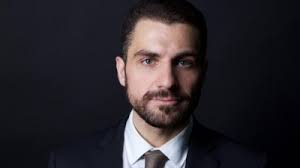
The Director of the American Affairs Department at the Syrian Ministry of Foreign Affairs, Qutaiba Idlbi, stated that the United States’ position regarding the ongoing battles in the northeast “is in harmony with Damascus’ view” on the need to unify Syrian territory and integrate the Syrian Democratic Forces (SDF) and the Jazira region into the Syrian state. He affirmed that Washington continues to exert efforts to persuade SDF leadership to implement the March 10 Agreement.
Idlbi added, in an interview with Syria TV from Damascus, that Washington’s efforts “have been appreciated from the beginning,” noting that they focused on accelerating integration and implementing the March 10 Agreement. He said these efforts are ongoing to avoid escalation, particularly given the presence of “unruly” armed groups within the SDF, foremost among them factions affiliated with the Kurdistan Workers’ Party, which is banned in Turkey.
He explained that the ceasefire calls issued by U.S. Central Command “are directed primarily at groups aligned with the SDF that have not complied with withdrawal decisions from areas west and south of the Euphrates River.” He argued that the army must intervene to protect civilians and neutralize these groups, which he accused of previously targeting civilians in Aleppo and of continuing to obstruct implementation of the March Agreement.
Idlbi noted ongoing communication with several members of the U.S. Congress to clarify Damascus’ position, especially in light of what he described as “stances that require greater clarity.” He criticized what he called “SDF claims” that the operations in Aleppo province target Syrian Kurds.
He said military operations “have been acknowledged by experts as precise and successful in avoiding civilian casualties,” adding that President Al-Shar’a’s decision to recognize the rights of Syrian Kurds—whether in language or citizenship—sent clear messages to Washington.
Idlbi affirmed that there is alignment between the Syrian government and the administration of President Donald Trump on the goal of unifying Syria and regulating the possession of arms, describing this as a path toward “shared stability” in the region.
The March 10 Agreement Remains the Reference Point
Regarding U.S. envoy Tom Barrack’s visit to the Kurdistan Region and his meetings with SDF leaders, Idlbi said American efforts are focused on pushing SDF leadership to commit to the March 10 Agreement and end delays. He warned that continued postponement threatens the agenda of stability, development, and building Syria’s future.
He stressed that the March 10 Agreement remains the primary framework for integrating the SDF. He said implementation has already begun in areas such as Sheikh Maqsoud and Ashrafieh, where governance institutions have been merged and local residents have been allowed to join the security and military sectors. He called on SDF leadership to “be a partner in this moment,” adding that the Syrian people “remain committed to implementing the agreement and reunifying the country.”
Addressing the military operations that have moved beyond Deir Hafer and Maskanah toward Raqqa, Idlbi said the latest agreement stipulates the SDF’s withdrawal from all areas west and south of the Euphrates, including Tabqa and Saba’ Tishreen. He said the SDF’s failure to withdraw prompted the government to continue operations due to what he described as “the lack of discipline among armed groups,” some of which, he noted, were previously affiliated with the government itself.
He argued that the continuation of operations aims to “create conditions that allow for SDF integration and national reunification,” emphasizing that the operations will cease only when there is “genuine willingness” within the SDF to implement the agreement peacefully.
In response to a question about ISIS detention facilities, Idlbi said the areas of operation contain no infrastructure related to counterterrorism, and that Damascus is coordinating with Washington and is prepared to maintain security. He stressed that none of the areas where operations are taking place include sites connected to ISIS.
Regarding the possibility of operations shifting to the eastern bank of the Euphrates, Idlbi said the Syrian army “conducts its operations to protect civilians wherever undisciplined groups are present,” whether they belong to the PKK or to what he described as “soldiers and officers who fled to the northeast since December 2020.”
He concluded by saying that the army “will continue its duty to protect Syrians in those areas.”
U.S. Pressure for De-Escalation
Idlbi’s remarks come after The Wall Street Journal reported that senior U.S. officials warned Damascus that “Caesar Act” sanctions could be reinstated if the Syrian government expands its military operations in the east, amid concerns that clashes in Aleppo could evolve into a broader campaign against the U.S.-backed Syrian Democratic Forces.
According to the newspaper, officials in the U.S. administration fear that a new Syrian offensive against “Kurdish forces” could widen into larger areas, threatening stability in Syria and deepening the rift between two key U.S. security partners engaged in the fight against ISIS.
The Wall Street Journal quoted a U.S. official as saying that Washington threatened to reactivate Caesar sanctions if the Syrian government proceeds with a broader offensive, at a time when American officials are intensifying daily contacts with all parties to prevent the fighting from expanding.
Republican Senator Lindsey Graham wrote on X on Saturday:
“If the new Syrian government uses military force against Syrian Kurds and the Syrian Democratic Forces, it will create massive instability in Syria and the region and will tell me everything I need to know about this new regime. If the Syrian government takes military action, I will do everything in my power to revive Caesar Act sanctions.”
This article was translated and edited by The Syrian Observer. The Syrian Observer has not verified the content of this story. Responsibility for the information and views set out in this article lies entirely with the author.