
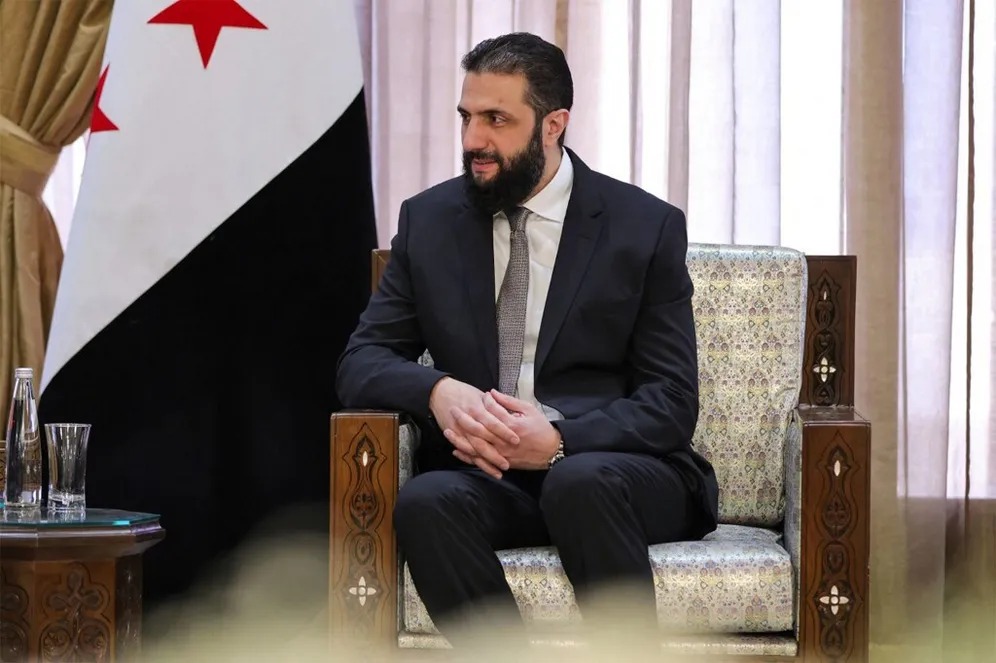
A growing wave of speculation surrounds an imminent government reshuffle, fueled by reports that President Ahmad al-Sharaa intends to remove his brothers from their posts. Two central observations are essential for understanding what is actually unfolding.
First, the anticipated changes are not a response to public pressure, nor do they reflect any genuine reformist impulse. They are the product of an internal power struggle. This is not conjecture; it is well-established among those familiar with the dynamics inside the ruling structure. The leadership of Hayat Tahrir al-Sham (HTS) now views al-Sharaa’s brothers—especially Maher—as an obstructive layer standing between them and the presidency. Their grievance is straightforward: despite being the force that secured victory, they remain subordinate to individuals whose authority stems solely from family ties rather than participation in the struggle.
For his part, al-Sharaa appears unable to decisively resolve this conflict. He may indeed remove his brothers from their public-facing roles, but this will not amount to removing them from power. Their influence will continue, only in less visible forms. A redistribution of responsibilities is likely, including a potential reallocation of duties between Maher and engineer Ali Keda within the General Secretariat of the Presidency. Such a shift would effectively elevate Keda to a position equivalent to head of the Council of Ministers. He could even be formally named prime minister if a reshuffle occurs—though this would require amending the Constitutional Declaration, which currently provides no mechanism for a premiership under the presidential system.
As for the broader cabinet, there is little reason to expect an expansion of technocratic representation. Ministerial changes are possible, but the overall direction points toward fewer independent figures and more ministers drawn directly from HTS. Individuals such as Basel Abdel Hanan or Abu Mu‘taz Afran may be elevated, potentially even to the Ministry of Economy.
New faces, same power structure
The second observation concerns the political function of the reshuffle itself. The authorities appear to be cultivating public anticipation of change as a way to divert attention from the suffocating economic crisis while offering a carefully managed illusion of renewal. Public frustration with the performance of current ministers—particularly in the economic and financial portfolios—is widespread. Under such conditions, the appointment of HTS-affiliated figures may be welcomed by those who equate new faces with the promise of improvement. Names like Basel Abdel Hanan, Abu Mu‘taz Afran, or Mohammed Abazid may thus be presented as symbols of corrective action.
It is also possible—though limited in scope—that a ministerial portfolio could be granted to the Syrian Democratic Forces (SDF) as part of political balancing and in support of al-Sharaa’s ongoing arrangement with them. Such an appointment would almost certainly be confined to a non-sovereign ministry, consistent with the existing technocratic model.
Yet the fundamental reality remains unchanged. Technocratic ministers have never exercised meaningful authority. With the exception of the Ministry of Information, executive power has been exercised indirectly by HTS. A reshuffle conducted within this same framework cannot produce substantive improvement.
Failure, in fact, is the most likely trajectory for this executive authority, regardless of who occupies its seats or what qualifications they possess. The absence of institutional balance, oversight, and accountability deprives governance of its corrective mechanisms. Equally decisive is the exclusion of Syrians from meaningful political participation. An executive that operates without scrutiny inevitably becomes consumed by internal rivalries—precisely what is now unfolding. This pattern has deep precedents: it mirrors the executive structures of the Assad era, where reshuffles occurred periodically without altering the underlying distribution of power.
Politics of Distraction
The present moment reproduces that familiar cycle. Public criticism intensifies. Rumors of change circulate. Expectations rise. Names are replaced. Yet the substance of governance remains untouched.
In the coming period, Syrians are likely to face further deterioration in their living conditions. The state is, in practical terms, financially insolvent. Its ability to secure sustainable revenue sources is deeply uncertain in the short term and doubtful in the medium term. With international assistance already fragile—and vulnerable to further decline, including support tied to salaries and energy supplies—the country faces the prospect of an economic shock whose consequences will reverberate across society with devastating force.
This article was translated and edited by The Syrian Observer. The Syrian Observer has not verified the content of this story. Responsibility for the information and views set out in this article lies entirely with the author.