
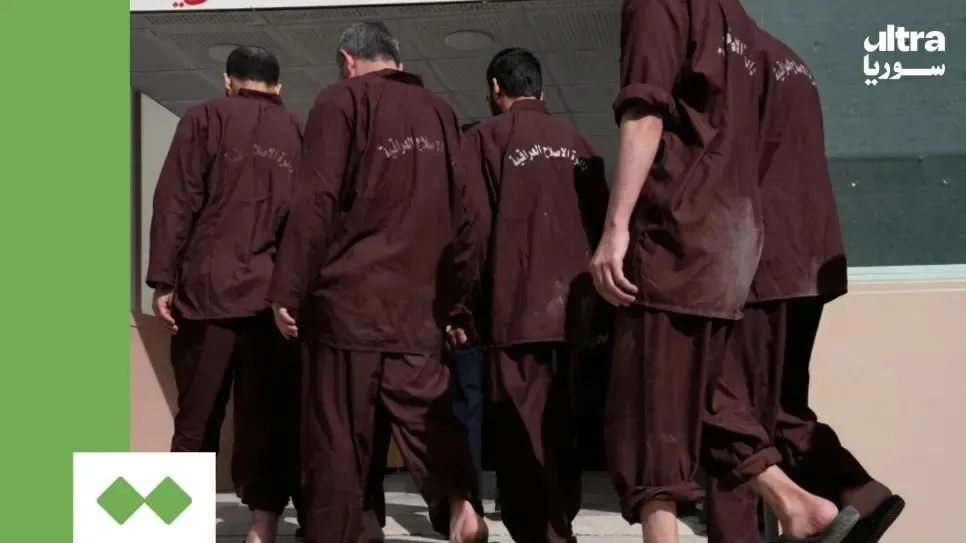
Iraq is preparing to launch trials for ISIS members transferred from Syria by the international coalition—a move that has triggered intense legal and political debate. According to U.S. Central Command, more than 5,700 detainees were moved from Syrian detention facilities to Iraqi custody during a 23-day operation that began on January 21. The transfer forms part of a new security and judicial framework for handling the detainee file.
Officials say the transferred individuals hold citizenship from roughly 60 countries, adding a complex international dimension. Iraqi Justice Minister Khalid Shawani stated that non-Iraqi nationals will be prosecuted under Iraq’s counter-terrorism law, which criminalises affiliation with terrorist organisations, particularly when involvement in crimes inside Iraq or against Iraqi citizens is established. Those against whom no such evidence exists will be repatriated through diplomatic channels. Human rights advocates, however, warn that the move risks sidelining the rights of Syrian victims harmed by ISIS.
A Transfer That Raises Questions
The transfer has prompted scrutiny over its underlying motives. Some observers argue it reflects the international coalition’s lack of confidence in the new Syrian administration’s ability to manage the detainee file legally and securely.
According to informed sources, the agreement emerged from the Syrian judicial system’s lack of readiness a year after the country’s liberation, compounded by the file’s complexity and its entanglement with multiple international actors. The coalition reportedly believes that a case of this scale is better handled in a neighbouring state with prior experience prosecuting ISIS members—namely Iraq—given that the ISIS issue transcends Syrian borders and is inherently international.
Researcher Marwan Hami argues the decision signals a broader loss of confidence, particularly by the United States, in the interim Syrian government’s capacity to manage such a sensitive dossier. He attributes this to the ideological backgrounds of certain officials previously linked to extremist groups. The diminished operational role of the Syrian Democratic Forces (SDF) also pushed the coalition to reorganise its priorities, ultimately paving the way for the detainees’ transfer to Iraq.
A Complex Legal Landscape
International criminal law specialist Al-Mu’tasim al-Kilani notes that Syrian law grants Damascus original jurisdiction over crimes committed on its territory, as stipulated in Article 15 of the Penal Code. Legally, the transfer of detainees does not extinguish this jurisdiction.
However, al-Kilani highlights a key procedural obstacle: initiating public prosecution requires the accused to be physically within the state’s jurisdiction. With the detainees now outside Syrian control, jurisdiction becomes largely theoretical unless formal judicial agreements or structured handovers are established.
Researcher Hami, meanwhile, points to longstanding criticism of Iraq’s counter-terrorism law, which is broad in scope and does not differentiate between international crimes such as war crimes or crimes against humanity. This could result in defendants being tried solely for “membership” in ISIS, without a detailed assessment of individual acts. Such an approach raises concerns about fair-trial guarantees. Human rights organisations therefore advocate for cumulative prosecutions that include international crimes alongside terrorism charges—an approach that would require new Iraqi legislation.
International Evasion and the Marginalisation of Victims
Hami argues that transferring detainees to Iraq reflects a broader pattern among some European states to evade their legal and moral responsibilities toward their citizens who joined ISIS. Despite repeated UN calls to repatriate these individuals from camps in northeastern Syria, many states continue to refuse their return, preferring that they be tried abroad to avoid domestic political fallout. UN reports have raised serious concerns about the lack of fair-trial guarantees in Iraq, making the transfer tantamount to states outsourcing their legal obligations.
Al-Kilani adds that public international law affirms state responsibility for internationally wrongful acts, including failure to prevent, suppress, or prosecute serious crimes committed by their nationals, as outlined in the International Law Commission’s Articles on State Responsibility.
The transfer also effectively excludes Syrian victims from the judicial process. They are not recognised as aggrieved parties before Iraqi courts and have no avenue to participate in truth-seeking or pursue compensation. Crimes committed against them risk being reduced to a generic charge of organisational affiliation, without detailed accountability for the violations they endured.
Related European Concerns
An internal European Union memorandum has warned of escalating security risks following the mass flight of thousands—including families of ISIS fighters—from the Al-Hol camp in northeastern Syria. The memo, circulated by the Cypriot Presidency of the EU Council, said security collapsed after the Syrian government took control of the camp from the SDF, triggering a breakdown of order and services and prompting large-scale flight. EU officials fear extremist groups may exploit the situation to recruit among the escapees.
The warning aligns with findings from Human Rights Watch, which reported that the fate of roughly 8,500 people—mostly women and children held for years without charge—remains unknown following the camp’s closure.
This article was translated and edited by The Syrian Observer. The Syrian Observer has not verified the content of this story. Responsibility for the information and views set out in this article lies entirely with the author.