
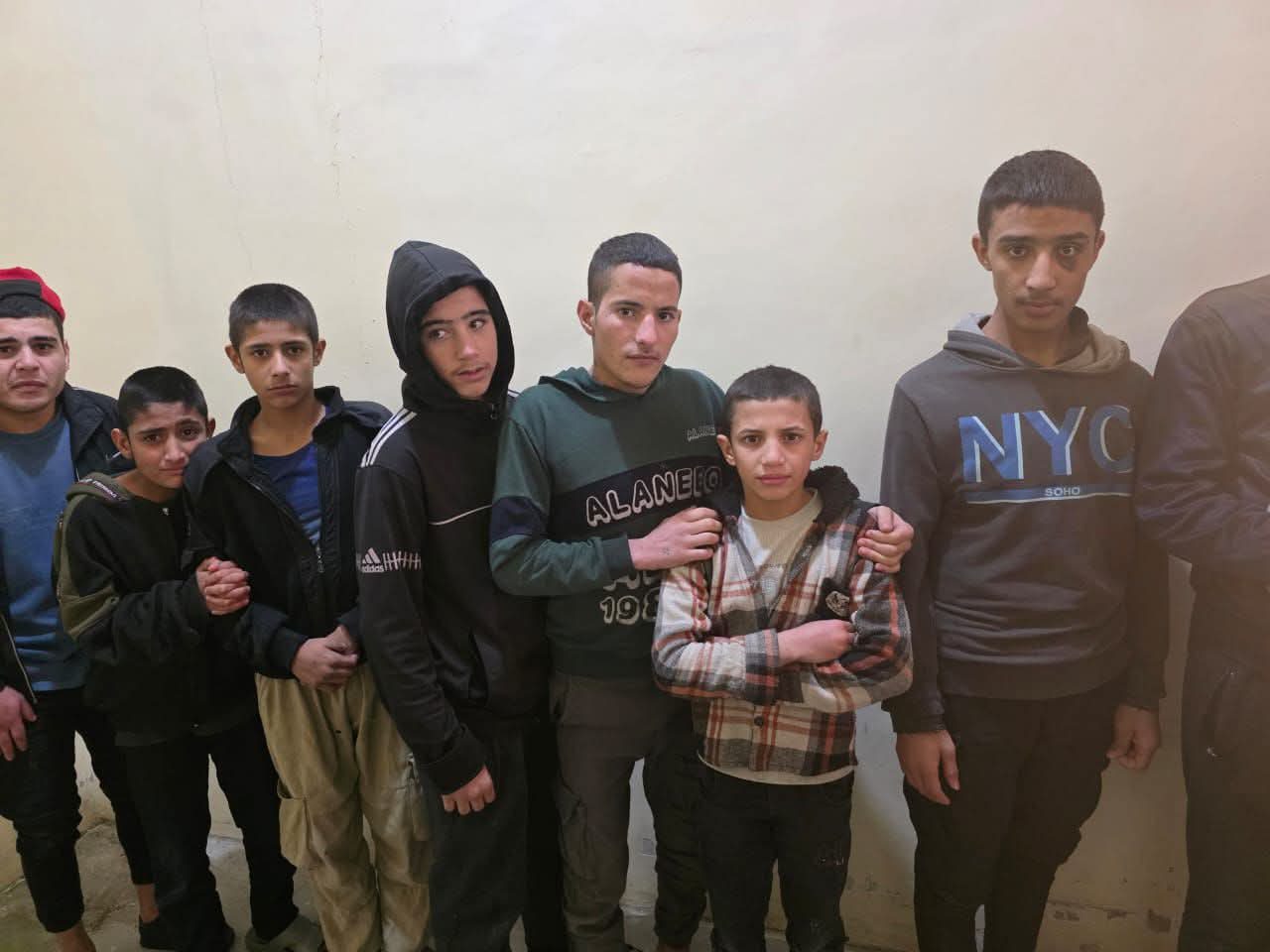
The Syrian authorities’ announcement of the release of 126 minors from Al-Aqtan Prison in Raqqa—after assuming control of the facility from the Syrian Democratic Forces (SDF)—has ignited wide reactions across social media and news outlets.
Images and video clips showing the children leaving the prison spread rapidly online. One video, capturing a child shouting in celebration, became a widely shared symbol among activists. Users turned the footage into memes and designed posts highlighting the moment of liberation, circulating them extensively.
Alongside these visuals came descriptions of the children’s poor physical and material condition. Official media outlets quoted government figures who described the detention of the minors as a “scandal,” while activists and bloggers used hashtags such as ChildrenOfAlAqtan to comment on the event, drawing parallels between SDF practices and those of the former Syrian regime regarding violations of children’s rights.
Harsh Treatment
Interviews with several of the released minors, including accounts of mistreatment, have intensified the debate surrounding past practices inside the prison. Human rights groups have called for investigations into the allegations.
One child testified that he had been subjected to electric shocks, denied food on multiple occasions, and held in prolonged solitary confinement. According to the children’s accounts, their detention was based on vague accusations such as “leaking information” or “photographing military sites.”
These testimonies point to “systematic practices” that contradict the SDF’s international commitments, prompting various parties to question its credibility as an authority capable of managing sensitive humanitarian files.
Unconvincing Responses
Amid the wave of criticism and the online uproar, the SDF’s initial responses appeared hesitant or absent from major communication platforms, which became divided between personalized condemnations and calls for international accountability.
The prison administration affiliated with the Autonomous Administration issued a statement noting that a designated section of the prison housed a number of juveniles—some accused of crimes for which official complaints had been filed, and others who were victims of recruitment and exploitation by the Islamic State (ISIS).
The administration explained that the transfer of these juveniles to Al-Aqtan Prison took place three months earlier due to security circumstances, describing the move as precautionary and organizational. It asserted that the minors were “provided with special treatment in accordance with international standards” and enrolled in rehabilitation programs aimed at behavioral reform and reintegration into society.
A Record of Violations and Unfulfilled Commitments
The handover of Al-Aqtan Prison comes against the backdrop of longstanding accusations against the SDF for failing to uphold its commitments. Reports by Human Rights Watch and Amnesty International indicate that the SDF signed action plans with the United Nations following documented cases of child recruitment in 2022 and 2023, pledging to end the practice and release recruited minors. Subsequent reports, however, documented continued recruitment.
In addition, the Autonomous Administration’s prison authorities have never permitted independent, comprehensive monitoring visits to juvenile detention centers.
According to human rights sources, the SDF has routinely justified the detention of minors on security grounds, describing them either as “affiliated with ISIS” or as “victims in need of protection.”
A Controversy Within a Larger Context
This controversy unfolds as the SDF hands over Al-Aqtan Prison to Syrian authorities under a bilateral agreement, and as the Ministry of Defense announces a 15-day extension of the ceasefire.
In a statement on its official platforms, the Ministry said the ceasefire had been extended “across all operational sectors of the Syrian Arab Army for a period of 15 days,” effective from 23:00 on January 24, 2026.
The Ministry added that the extension supports the American-led operation to transfer ISIS detainees from SDF-run prisons to Iraq.
This article was translated and edited by The Syrian Observer. The Syrian Observer has not verified the content of this story. Responsibility for the information and views set out in this article lies entirely with the author.