
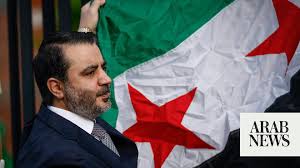
Nine months after the fall of Bashar al-Assad’s regime on December 8, 2024, Syria’s transitional government has begun reshaping its diplomatic corps. Under Foreign Minister Asaad al-Shibani, several long-serving envoys have been recalled, including Bashar al-Jaafari from Moscow and Ayman Soussan from Riyadh. For some, these moves mark the start of a long-overdue overhaul of Syrian diplomacy. For others, they are little more than cosmetic gestures in a system still plagued by old habits.
A Step Toward Rebuilding or a Symbolic Gesture?
On April 8, Shibani announced the restructuring of Syria’s embassies and missions at the direction of Interim President Ahmad al-Sharaa. The recall of diplomats from strategic capitals — Russia, Saudi Arabia, the United States, France, Turkey, and the United Nations — was cast as a bid to “reestablish Syrian diplomacy as a sovereign, independent tool” and align foreign policy with the priorities of the transitional era. Several host governments had already shown reluctance to deal with envoys linked to Assad, reinforcing the urgency of change.
Yet critics see limited vision behind the recalls. Former diplomat Bassam Barabandi argues the process lacks transparency and fails to establish clear recruitment standards. With more than 500 Assad-era diplomats still in place — many accused of undermining the new government abroad — the shake-up risks appearing symbolic rather than substantive. Defectors with professional experience remain sidelined, even as salaries continue to flow to controversial incumbents.
Responding to Expatriates and Building Capacity
Others view the restructuring as a pragmatic response to mounting complaints from Syrian expatriates over deteriorating embassy services, particularly in Germany and Saudi Arabia. Officials say the delay in recalling envoys stemmed from the need to train replacements at the Foreign Ministry’s Diplomatic Institute, part of an effort to professionalize the corps and improve representation for the 5.4 million Syrians abroad.
The changes also come as Syria redefines its regional relationships. A military cooperation agreement with Turkey, a new gas pipeline deal, and improving ties with Arab states like Saudi Arabia all demand envoys capable of navigating shifting alliances and advancing the transitional government’s vision.
Addressing a “Diseased” System
Skeptics warn that personnel changes alone cannot fix what many describe as a “diseased” system. For decades, Syrian diplomacy was subordinated to security agencies, with loyalty valued over competence. Reform, critics argue, must be more ambitious: reintegrating defectors, recruiting skilled professionals, and ensuring decision-making reflects national rather than factional interests.
The stakes are high. With Syria’s economy shattered, 90% of the population living below the poverty line, and tensions simmering with Kurdish forces in the northeast, effective diplomacy is essential for securing aid, managing refugee returns, and navigating regional rivalries. Embassies abroad — many with frozen assets or tarnished reputations — require credible representation if Syria is to rebuild ties with global powers.
A Crossroads for Syrian Diplomacy
For now, the recalls have sparked cautious optimism. Some Syrians on social media hail the break with Assad’s legacy; others demand more transparent mechanisms and deeper reform. Whether al-Shibani’s initiative becomes a true turning point or remains a reshuffle of faces will depend on the government’s ability to train, empower, and deploy a new generation of diplomats untainted by the past.
The coming months will reveal whether Syrian diplomacy is finally set for renewal — or destined to remain a relic of its old order.
This article was translated and edited by The Syrian Observer. The Syrian Observer has not verified the content of this story. Responsibility for the information and views set out in this article lies entirely with the author.