
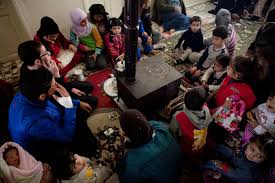
As temperatures drop and winter rains intensify, many impoverished families across Syria are forced to rely on unsafe and unhealthy heating methods to shield their children from the cold. Their limited means prevent them from purchasing quality diesel fuel or suitable alternatives.
In the absence of affordable options, some households resort to burning plastic, nylon, scraps of garbage, and other combustible waste. Others turn to cardboard, paper, worn-out clothing, discarded fabric, old tires, low-grade coal, and even tattered shoes, gathering whatever they can find to generate warmth.
Such practices have become increasingly common in several areas, including camps in northwestern Syria, villages in southern Idlib and northern Hama, the Al-Ghab Plain, and other regions where residents endure harsh living conditions.
Munir Razouq, a father of five and a displaced resident of a camp in the village of Deir Hassan north of Idlib, recounts his struggle with the cold. He explains that he and his children search through trash for anything that might burn—nylon, scraps, any material that can offer a measure of warmth. His modest income as a street vendor, he says, makes it impossible to buy diesel or firewood.
The reasons driving families toward these desperate alternatives are many, yet the overwhelming majority stem from poverty and need. According to the United Nations Development Programme’s 2025 report, nine out of ten Syrians live below the poverty line, and one in four suffers from unemployment.
Speaking to Sham News Network, humanitarian relief worker Abdulsalam Al-Youssef said that reliance on materials such as plastic, animal waste, and worn-out clothing reflects the severe living conditions families face. It also highlights their inability to afford safe heating methods, whose rising prices far exceed their financial capacity.
Al-Youssef added that burning such materials leads to health problems including coughing and respiratory illnesses, especially due to the foul odors they emit. These risks are heightened in camps built in inadequate shelters. He stressed that the solution lies in providing vulnerable families with safe and appropriate heating supplies through humanitarian and local organizations.
Nurse Fatima Al-Mohammad, who works in a local hospital, warned that these heating methods pose serious health hazards. She noted that inhaling smoke from burning plastic and waste irritates the respiratory system and can cause coughing, asthma, bronchitis, eye irritation, and skin inflammation upon contact with the smoke or burned materials.
In the end, many impoverished families have no choice but to rely on unsafe heating methods as purchasing power declines and living conditions worsen. This exposes them to significant physical and health risks, deepens the fragility of their daily lives, and makes the struggle to endure the harsh winter even more difficult.
This article was translated and edited by The Syrian Observer. The Syrian Observer has not verified the content of this story. Responsibility for the information and views set out in this article lies entirely with the author.