
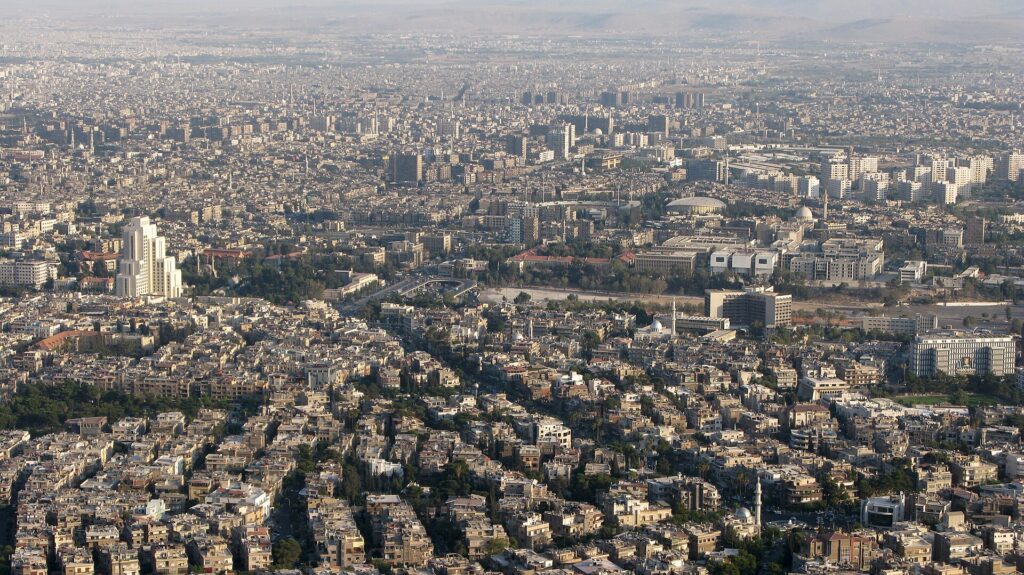
In the upscale districts of Damascus, apartment prices have surged to as high as three million dollars — a staggering figure in a country mired in economic collapse. Far from signaling a genuine recovery, economists say Syria’s real estate boom is a distorted byproduct of currency freefall, market dysfunction, and a desperate search for safe assets.
Field surveys across major cities show a market operating without standards or transparency. Prices fluctuate wildly from one neighborhood to another, driven not by valuation metrics but by individual guesswork. In Damascus’s elite areas of Al-Malki and Abu Rummaneh, the price per square meter now ranges from $2,000 to $4,000, placing even modest apartments between $850,000 and $3 million.
The pattern repeats nationwide. In the Damascus countryside, mid-sized apartments sell for $200,000 to $1 million. In Homs, prices range from $30,000 in outlying districts to $1.5 million in affluent ones. Aleppo — still scarred by years of war — has units listed at $250,000, while in Latakia, prices run from $55,000 to $155,000.
A Distorted Economy, Not a Real Estate Boom
Economists argue that these soaring prices cannot be explained by inflation or construction costs alone. Instead, they reflect a convergence of structural failures.
With the Syrian pound in freefall, real estate has become one of the few remaining hedges against currency collapse. Construction costs have also skyrocketed due to shortages of materials and the high cost of imports. Meanwhile, the near-total absence of mortgage financing means the market is driven almost entirely by cash buyers and foreign remittances — effectively shutting out most Syrians.
“Real estate is no longer a productive sector. It has become a savings tool,” said one Damascus-based economist. With few viable investment options left, individuals and businesses with access to hard currency are pouring money into property, fueling demand that bears little relation to actual housing needs.
A ‘Silent Bubble’ in a Collapsing Economy
Analysts describe the phenomenon as a “silent bubble” — a market where prices rise relentlessly despite falling incomes and a deep recession. The widening gap between asset values and the population’s purchasing power raises concerns about long-term stability.
Legal and administrative chaos further inflates the bubble. Years of conflict have damaged land registries and created widespread disputes over property rights. This opacity increases risk, encourages speculative pricing, and makes transparent transactions nearly impossible.
A supply-demand mismatch is also distorting the market. Mass displacement has concentrated demand in government-held areas like Damascus, while other neighborhoods remain empty. At the same time, many housing units are deliberately kept vacant as a store of value, artificially tightening supply and pushing prices higher.
No Clear Path to Relief
Despite rising demand — particularly as some displaced families return and the rental crisis worsens — meaningful solutions remain out of reach. Experts say stabilizing the market would require a comprehensive approach: establishing a functional mortgage system, regulating building material prices, and overhauling property laws to clarify ownership and provide transparent pricing data.
For now, homeownership remains a distant dream for most Syrians. The million-dollar price tags in Damascus and beyond stand as a stark symbol of an economy in profound distress — a mirage of wealth built on currency collapse, frozen savings, and a frantic flight to safety.
The real estate surge adds yet another layer of complexity to Syria’s economic landscape, already strained by regional conflict, institutional fragility, and the ripple effects of escalating tensions between the United States, Israel, and Iran.
This article was translated and edited by The Syrian Observer. The Syrian Observer has not verified the content of this story. Responsibility for the information and views set out in this article lies entirely with the author.