
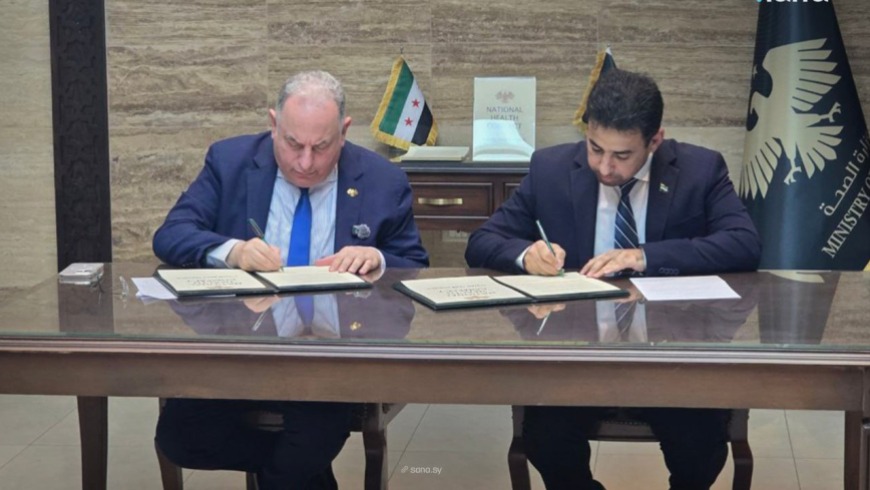
After nearly fifteen years of financial isolation, Syria has taken a step that would have been unthinkable just a few years ago: the Central Bank has restored its banking relationship with the Federal Reserve Bank of New York. The announcement, delivered by Central Bank Governor Abdulkader Husrieh, is more than a bureaucratic milestone. It is a political and economic turning point—one that signals the formal end of Syria’s exclusion from the global financial system.
For a country whose economy has been battered by war, sanctions, and institutional collapse, the reopening of its account at the world’s most influential central bank is nothing short of transformative.
A Return to the Global Financial Map
Governor Husrieh framed the development as a “strategic milestone,” and for once, the rhetoric matches the reality. The restoration of the New York Fed account is not symbolic. It allows Syria to manage foreign reserves, conduct international transactions, and reconnect with the global banking architecture from which it has been severed since 2011.
For more than a decade, Syrian banks were locked out of SWIFT and forced to rely on costly, opaque intermediaries to settle even basic trade payments. The reopening of the account restores a level of transparency and efficiency that the economy has desperately lacked.
It also sends a message to international financial institutions: Syria is back in the system, and the system is willing to engage.
The U.S. Policy Shift Behind the Scenes
This moment did not materialize in a vacuum. It is the culmination of a sweeping reversal in U.S. policy toward Syria.
Beginning in mid-2025, Washington dismantled the sanctions architecture that had defined its Syria policy for more than a decade. President Trump’s June 30 executive order revoked six foundational sanctions orders. The Caesar Act—once the centerpiece of U.S. pressure—was repealed in December. The U.S. even removed Hay’at Tahrir al-Sham from its Foreign Terrorist Organization list and lifted the SDGT designation from President Ahmed al-Sharaa.
These decisions cleared the legal and political obstacles that had long prevented Syria from re-entering the global financial system. The reopening of the New York Fed account is the clearest evidence yet that the shift is not theoretical—it is operational.
A Vote of Confidence from International Institutions
The timing of the announcement is no coincidence. It follows a notably upbeat assessment from the International Monetary Fund, whose staff visited Damascus in February. The IMF reported accelerating economic activity, slowing inflation, and a stabilizing exchange rate—developments that would have been inconceivable under the old sanctions regime.
The Fund has agreed to provide extensive technical assistance to the Ministry of Finance and the Central Bank, laying the groundwork for the eventual resumption of Article IV consultations. In the world of international finance, that is the equivalent of being invited back into polite society.
The Reconstruction Horizon
The implications for Syria’s reconstruction are profound. The World Bank estimates the cost of rebuilding at more than $200 billion—a figure that no country can shoulder alone. A functioning relationship with the New York Fed is a prerequisite for attracting the foreign direct investment needed to rebuild infrastructure, restore services, and revive industry.
Already, Gulf states have pledged more than $28 billion for energy and transport projects. But without a credible banking channel to move capital in and out of the country, such commitments would remain theoretical. The restored Fed account provides the institutional backbone investors require.
It also lowers the cost of imports, enables the official transfer of remittances from the Syrian diaspora, and gives international partners confidence that financial settlements can be executed cleanly and legally.
A Long Road Ahead
None of this means Syria’s economic crisis is over. The country still faces structural challenges: weak institutions, a fragile banking sector, and the need for deep regulatory reform. But the reopening of the New York Fed account marks a decisive break with the past. It is the moment Syria’s financial isolation ended—not in speeches or aspirations, but in the hard mechanics of global banking.
For a country emerging from war and sanctions, that alone is historic.
The question now is whether Syria’s leadership can translate this opening into sustained reform and inclusive growth. The door to the global financial system has reopened. What the country does with that access will determine the next chapter of its economic recovery.
This article was translated and edited by The Syrian Observer. The Syrian Observer has not verified the content of this story. Responsibility for the information and views set out in this article lies entirely with the author.