
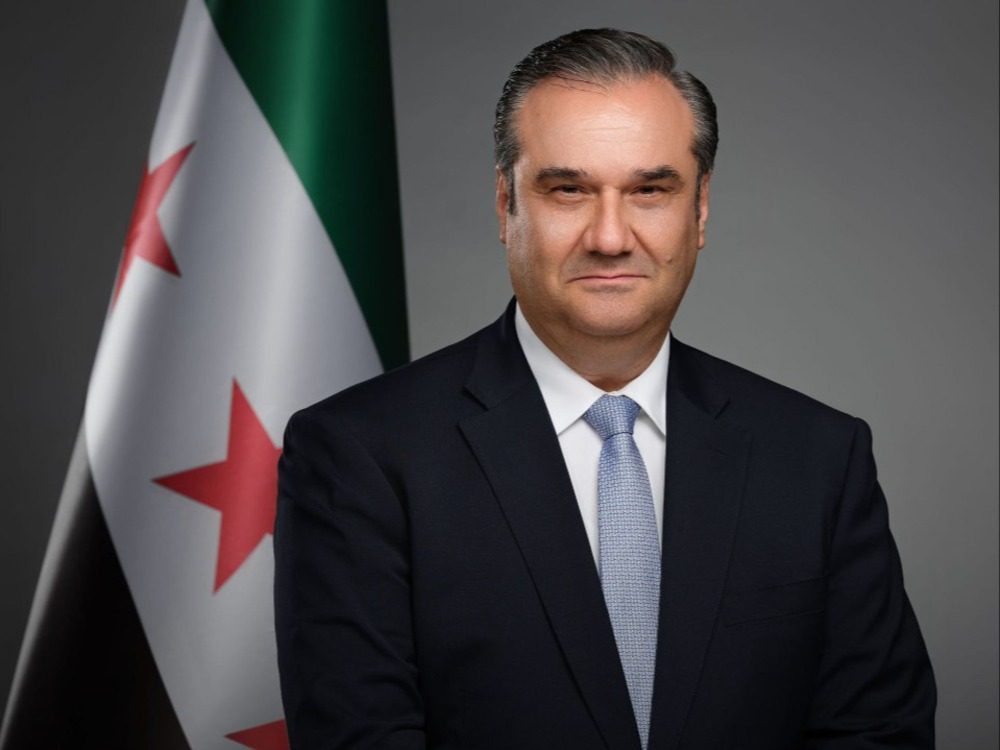
Syria’s Central Bank Governor, Abdul Qader Husrieh, has unveiled plans to replace the country’s existing banknotes under the supervision of a specialised U.S. delegation, marking a major milestone in efforts to stabilise the national economy and restore confidence in the Syrian pound.
In an exclusive interview with Al-Ikhbariya during a high-level visit to the United States, Husrieh — joined by Finance Minister Muhammad Yasser Barniya — said the initiative was part of a wider strategy to modernise Syria’s financial system. The delegation attended nearly 60 meetings during the annual sessions of the International Monetary Fund (IMF) and World Bank, building on foundations laid at April’s spring meetings.
The meetings included engagements with the U.S. Treasury Department, the Federal Reserve, American consultancy firms, the U.S. Chamber of Commerce, and financial giants such as Visa, Mastercard, and Citibank.
Husrieh described an “unprecedented interest” in Syria’s reconstruction, calling the support “unique” among post-conflict states over the past quarter-century. On 17 October, he met with Visa’s Global Markets CEO, Oliver Jenkyn, to explore the company’s potential entry into the Syrian market — a development he said reflects warming international financial ties in the wake of U.S. sanctions relief.
Global Integration and Institutional Reform
The talks in Washington, Husrieh explained, are integral to Syria’s broader recovery strategy. They aim to support Central Bank reforms and reintegrate the Syrian financial system into global markets. The outcomes, he said, include substantial commitments to institutional development and technical assistance across multiple domains, helping align Syria’s operations with international standards.
One landmark agreement focuses on regulating digital currencies in Syria — described by Husrieh as a “critical evolution” — as part of an overarching vision to transform the financial sector. He emphasised that daily efforts are now directed at freeing Syria’s banking institutions from more than five decades of isolation, neglect, and sanctions — constraints that continue to impact citizens’ daily lives.
A U.S. delegation specialising in payment systems is scheduled to visit Syria in mid-November to assess infrastructure and recommend improvements. Further missions will support financial sector reform and capacity building, forming a layered programme of assistance.
Supporting the Syrian Diaspora
Looking to future visits, Husrieh highlighted the need to prioritise financial and trade links between Syria and the United States. Central to these discussions is the potential reactivation of Syria’s account at the New York Federal Reserve — a move he described as transformative, potentially opening up access to correspondent banking relationships and facilitating wider international engagement.
Easing remittances from the Syrian diaspora remains a key goal. Husrieh noted progress in establishing direct banking channels while ensuring strict compliance with anti-money laundering regulations. Meetings with members of the U.S.-based Syrian community focused on the risks associated with informal remittance systems and encouraged reliance on licensed Syrian banks and their approved partners to reduce fraud and extortion.
Regional Cooperation: Arab Transfers Network
Husrieh also announced that Syria has signed an agreement with the Arab Monetary Fund to join the inter-Arab transfers network, describing this as a daily step towards economic recovery. Collaborations with regional banks, including Saudi institutions, have already facilitated riyal-denominated transactions — a pragmatic measure in overcoming persistent financial sector challenges.
Appointed Central Bank Governor in April 2025, Husrieh — a Damascus-born economist and graduate of the American University of Beirut — brings decades of experience in monetary policy and regulatory reform. His tenure coincides with far-reaching currency reforms, including a decision in August to revalue the Syrian pound by removing two zeros. New banknotes are expected to be introduced by December.
The printing of the new currency has shifted from Russia to partners in the UAE and Germany, reflecting a shift in Syria’s international economic alignments.
As the country tentatively navigates its post-war recovery — with World Bank projections forecasting 1% growth for 2025 — these reforms reflect a determined push for monetary sovereignty and long-term stability. Husrieh’s announcements, widely echoed across Syrian media and social platforms, have sparked cautious optimism about a long-awaited financial revival.
This article was translated and edited by The Syrian Observer. The Syrian Observer has not verified the content of this story. Responsibility for the information and views set out in this article lies entirely with the author.