
In the heart of Damascus, within the Conference Palace that has borne witness to the dawn of a new political chapter, the Syrian state announced the arrival of the “new lira” on Monday evening. This marks a significant monetary and political milestone, coming one year after the fall of the former regime, and symbolises a definitive break with the past.
President Ahmed Al-Shar’a unveiled the redesigned currency, which has had two zeros removed. He described the move as more than a technical financial measure, calling it a sweeping statement heralding the end of a period “no one mourns” and the beginning of a future Syrians—and the region—aspire to embrace.
Removing Zeros and Simplifying Transactions
In a speech marked by frankness, Al-Shar’a likened the currency overhaul to a “delicate surgical operation” on the national economy, aimed at reshaping the monetary landscape and restoring public confidence in the Syrian pound as a cornerstone of economic renewal.
He clarified that removing zeros would not, in itself, improve purchasing power or enhance the exchange rate. Rather, it was designed to ease everyday transactions and calculations after rampant numerical inflation had rendered the five-thousand-lira note worth barely half a dollar, severely complicating routine commerce.
This imbalance, he stated, has now been rectified. Under the new system, the 500-lira note corresponds to the former 50,000-lira denomination, offering greater ease of use. Al-Shar’a emphasised, however, that genuine economic recovery hinges on increased production, reduced unemployment, and the revitalisation of banking systems capable of breathing life back into the country’s economy.
A New Identity for the Banknote
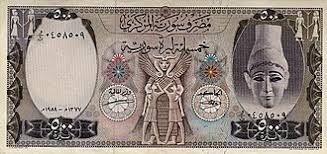
The president also underscored that the new currency’s visual design reflects a renewed national identity and a deliberate departure from the glorification of individuals. The design, he explained, draws on symbolic imagery rooted in the Syrian landscape—because people, ultimately, come and go.
He noted that multiple firms had been contracted to manage the currency exchange process, and that new policies would soon emerge via what he termed an operations room within the Central Bank.
Al-Shar’a called for a new public culture during the transition period, one that outlaws speculative profiteering and ensures liquidity is introduced gradually to avoid fuelling inflation.
A Storm of Debate and Division
Beyond economics, the artistic design of the new currency has sparked fierce debate across Syria and on social media platforms. The banknotes have entirely new imagery, replacing portraits of historical figures, monuments, and ancient architecture with symbolic illustrations of Syria’s natural bounty and wildlife.
The Damascene rose, mulberries, oranges, wheat, and olives dominate the notes, alongside depictions of Arabian horses, sparrows, and gazelles—a conscious effort to avoid favouritism towards any region or political affiliation.
However, this “botanical” aesthetic drew sharp criticism from those who saw the omission of Syria’s ancient heritage as an attempt to erase its civilisational identity. Detractors argued that replacing millennia-old cultural symbols with what they described as an “agricultural catalogue” reflects an ideology that fears antiquity and regards it as idolatrous. They warned that Syria risked being stripped of its historical depth and reduced to a newly minted entity divorced from its past.
Others ridiculed the economic decision itself, dismissing it as a superficial gesture lacking structural reform. They likened it to cosmetic surgery—deleting zeros without addressing the root causes of economic collapse. With biting sarcasm, some questioned why Syria’s architectural heritage, which had withstood centuries, should vanish from its banknotes by mere administrative decree.
Supporters of the New Design: A Currency with the Spirit of Life
Conversely, a strong wave of support has emerged in defence of the new design. Advocates describe it as modern, coherent, and in line with global currencies—praised for its vibrant colours and clear denominations. They argue that the design strengthens national belonging without favouring any single region, and that its authentic motifs, notably the Seljuk octagon at the centre of the banknote, symbolise the continuity of Syrian culture and its Islamic and Eastern roots.
To its supporters, the new currency—with its “joyful” spirit—celebrates life, growth, and natural beauty. It marks a move away from idolising individuals or clinging to the ruins of a past already ravaged by destruction.
Caught between economic hope for a new chapter and cultural anxiety over the erasure of historical identity, the new Syrian lira now stands as a litmus test of public trust in the state during this transitional period. Ultimately, Syrians remain most concerned with their daily living conditions—whatever the imagery on their currency might be.
This article was translated and edited by The Syrian Observer. The Syrian Observer has not verified the content of this story. Responsibility for the information and views set out in this article lies entirely with the author.