
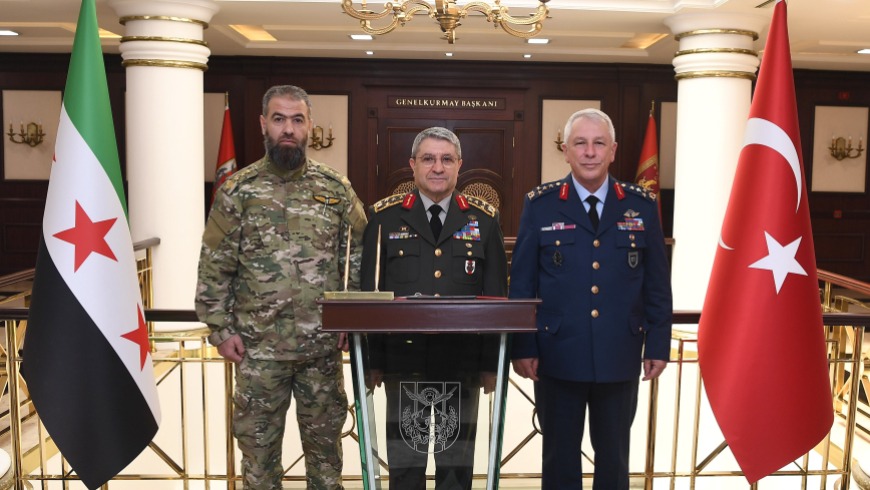
On 8 September 2025, Turkey’s Chief of the General Staff, General Selçuk Bayraktaroğlu, hosted Brigadier General Aassem Rashed Hawary, Commander of the Syrian Air Force and Air Defence, during an official visit to Ankara. The meeting, which was also attended by Turkish Air Force Commander General Ziya Cemal Kadıoğlu, signals deepening military ties between Turkey and Syria’s post-Assad administration.
The Turkish Ministry of Defence announced the visit via a statement on X, confirming that Hawary had been invited by Kadıoğlu. While the discussions were not disclosed in detail, they are understood to align with a broader military cooperation agreement signed between Ankara and Damascus in August 2025. The agreement seeks to enhance Syria’s defence capabilities through the provision of military equipment, logistical support, and potential training initiatives.
A New Chapter in Military Cooperation
The August accord represents a major development in bilateral relations, following several months of dialogue involving foreign and defence ministers, as well as intelligence officials from both countries. According to a source within Turkey’s Ministry of Defence, the memorandum of understanding centres on joint training, advisory support, intelligence exchange, and logistical and material assistance. “Turkey will continue to support Syria in combating terrorism and strengthening its defence and security structures,” the ministry stated, framing the agreement as part of Turkey’s broader regional security strategy.
This latest meeting builds upon prior engagements. In July 2025, Hawary held talks with Kadıoğlu and then-Chief of Staff Metin Gürak at the IDEF 2025 defence exhibition in Istanbul—an event seen as a milestone in the ongoing normalisation process. Turkish military backing is widely viewed as part of Ankara’s strategic realignment, aimed at supporting Syria’s interim government under Ahmed al-Sharaa following the collapse of Bashar al-Assad’s regime in December 2024.
Regional Implications
The burgeoning military partnership reflects Ankara’s recalibrated geopolitical posture, particularly its focus on regional stability and counterterrorism. President Recep Tayyip Erdoğan has repeatedly emphasised Turkey’s role as a guarantor of regional security. Posts shared on X in August 2025 reiterated his commitment to safeguarding all Syrian communities, including Kurds, and to positioning Turkey as a refuge for the oppressed. The defence agreement also dovetails with Turkey’s ongoing advancements in military technology, notably its deployment of advanced air defence systems—equipment that may, in time, bolster Syrian capabilities as well.
However, lingering concerns surround Syria’s fragile transition. Reports from the Syrian Observatory for Human Rights and Amnesty International have documented over 3,000 extrajudicial executions since December 2024, raising serious questions about the interim government’s adherence to human rights standards. These issues risk complicating Turkey’s engagement, particularly as Ankara faces both domestic and international scrutiny over its growing military involvement in Syrian affairs.
The Ankara meeting marks a pragmatic step towards reconstructing Syria’s defence infrastructure with Turkish support. Yet the long-term success of this collaboration will depend not only on military assistance, but also on Syria’s ability to address the broader challenges of governance, accountability, and national reconciliation in the post-Assad era.
This article was translated and edited by The Syrian Observer. The Syrian Observer has not verified the content of this story. Responsibility for the information and views set out in this article lies entirely with the author.