
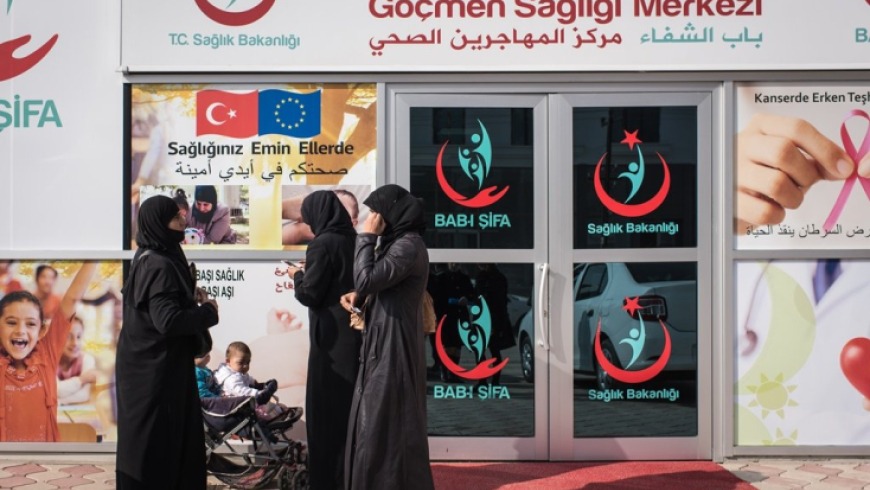
On 1 January 2026, the era of comprehensive free healthcare for Syria’s 2.3 million refugees in Turkey will come to a quiet end. A new presidential decree aligns Syrian access to medical services with that of Turkish citizens: no more special regime, no more automatic state coverage. From now on, healthcare will be tied to social security contributions (SGK), private insurance, or demonstrated financial hardship. Though long signposted, the implications are only now becoming widely understood.
How Healthcare Works for Turks (and Now for Syrians)
For Turkish citizens, healthcare is never entirely free:
- Formally employed individuals pay compulsory SGK premiums and receive near-complete coverage, with minor co-payments for prescriptions.
- Uninsured individuals can still access emergency care entirely free of charge — a rarity globally, even compared with the United States.
- Low-income citizens can apply for state-sponsored full coverage (formerly known as the yeşil kart); if approved, the government covers all medical expenses.
- Tourists and uninsured foreigners pay moderate fees — still significantly lower than in most Western countries, contributing to Turkey’s booming health tourism sector.
From January, Syrians will be subject to the same rules.
What Changes for Syrians on 1 January?
- Legally employed or insured Syrians
No change. Those already paying SGK contributions or holding private insurance will continue to receive full coverage. - Unemployed or impoverished Syrians
Must apply through the Directorate General of Migration Management (Göç İdaresi) for means-tested state coverage. If approved, expenses will be reimbursed retroactively. - Informally employed or uninsured Syrians
Will be treated as uninsured Turks or tourists: payment required. Emergency services remain completely free for all, regardless of status or nationality.
Driving Syrians into Formal Employment
Since October 2024, Syrians under temporary protection have been exempt from Turkey’s typically stringent foreign work-permit regime. Any registered Syrian can obtain a “work-permit exemption document” via the e-Devlet portal in minutes and work legally across all sectors (except NGOs, which still require standard permits). Employers are then obligated to register them and make SGK contributions as they would for any Turkish citizen.
Despite this, only a small number of Syrians have formalised their employment. The reason: free healthcare was previously guaranteed regardless of employment status, eliminating any incentive to insist on SGK registration.
The new decree changes that dynamic entirely. From January, formal employment becomes the clearest path to secure free or subsidised healthcare. Ankara is betting that hundreds of thousands of Syrians will now demand contracts and social security contributions from their employers.
The Other Side: Employers and Enforcement
Many Turkish (and some Syrian) employers prefer informal arrangements: reduced wages, no SGK contributions, and greater profits. To counter this, Interior Minister Ali Yerlikaya has announced tougher inspections and harsher penalties in 2026. The message is unequivocal: exploiting Syrian workers will carry consequences.
Return, Integration — or Both?
Turkey’s Syrian refugee population has declined from a peak of 3.7 million in 2021 to approximately 2.3 million today. Since the fall of Assad, more than 550,000 have returned — the daily rate has slowed from 3,000 to under 1,000, but the trend continues.
Ankara’s logic is evident:
- Free healthcare was one of the last significant incentives for remaining in Turkey.
- Removing it prompts more Syrians to consider returning, especially with security improving in northwest and central Syria.
- For those who remain — and many will — the new policy accelerates integration: contribute to the system and receive the same rights and responsibilities as citizens, paving the way towards a status beyond “temporary protection”.
In essence, the healthcare decree is not simply a cost-cutting measure — it is a redefinition of the social contract. Turkey is telling its Syrian guests: you are no longer emergency cases; you are long-term residents who must contribute like everyone else — or, if you prefer, the road home is open and secure.
From January, a doctor’s visit will no longer be a gift from the Turkish state. It will become a right earned through work, a reimbursement based on need, or a service paid for directly — just as it is for the Turkish citizen in the next bed. After fourteen years, the Syrian refugee experience in Turkey is being normalised, through integration or dignified return.
This article was translated and edited by The Syrian Observer. The Syrian Observer has not verified the content of this story. Responsibility for the information and views set out in this article lies entirely with the author.