
Once again, Damascus has welcomed General Yunus-Bek Yevkurov, Russia’s Deputy Minister of Defence. The deliberations he held with Syrian Defence Minister Murhaf Abu Qasra are of considerable importance, following on from earlier rounds of talks in Moscow and Damascus. Yet, the true focus of this visit lies in Yevkurov’s journey—accompanied by officials from the Syrian Ministry of Defence—into the volatile southern regions of Syria, where tensions are escalating due to increasing Israeli incursions into Syrian territory.
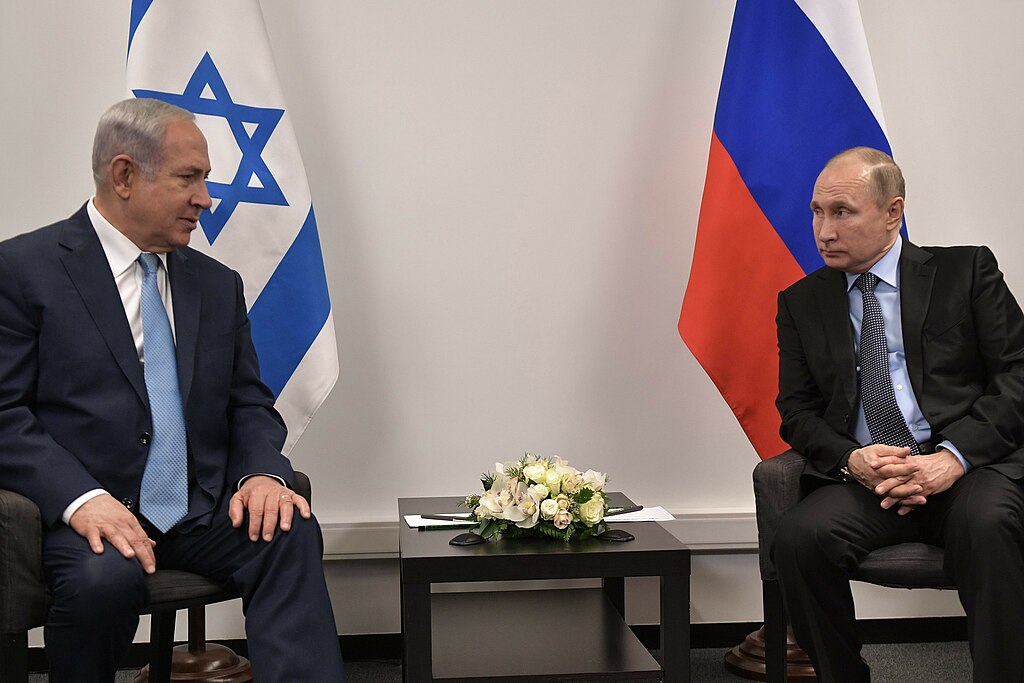
Of particular note is the coordination that appears to have preceded Yevkurov’s arrival, suggesting a tacit understanding between Moscow and Tel Aviv. He landed in Damascus on Sunday, 16 November, leading a delegation from the Russian Ministry of Defence, just hours after President Vladimir Putin held a phone call with Prime Minister Benjamin Netanyahu the previous evening. Syria was high on the agenda in that exchange, and it is widely assumed that Moscow informed Tel Aviv of Yevkurov’s southern itinerary. Whether for the sake of regional coordination or simply to ensure safe passage, the Kremlin reported that Putin and Netanyahu discussed developments in Gaza following the ceasefire, the Iranian nuclear programme, and efforts to reinforce long-term stability in Syria.
Curbing Israel’s Transgressions
These discussions are not isolated; they reflect a broader effort by Syrian authorities to establish lasting security and stability throughout the country. At the forefront of this mission is the need to confront Israel’s repeated breaches of Syria’s territorial integrity and its persistent interference in internal affairs. Russia, attuned to Damascus’s concerns over these provocations in the south, recognises the danger they pose to Syria’s broader reconstruction and recovery.
In this context, the Russian leadership sees an opportunity to support Syria’s calls for calm in the occupied Golan and to contain Israeli actions. Such efforts may create a more favourable environment for renewed bilateral ties, grounded in the realities of a newly emerging Syria. This would serve both Syrian interests and Russia’s strategic aims, helping Moscow to maintain its influence across the Levant.
What is clear for now is that Yevkurov’s presence in southern Syria was not a ceremonial visit. His tour was guided by a military mandate, primarily to conduct a close assessment of the area and consider potential deployments of Russian forces. These observations are expected to inform strategic recommendations for Russian political decision-makers. The goal is to initiate a diplomatic push, urging stakeholders to embrace a plan that could stabilise Syria and prevent a descent into renewed conflict—one that could spread beyond Syria’s borders and jeopardise regional and global security.
The question naturally arises: are Russia and Damascus developing an independent strategy for restoring southern Syria, or are these moves the result of preliminary understandings with the Trump administration and Netanyahu’s government?
Either way, Moscow recognises the opportunity to reclaim its role as guarantor of calm along the Syrian-Israeli frontier. Beyond bolstering relations with Damascus, such a role would reinforce Moscow’s long-held belief that cooperation between Russia and the United States is not only possible but essential to resolving major international crises.
If Russia’s current initiatives in southern Syria have not already received American backing, President Putin may find little resistance in securing it—at the very least, through political support or by encouraging Tel Aviv to respond positively to these efforts.
The 2017 Accord in Southern Syria
Russia has not forgotten that Syria’s southern provinces were among the few issues where Moscow and Washington found rare common ground during Donald Trump’s presidency. In 2017, Presidents Putin and Trump agreed on security arrangements for the southern provinces of Daraa, Quneitra and Suweida. The agreement tasked Russia with distancing Iranian forces and Tehran-aligned militias from the area.
It is difficult to imagine Trump—who often boasts of ending multiple wars—rejecting renewed Russian overtures or resisting a fresh partnership with Putin in stabilising southern Syria. He may even welcome the chance to replicate the 2017 accord. Trump’s past declarations suggest a sincere interest in Syrian stability, notably during a White House meeting with President Ahmead al-Sharaa, where he pledged: “We shall exert every ounce of our endeavour to champion Syria’s triumph. Syria is a land of grandeur, its people a tapestry of nobility; we yearn to witness its ascent alongside the region’s luminaries. We envision a Syria transfigured into a paragon of prosperity.”
As for Israel, if it refuses to engage constructively with Russia’s efforts to restore calm in southern Syria and return to the status quo before 8 December—by halting incursions and ending interference in Syrian affairs—President Putin has several ways to remind Netanyahu of past cooperation. He might recall how Russian involvement during a period of Syrian weakness enhanced Netanyahu’s domestic image: through the repatriation of a tank captured in 1982, held for decades in a Russian museum, and the return of Sergeant Zachary Baumel’s remains to Israel, both delivered with solemn ceremony.
Such gestures are not easily dismissed, and Netanyahu is likely to respond more positively if these initiatives align with a broader Russian-American understanding. This would also offer Trump a diplomatic success in preventing a new Israeli-Syrian conflict before it erupts.
This article was translated and edited by The Syrian Observer. The Syrian Observer has not verified the content of this story. Responsibility for the information and views set out in this article lies entirely with the author.