
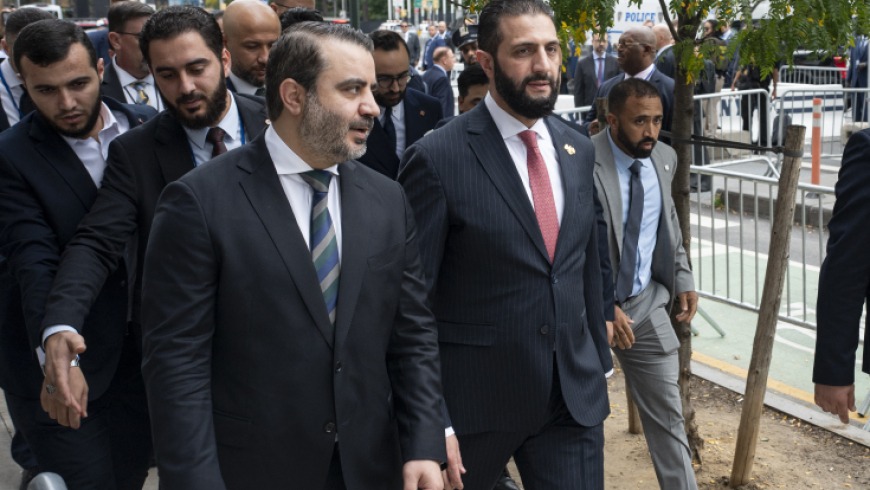
The Trump administration is pushing for the repeal of a key sanctions law targeting Syria, in a move reported by The Wall Street Journal to coincide with an upcoming historic meeting between U.S. President Donald Trump and Syrian interim President Ahmad al-Sharaa. The proposed repeal of the Caesar Act is aimed at facilitating Syria’s post-war reconstruction and reintegration into the international financial system, amid efforts to consolidate stability following over a decade of civil conflict.
However, the path to repealing the Caesar Act remains politically complex. The House of Representatives, which has yet to approve the measure, is currently in recess. Any formal consideration would require lawmakers to end their leave and reconvene for extended negotiations — a process that could delay or even derail the effort, given the need for bipartisan consensus on such a significant policy shift.
The Caesar Syria Civilian Protection Act, passed in 2019, imposed sweeping sanctions on Syria’s economy and institutions, significantly hindering post-war recovery efforts. The White House argues that lifting these restrictions is vital to stabilising the country, attracting long-term investment, and preventing a resurgence of conflict.
President Sharaa, once a senior figure in a U.S.-designated terrorist organisation, has since repositioned himself as a moderate nationalist. He played a central role in the 2024 military campaign that led to the collapse of Bashar al-Assad’s regime, and his administration has since begun a cautious programme of political and security reforms. His upcoming visit to Washington is the first by a Syrian head of state to the White House.
While the U.S. Senate has already passed legislation supporting the repeal of the Caesar Act, the measure faces resistance in the House of Representatives. Lawmakers remain divided, with some citing concerns about Sharaa’s past affiliations and the involvement of former hard-line rebel factions in recent sectarian violence.
Trump administration officials, however, contend that maintaining the sanctions risks derailing progress and exacerbating instability. Cities across Syria remain in ruins, and the economy is struggling under the weight of war and isolation. The administration has already issued a temporary suspension of sanctions via executive order, but is pushing for full repeal to provide long-term clarity and encourage foreign investment.
Families of Americans detained or missing in Syria have also backed the repeal, arguing that sanctions impede forensic investigations and humanitarian access, particularly to sites of mass graves that could hold crucial evidence.
The proposed repeal, part of the broader National Defense Authorization Act, includes provisions requiring the U.S. president to report annually on Syria’s progress in areas such as human rights, counterterrorism, and diplomatic relations, including with Israel. Sanctions could be reimposed through new legislation if Syria fails to meet these benchmarks.
Despite these safeguards, several prominent lawmakers remain cautious. Rep. Brian Mast, chairman of the House Foreign Affairs Committee, has yet to endorse the repeal, and his office has not commented on the ongoing negotiations.
Analysts and humanitarian groups warn that without immediate aid and reconstruction, millions of Syrians returning home face insurmountable challenges. “The key now is a surge in support for Syrians on the ground,” said Natasha Hall of the Center for Strategic and International Studies. “It will take time for investment to reach ordinary people, but without that foundation, recovery cannot begin.”
President Trump and President Sharaa’s meeting is expected to mark a significant turning point in U.S.–Syria relations, with the fate of sanctions — and Syria’s post-war future — hanging in the balance.