
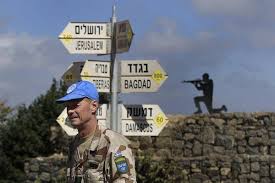
The arrival of a United Nations fact-finding committee in Syria’s Quneitra province on 13 December marks a significant step in efforts to document ongoing Israeli military activities in the region. The mission comes against a backdrop of daily incursions, detentions, and military checkpoint installations by Israeli forces — actions which Syrian sources describe as repeated violations of national sovereignty.
According to local media, the committee intends to assess the impact of Israeli operations on civilian life, including damage to property and farmland, and to collect testimonies from residents affected by the military presence. The visit, however, coincides with a marked escalation in Israeli operations, casting doubt on the effectiveness of international monitoring efforts in restraining unilateral military action.
Escalating Military Activity
Just hours before the committee’s arrival, an Israeli unit comprising eight vehicles entered the village of Sayda al-Hanout in southern Quneitra. Soldiers established a checkpoint and carried out home searches, reportedly under the pretext of locating weapons. According to a local activist, who requested anonymity for security reasons, troops questioned residents about internal Syrian affairs and attempted to gain favour by offering humanitarian aid — an overture firmly rejected by the villagers.
Similar patterns of activity have been documented across the governorate. On 12 December, two men detained by Israeli forces between Umm Batna and al-Ajraf were released. That same evening, a military patrol with six vehicles advanced into Western and Eastern al-Samadaniyah in northern Quneitra, underscoring the sustained Israeli presence across multiple zones of the province.
Civilian Confrontations and Injuries
A more confrontational episode took place on 9 December, when Israeli forces moved into the vicinity of Jaba, Khan Arnabeh, and Ain Nuriyeh. Temporary checkpoints were established using troop carriers and military vehicles. In Khan Arnabeh, civilians attempted to protest the patrol’s presence by throwing stones — a response met with live fire from Israeli troops, injuring at least three individuals: Hamza al-Dabbak, Mohammed al-Dabbak, and Nasser al-Bakr.
Further reports indicate that Israeli forces also opened fire on a civilian near al-Hamidiyah, although no details were released regarding his condition. Notably, one of the checkpoints was set up along the “Peace” highway, a critical route connecting Damascus with Quneitra, at the very moment a Syrian Interior Ministry convoy was returning from the capital. Although Israeli forces later withdrew, the highway had already been closed and reopened only after the confrontation subsided.
Territorial Encroachment and Strategic Positioning
The scope of Israeli military encroachment is extensive. According to local monitoring, Israeli forces have asserted control over an area spanning 346 square kilometres and established nine military bases. Eight of these are located within Quneitra province, including positions at Mount Hermon Observatory, the Teloul al-Homr highlands, Qurs al-Nafl in Hadar, and the Jbata al-Khashab forest — which reportedly houses a helicopter landing site. Other bases include locations in al-Hamidiyah, al-Adnaniyah, Tel Ahmar al-Gharbi in Kodna, and the ruins of Quneitra city. A ninth base was constructed at al-Jazira Dam in western Daraa, extending the operational footprint into the Yarmouk Basin.
This strategic build-up suggests a calculated Israeli posture aimed at consolidating control over a buffer zone extending from the occupied Golan Heights into Syrian territory. The physical presence is reinforced by a network of 260 temporary checkpoints, which not only fragment civilian movement but also serve to intimidate local populations.
Resistance and Rejection
Despite pressure and military coercion, local resistance remains evident. In Western al-Samadaniyah, Israeli forces installed a metal gate at the village entrance, effectively isolating it. Several young men were detained during this period; while some were released after hours, 34 remain in custody. The Quneitra Media Directorate reported at least three attempts by Israeli settlers to establish a settlement inside Quneitra — all thwarted by Israeli military authorities, who returned the settlers to the Golan Heights.
Efforts to sway public opinion through humanitarian gestures have also failed. Reports confirm that Israeli forces distributed food aid in multiple villages, which residents rejected and, in some cases, publicly burned. Such acts reflect a widespread refusal to legitimise Israeli presence or accept incentives viewed as occupation tactics.
International Oversight and Limitations
The United Nations committee’s arrival, while symbolically significant, highlights the limitations of international oversight in contested zones where power asymmetries favour military actors. With Israeli forces expanding their footprint and altering the demographic and logistical landscape of Quneitra, questions arise regarding the efficacy of diplomatic instruments in deterring unilateral aggression.
Moreover, the UN mission faces the challenge of operating in an environment where civilians are caught between geopolitical rivalry and the erosion of sovereign control. The outcome of their investigation — and whether it leads to tangible consequences — remains uncertain, particularly in light of continued Israeli defiance of international criticism.
As regional tensions simmer and military manoeuvres persist, the situation in Quneitra underscores the broader volatility of the Israeli–Syrian frontier and the geopolitical vacuum left by weakened state institutions and stalled diplomatic processes.
This article was translated and edited by The Syrian Observer. The Syrian Observer has not verified the content of this story. Responsibility for the information and views set out in this article lies entirely with the author.