
The Turkish Embassy in Damascus has announced the start of installing the HTRS-100 Air Traffic Surveillance Radar System—manufactured by the Turkish defense electronics company ASELSAN—at Damascus International Airport. The move is being presented as a significant structural upgrade to the aviation infrastructure of the Syrian capital.
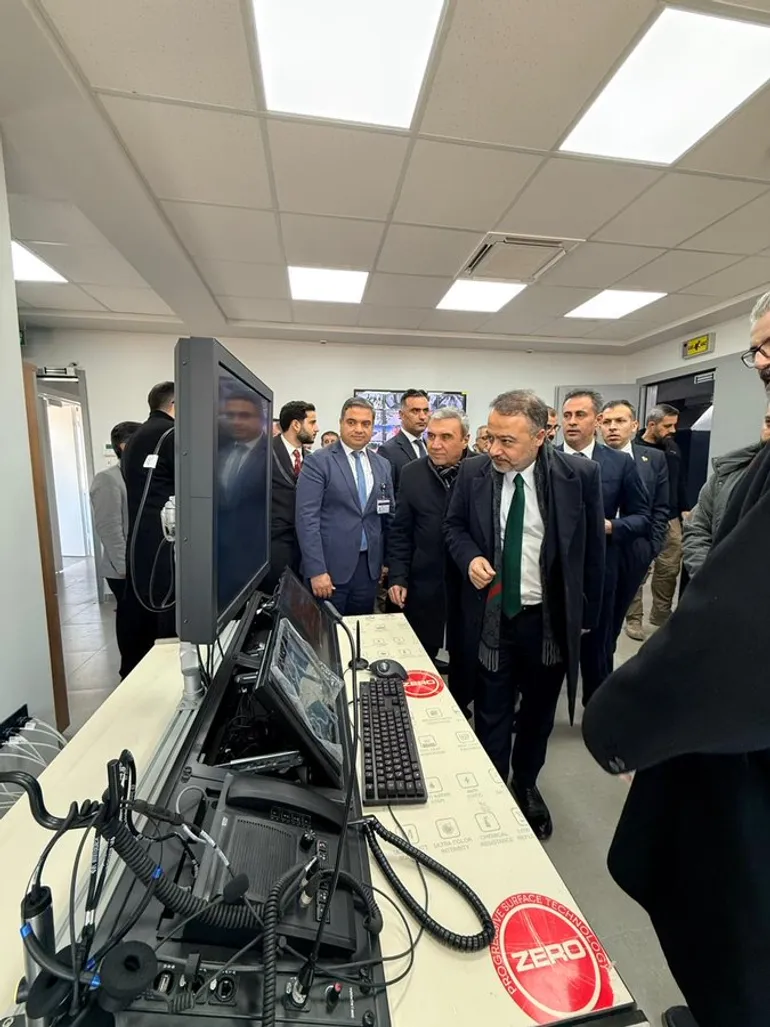
Turkish Ambassador to Syria, Nuh Yılmaz, stated that a diplomatic delegation conducted a field inspection at the airport to monitor the installation phases of the radar system supplied from Turkey. He noted, in posts on social media, that technical work is progressing on schedule and that the new system will substantially enhance flight safety and air-traffic management at Syria’s most important civil aviation hub.
According to Turkish sources, the HTRS-100 provides high-precision capabilities for detecting and tracking all aerial targets in the vicinity of the airport. It employs state-of-the-art surveillance technologies designed to deliver maximum reliability and operational performance in complex environments.
The system is built on a dual-radar architecture. Its primary surveillance radar operates in the S-Band and incorporates advanced algorithms for interference suppression and target tracking, enabling accurate aircraft detection even under challenging operational conditions. Complementing it is a secondary surveillance radar that strengthens identification and tracking through IFF (Identification Friend or Foe) interrogation and supports multiple operational modes.
ASELSAN highlights that the system’s most distinctive feature is its Distributed Active Hot-Standby configuration—a rare architecture found in only a limited number of comparable systems worldwide. This networked design ensures uninterrupted operation even in the event of component failure, preventing full system outages and guaranteeing continuous air-traffic management during critical moments measured in seconds.
Sources also indicate that the radar is equipped with intelligent algorithms capable of mitigating the effects of severe weather and electromagnetic interference through advanced noise-suppression techniques. This allows for clear tracking of aerial targets even during storms or heavy rainfall.
Additionally, the system includes a dedicated channel for real-time monitoring of weather phenomena. Its algorithms can accurately distinguish between aircraft, bird flocks, and wind turbines, thereby raising safety levels within the airport’s surrounding airspace.
According to the published technical specifications, the HTRS-100 boasts a Mean Time Between Critical Failures exceeding 40,000 hours, while required maintenance can be completed in under 30 minutes. Its radar coverage range is adjustable between 80 and 100 nautical miles—approximately 185 kilometers—meeting both current and anticipated air-traffic demands at Damascus International Airport.
This article was translated and edited by The Syrian Observer. The Syrian Observer has not verified the content of this story. Responsibility for the information and views set out in this article lies entirely with the author.