
In her pharmacy in central Damascus, Lara Enaya continues to serve customers while occasionally glancing at her phone to check on relatives in the Gulf—a region now under the fire of a regional war that Syria, for now, remains spared from.
“I stick to following the news on Instagram,” said Enaya, 35. “For the first time, we are the ones calling our family and friends in Dubai, Riyadh, and Doha to make sure they are safe. It is a massive irony that we are secure today while everyone around us is in danger,” she told Agence France-Presse (AFP). Having witnessed the long years of war in Syria from 2011 until the ousting of Bashar al-Assad in 2024, Enaya added: “War is hideous. We lived through it, and we would never wish it upon anyone.”
A Shift in Alliances and Frontiers
On Saturday, the United States and Israel launched an unprecedented offensive against Iran, killing Supreme Leader Ali Khamenei on the first day of hostilities. Iran retaliated with strikes across the Gulf states, Israel, and Jordan, claiming to target American interests and bases.
Syria Urged to File Formal Complaint Over Airspace Violations Amid Iran–Israel Escalation
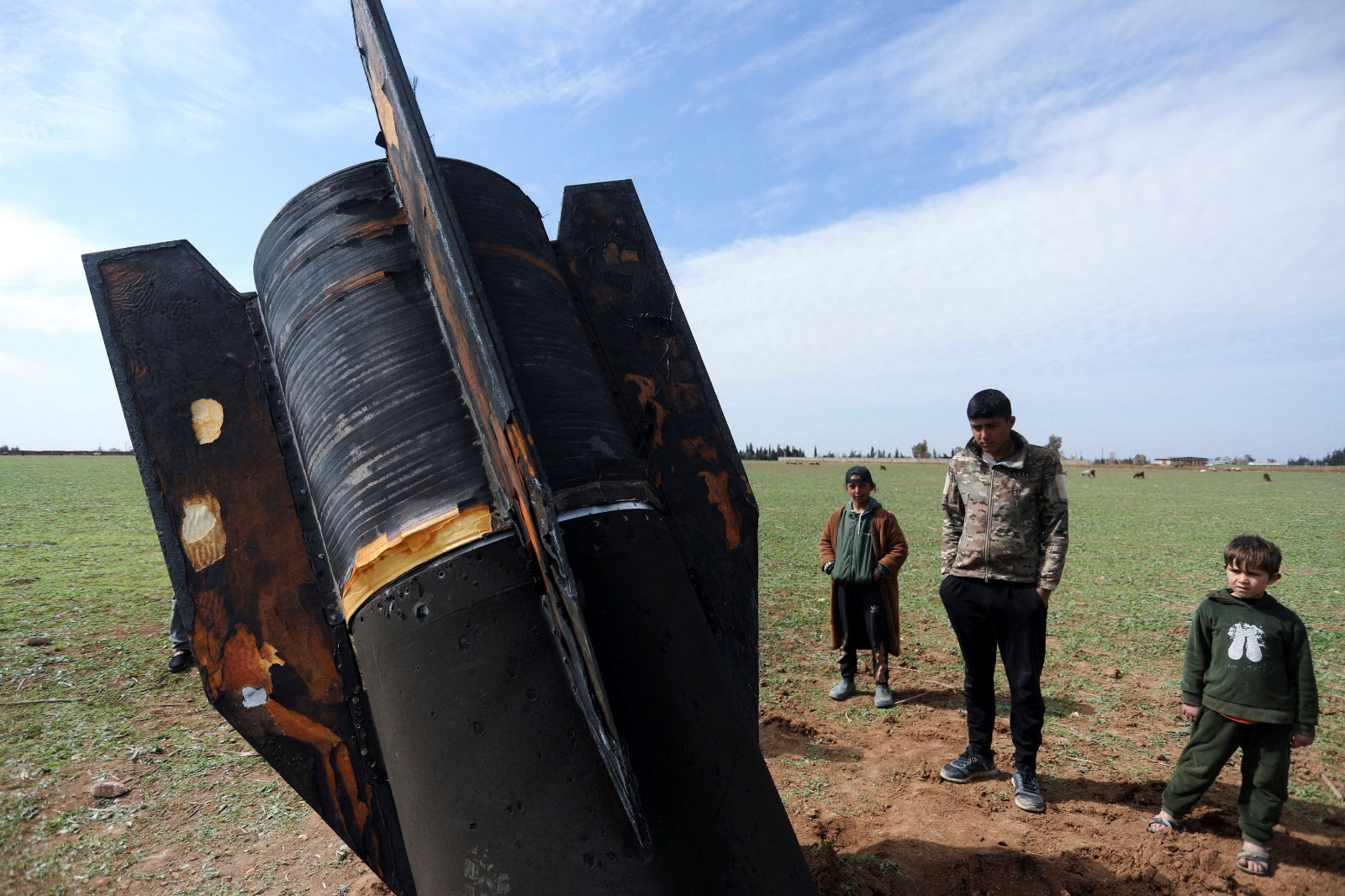
For years, Tehran was the primary ally of Bashar al-Assad, intervening militarily to tip the scales in his favor and maintaining advisors and troops in the country until his fall. The new authorities in Syria, who fought against Assad’s rule, view Tehran with deep hostility. Now, Syrians watch the conflict from a distance, even as Israel intercepts Iranian missiles in Syrian airspace. Shrapnel from these interceptions has fallen in southern Syria, injuring a man and his three daughters. Consequently, the General Authority for Civil Aviation announced the closure of Syrian airspace and the suspension of operations at Damascus International Airport until further notice to ensure public safety.
Mixed Sentiments in the Streets
In the Salhiya commercial market, shops remained crowded during the afternoon and stayed open late after the Iftar meal during Ramadan.
“I follow the news around the clock; I became addicted to it because of what happened in Syria,” said Adel al-Aqel, 59, a clothing vendor. He views the events in Iran as “divine retribution.” Pointing to a photo of his young son, who was killed during the Syrian conflict, Al-Aqel said sadly: “The Iranians killed him when they were fighting alongside Bashar al-Assad.” He paused before adding: “At the same time, Israel is our historic enemy. But we must not interfere. We should just watch.”
Economic and Humanitarian Fallout
Despite Syria’s neutrality, the war has cast a shadow over daily life. The Ministry of Energy reported increased electricity rationing in recent days due to a drop in natural gas supplies via Jordan, where pumping was disrupted by the “regional escalation.”
Additionally, thousands have streamed across the border from Lebanon into Syria to escape the fighting, most of them Syrians who had sought refuge in Lebanon years ago. According to a government source, the Syrian army has bolstered its presence along the borders with Lebanon and Iraq to “secure and control the frontiers.”
The conflict expanded two days after it began to include Lebanon, from where the Iranian-backed Hezbollah launched rockets and drones at Israel in response to Khamenei’s death. Hezbollah had also fought for years alongside Assad’s forces. Iraq, home to pro-Tehran armed groups, is similarly reeling from the repercussions.
In Damascus, life maintains a normal rhythm, with the exception of long queues at gas stations as residents stockpile fuel, fearing potential shortages. “All I care about is that we aren’t affected economically or militarily,” said Abu Raed, 59, a public transport driver waiting in line. “The war exhausted all our energy. We are depleted and cannot bear another one.”
This article was translated and edited by The Syrian Observer. The Syrian Observer has not verified the content of this story. Responsibility for the information and views set out in this article lies entirely with the author.