
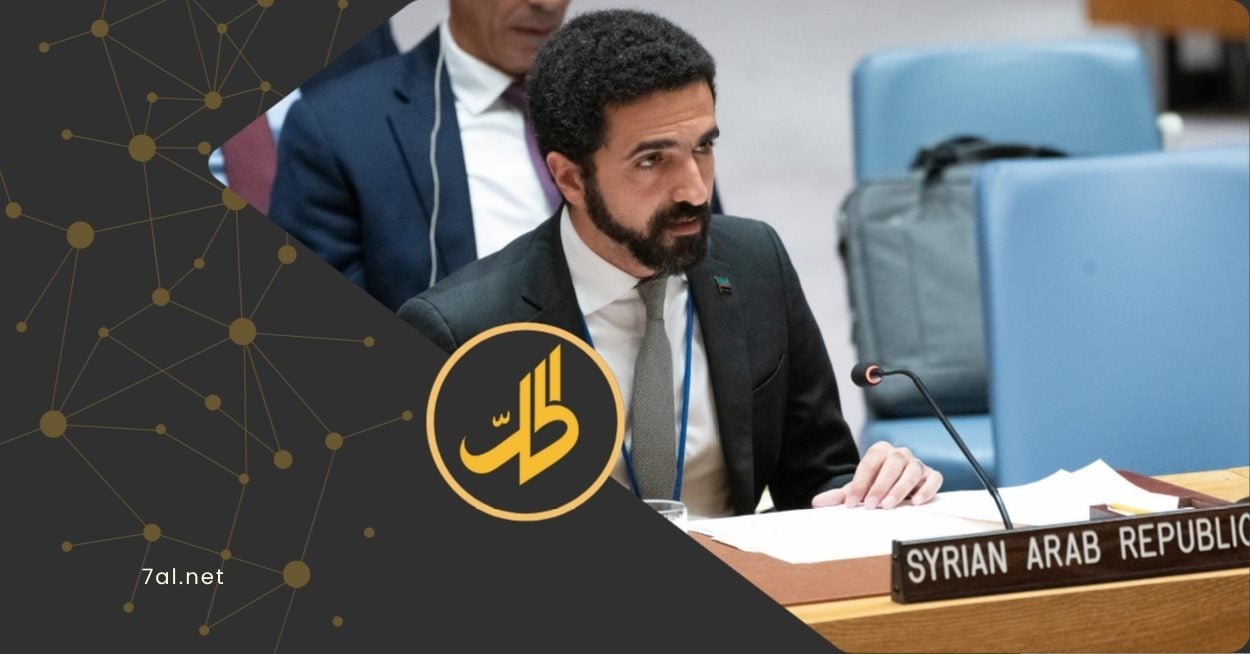
In a striking development underscoring the shifting contours of Syria’s geopolitical landscape, Ibrahim al-Olabi—Syria’s permanent representative to the United Nations—has revealed that ongoing talks with Israel over a new security agreement have reached an advanced technical stage. A formal announcement, he suggested, could be made at any moment.
Technical Negotiations with Israel
In an interview with Al Arabiya television, Olabi explained that the emerging security agreement is grounded in the framework of the 1974 Disengagement of Forces Agreement, which ended hostilities following the October War and established ceasefire lines across the Golan Heights.
He said: “The 1974 agreement is our foundational reference point; its revival has been invoked in both closed-door discussions and public sessions within the United Nations.” He added that current talks focus on “border demarcation, troop levels, and on-site monitoring mechanisms.”
With notable clarity, Olabi declared: “Once an agreement is finalised, the Syrian public will be informed immediately”—a signal that negotiations have passed the threshold of substance, with only specific arrangements regarding borders and deployments remaining.
He also praised the transitional Syrian President’s forthcoming visit to the White House as “a historic milestone,” indicating that the anticipated meeting between President Ahmad al-Sharaa and US President Donald Trump will explore “the culmination of efforts to lift sanctions on Syria.” His remarks followed a recent UN resolution removing al-Sharaa’s name from sanctions lists linked to alleged associations with ISIS and al-Qaeda.
He added: “Al-Sharaa’s visit to Washington carries enormous political symbolism, heralding a new era in Syria’s international relations and signalling Damascus’s willingness to engage fully in both regional security and economic frameworks.”
A Security Accord, Not a Political Pact
Olabi stressed that the agreement should be classified strictly as “a security accord,” distancing the discussions from any broader political or diplomatic negotiations.
He stated: “The United States is backing these talks and views them as part of the broader architecture for regional stability.”
He noted that the current technical exchanges aim to address “mutual security concerns,” explaining: “Syria seeks to ensure peace, stability, and safety for its people. If Israel has security concerns, these can be addressed. Non-security issues, however, must be resolved through other channels.”
The envoy also noted that Syria has become “a partner in the international coalition against ISIS,” and affirmed that “a security understanding with the United States aligns with Syrian priorities.”
He revealed that Syria is currently working to “restructure its security agreements in line with this new phase,” adding that the prospective accord with Israel, should it be officially announced, “will form part of a wider regional security framework aimed at de-escalation and the protection of Syria’s borders.”
These revelations come amid ongoing Israeli military activities in southern Syria, including routine incursions into Quneitra and Daraa provinces. These actions—carried out with tanks and armoured vehicles—have involved inspections, arrests, and the erection of roadblocks cutting off villages and towns.
Since 8 December last year, Israeli forces have reportedly conducted 314 such incursions across areas in the Daraa and Quneitra countryside, as well as near the occupied Golan Heights, according to figures from the Syrian Observatory for Human Rights.
This article was translated and edited by The Syrian Observer. The Syrian Observer has not verified the content of this story. Responsibility for the information and views set out in this article lies entirely with the author.