
Nearly a year after the fall of Moscow-backed Syrian dictator Bashar al-Assad, Russia is quietly rebuilding its strategic foothold in Syria—threatening to close a rare window of opportunity for the West to reshape the regional balance of power, a Washington Institute report has said.
The Institute added that Moscow is once again using Syria as a long-term strategic lever against U.S. interests, offering “no strings attached” deals to Damascus while Western governments hesitate to deploy their economic leverage.
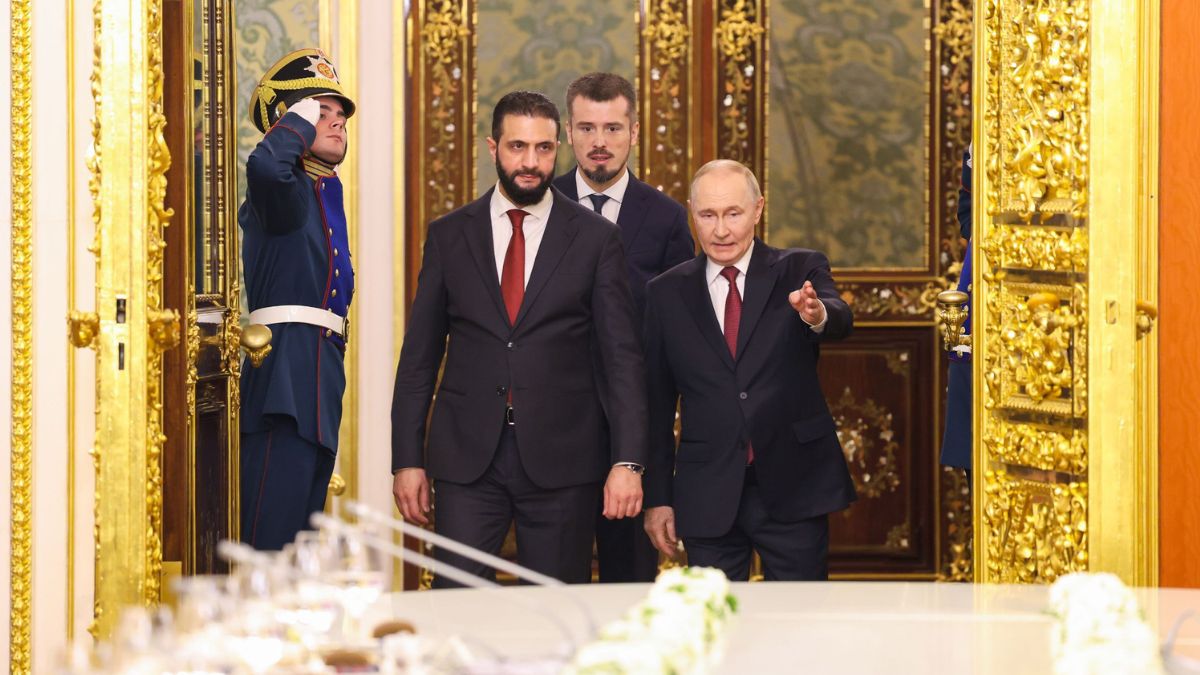
Earlier this month, Russian President Vladimir Putin hosted Syrian President Ahmed al-Sharaa in Moscow for the first time since Assad’s ouster. Al-Sharaa, who led the offensive that toppled Assad, has pledged to honour previous agreements with Russia, including access to military bases in Tartus and Khmeimim—ensuring Moscow’s continued presence in the Eastern Mediterranean.
According to the report, Russia remains Syria’s primary oil supplier and continues to print its currency. With fewer restrictions on economic transactions, Moscow is well-positioned to deepen its influence through opaque business networks and energy cooperation. In September, Russian Deputy Prime Minister Alexander Novak led a delegation to Damascus, offering aid and inviting Russian energy firms to resume operations.
Despite Syria’s overtures to the West, the report notes that Damascus still depends on Russia for military equipment and diplomatic support. Al-Sharaa has repeatedly emphasised the importance of maintaining ties with Moscow, revealing in a recent interview that his forces had entered secret negotiations with Russia during the final stages of the battle for Homs. While Russia refrained from direct involvement, Sharaa’s forces avoided targeting Russian assets—preserving Moscow’s strategic access.
The Washington Institute warns that failure to counter Russia’s expanding role in Syria could undermine U.S. credibility with allies, weaken its position in Ukraine, and erode NATO’s southern flank. Moscow’s policy, it argues, was never about Assad or Syria itself, but about advancing a broader global challenge to American influence.
Although Russia’s influence in Syria has diminished since Assad’s fall, the Kremlin is playing a long game—cultivating ties across Syria’s fragmented landscape, including with the Syrian Democratic Forces, Alawites, and Druze. These relationships could be used to exacerbate ethnic tensions and keep Syria divided, making it more vulnerable to manipulation.
The report urges Western governments to act swiftly, using economic leverage to offer viable alternatives to Russian support. Syria needs a functioning economy—something Moscow cannot provide—and al-Sharaa is open to Western engagement. Without a coordinated response, Russia will continue to present itself as a reliable partner, offering rapid assistance without conditions, unlike democratic states that tie aid to human rights reforms.
The Washington Institute concludes that the Middle East remains a critical front in Russia’s broader confrontation with the West. If Moscow’s ambitions in Syria go unchallenged, it could destabilise the region, divert Western attention from Ukraine, and reinforce a multipolar world order led by authoritarian powers.
This article was translated and edited by The Syrian Observer. The Syrian Observer has not verified the content of this story. Responsibility for the information and views set out in this article lies entirely with the author.