
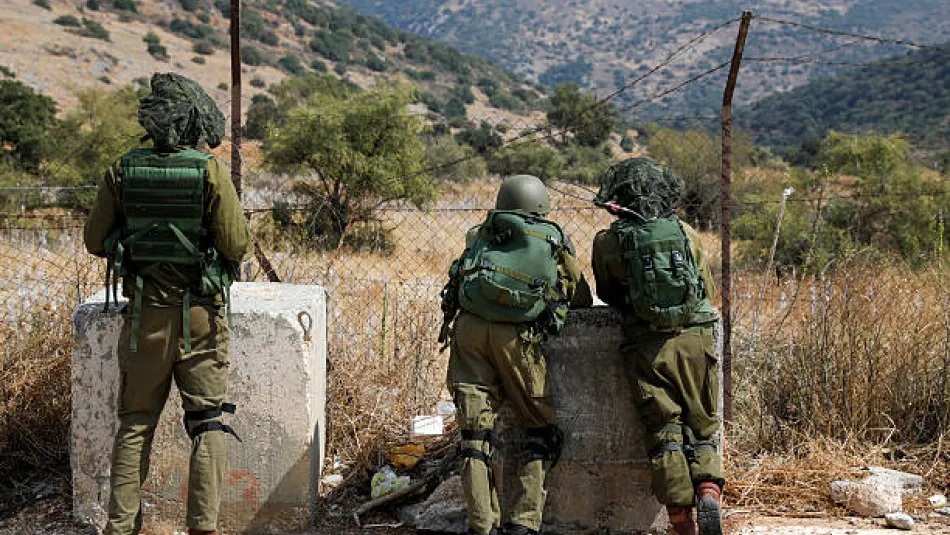
From the windswept summit of Mount Hermon, where ancient stones echo with history, new tensions emerge. Israel has tightened its hold on this strategic height, while the United States breaks its silence, sending envoys in an attempt to ease the rising tensions. In southern Syria, the village of Beit Jinn now bears the latest scars of incursion and confrontation, drawing international attention from Paris to Washington.
Israel’s state broadcaster has reported that the United States is considering dispatching a delegation of officials—including Morgan Ortagus, deputy to special envoy Steve Witkoff—to Damascus. Their objective: to stabilise a situation that threatens to unravel what little peace remains. Tel Aviv, resolute as ever, insists it will not relinquish control of Hermon’s crest until a comprehensive agreement with Syria is achieved—one that surpasses temporary ceasefires and establishes lasting security measures along the volatile frontier.
This diplomatic manoeuvring coincides with Washington’s efforts to de-escalate the growing rift between Damascus and Jerusalem. Tensions spiked following Israel’s early morning assault on Beit Jinn in the Damascus countryside. What began as a covert patrol escalated into a violent clash marked by gunfire, alleged arrests, and reports of forced confessions—events that underscore Israel’s entrenched presence on Mount Hermon since the collapse of Assad’s initial hold on power.
Hebrew-language media report that individuals detained during the dawn raid on Friday confessed under interrogation to links with Hamas, Iran, and Hezbollah. They allegedly admitted to receiving funds earmarked for weapons and operations targeting Israel. Channel 11, citing a regional source familiar with interrogations involving Islamic Group elements, claimed operatives backed by Tehran and Gaza had been active in the area. However, Lebanon’s Islamic Group has issued a categorical denial, rejecting any involvement in the incident or any operations beyond Lebanese territory. The group condemned the assault on Beit Jinn as a cover for broader Israeli aggression.
According to the same reports, the United States is attempting to mediate between the parties even as the consequences of the raid unfold. Syrian authorities report thirteen fatalities, including women and children, along with dozens more injured—figures confirmed by the Syrian Ministry of Health. On the Israeli side, six soldiers were wounded, three of them seriously, reflecting the fierce resistance encountered in the village.
France Reaffirms Commitment to Syrian Sovereignty
Against this backdrop of violence, France has issued a strong appeal for restraint. Paris called on Israel to respect Syrian sovereignty and the sanctity of its territory. Jean-Baptiste Faivre, France’s chargé d’affaires in Damascus, posted on X (formerly Twitter) to reaffirm France’s commitment to Syria’s unity, sovereignty and stability, in accordance with international law and the 1974 Disengagement Agreement—a post-Yom Kippur accord that established a demilitarised buffer zone between the two sides.
Faivre expressed grave concern over reports of civilian casualties in Israeli operations, urging all regional actors to contribute to rebuilding Syria as a stable and secure state. “Escalatory actions,” he warned, “offer no path to regional peace.”
Israeli Occupation Deepens on Mount Hermon
Despite international concerns, Israel continues to fortify its position atop Mount Hermon. The peak offers a commanding view of Damascus and large stretches of southern Lebanon, making it a coveted strategic asset. Since Assad’s control began to falter, Israel has increased its incursions into Syrian territory, citing threats from Iranian, Palestinian and Lebanese actors.
Syrian Information Minister Hamza al-Mustafa, in a televised statement, denounced the repeated Israeli operations as deliberate provocations. He warned that Syria would not be drawn into conflict by what he described as Israel’s “arrogance of power,” vowing that the state would maintain its firm stance.
The Beit Jinn Raid
The confrontation began at dusk on Friday, when an Israeli patrol entered Beit Jinn, a village on Mount Hermon just ten kilometres from the contested Golan Heights. The incursion triggered an exchange of fire as local residents, awakened by the intrusion, fought back. Six Israeli soldiers, including three officers, were reportedly injured.
In retaliation, Israel launched a large-scale airstrike several hours later. Official Syrian sources say the bombardment killed thirteen people and wounded nearly forty others. Beit Jinn, already battered by repeated Israeli strikes in recent months, now bears the brunt of yet another assault—a stark reminder of the tenuous calm that defines Syria’s southern front.
As Ortagus prepares to head for Damascus and France’s diplomatic warning reverberates through international channels, the broader question remains: will these latest developments push the region closer to a durable peace, or deepen the fractures threatening Syria’s fragile sovereignty? Amid the turbulence on the Golan frontier, the answer remains uncertain.
This article was translated and edited by The Syrian Observer. The Syrian Observer has not verified the content of this story. Responsibility for the information and views set out in this article lies entirely with the author.