
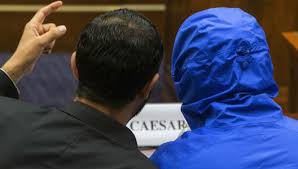
The U.S. Congress is preparing to debate a proposed amendment to the National Defense Authorization Act (NDAA) that would repeal the Caesar Syria Civilian Protection Act, redefine the terms of military aid to Lebanon, and intensify intelligence oversight of foreign involvement in the conflict in Sudan. The amendment, which has far-reaching implications for Washington’s regional posture, is expected to come to a vote later this week.
Repeal of the Caesar Act: Conditional Engagement with Damascus
Section 8369 of the amendment proposes the complete repeal of the Caesar Syria Civilian Protection Act of 2019, which has served as the legal foundation for U.S. sanctions on the Syrian government.
In exchange, the amendment obliges the President of the United States—within 90 days of the law’s enactment and every 180 days thereafter for four years—to submit a public report, with a classified annex if necessary, to key congressional committees. The report must certify whether the Syrian government is implementing a defined set of measures. These include:
- Taking concrete and verifiable steps to eliminate the threat posed by the Islamic State (ISIS) and other terrorist groups, including al-Qaeda, in coordination with the United States, and preventing the re-emergence of ISIS;
- Initiating the removal of foreign fighters from senior positions in government, state institutions, and the security apparatus;
- Respecting the rights of religious and ethnic minorities, including freedom of worship and belief, and ensuring equitable representation in government and parliament;
- Refraining from unilateral or unprovoked military actions against neighbouring states, including Israel, while continuing to pursue regional security agreements;
- Implementing the “March 10, 2025 Agreement” reached between the Syrian government and the Syrian Democratic Forces, including the integration of security forces and creation of political representation;
- Strengthening efforts to combat money laundering, terrorism financing, and the proliferation of weapons of mass destruction, and ceasing support for sanctioned groups or individuals, including terrorist organisations, that threaten U.S. or allied national security;
- Prosecuting perpetrators of gross human rights violations committed since 8 December 2024, particularly those responsible for attacks against religious minorities;
- Taking verifiable action against the illicit production and international trafficking of narcotics, especially Captagon.
The amendment also mandates that the President notify Damascus of the report’s conclusions. Should the President fail to provide a “positive certification” in two consecutive reports, he may consider imposing targeted sanctions against individuals, in accordance with existing legal authorities, until such a certification can be achieved.
This article was translated and edited by The Syrian Observer. The Syrian Observer has not verified the content of this story. Responsibility for the information and views set out in this article lies entirely with the author.