
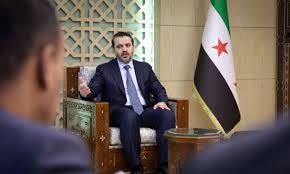
In the historic heart of Damascus, a flurry of diplomatic activity is unfolding, as international delegations converge on the Syrian capital to navigate a complex matrix of security concerns and economic sanctions that continue to impede the country’s recovery.
Credible sources confirm the presence of American, Turkish and Russian delegations within Syria, engaged in discussions on matters deemed crucial to the nation’s future.
This diplomatic convergence coincides with the departure of Syria’s Minister of Foreign Affairs and Expatriates, Assaad al-Shibani, on his first official visit to the People’s Republic of China—a mission signalling a potential shift in Syria’s foreign policy orientation and a renewed effort to strengthen bilateral ties.
A Gathering of Foreign Envoys in Damascus
A Russian intelligence delegation visited Damascus, accompanied by a Turkish counterpart, to conduct high-level security talks. While the precise details of these negotiations remain undisclosed, their very occurrence highlights the fragile balance of power that continues to define the region.
Simultaneously, several unresolved issues persist between Damascus and Moscow. Russia maintains strategic military positions along the Syrian coast at Hmeimim and Tartus, as well as a presence at the Qamishli airfield in the northeast. Sources also indicate that a delegation from the United States Congress is in the capital, engaging with Syrian officials to discuss the ongoing impact of Caesar Act sanctions and the geopolitical significance of Syria’s coastal region.
This diplomatic flurry follows closely on the heels of Syrian Transitional President Ahmed al-Sharaa’s visit to Washington, where he met with U.S. President Donald Trump at the White House. In a related development, the U.S. State Department extended its suspension of Caesar sanctions by an additional 180 days—an overture interpreted by some as a sign of cautious engagement.
Only two days earlier, U.S. Special Envoy to Syria, Tom Brack, remarked that Syria had experienced “a remarkable metamorphosis from isolation to partnership,” reflecting a broader reassessment of Damascus’s place on the world stage.
Shibani’s Journey to Beijing
This renewed diplomatic energy in Damascus is matched by Shibani’s landmark journey to Beijing—the first such visit by a Syrian official since the fall of the previous regime more than eleven months ago. The visit underscores a shift from historic allegiances towards a more diversified diplomatic agenda.
According to reports by the Syrian Arab News Agency (SANA), Shibani is expected to meet with a range of Chinese officials to explore avenues for reinforcing Syria-China relations. However, the full itinerary remains undisclosed.
In late October, Shibani publicly acknowledged a recalibration of Syria’s foreign relations, particularly with China. Once a firm backer of the former regime, Beijing had used its veto power in support of Damascus at the United Nations. Addressing this shift, Shibani stated: “All our diplomatic efforts are calm and deliberate. We yield no rights. Our relations with Russia, China and Europe derive from Syria’s national stature, and must serve the lasting welfare of the Syrian people.”
Beijing’s Strategic Reawakening
Despite the symbolism of Shibani’s visit, a full return to the once-close relationship between Damascus and Beijing seems unlikely. Syria is now positioning itself to embrace greater openness with Western states, while maintaining calculated and measured ties with global powers such as China and Russia.
In turn, China is seeking to reinvigorate its influence in Syria, driven by economic interests and its broader Belt and Road Initiative. Syria’s geographic and maritime importance makes it a valuable link in China’s expanding trade network. However, this strategic ambition necessitates strong political relations—a prerequisite for safeguarding China’s commercial and infrastructural stakes in the region.
As Syria seeks to reassert its sovereignty and rebuild from years of conflict, its capital has become a theatre for international diplomacy. In this delicate balancing act between East and West, Damascus navigates a path that aspires not merely to survival, but to a renewed role on the global stage.
This article was translated and edited by The Syrian Observer. The Syrian Observer has not verified the content of this story. Responsibility for the information and views set out in this article lies entirely with the author.