
A recent security incident along the Syrian-Lebanese border has drawn swift attention in Damascus, after artillery shells struck the vicinity of Sarghaya in the western Damascus countryside, a region that directly borders Lebanon. The Syrian Army’s Operations Authority confirmed that mortar rounds fired from Lebanese territory landed near Syrian military deployment points.
According to the Authority, several shells fell close to army positions along the border sector. Field monitoring also detected movements and reinforcements by elements affiliated with Hezbollah on the Lebanese side of the frontier. The Authority stated that the army is closely observing developments, assessing the nature of the incident, and evaluating available response options while maintaining continuous military oversight in the area.
Syrian Military Reinforcements Along the Border
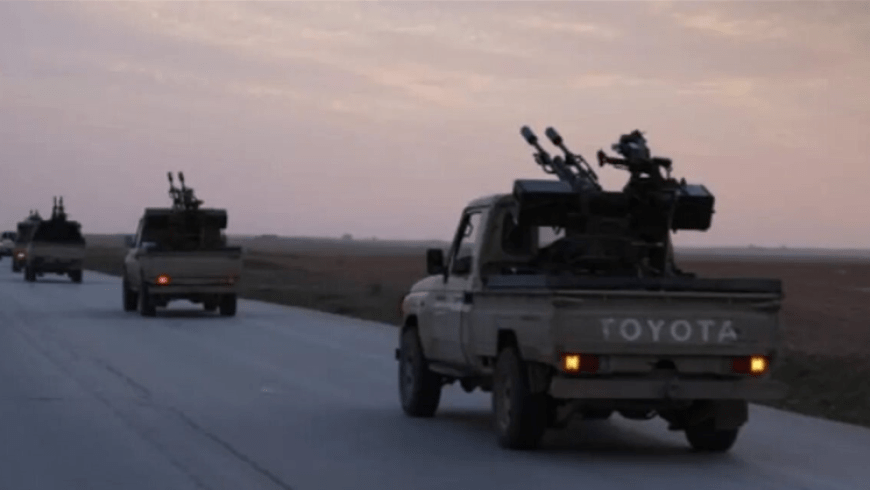
In parallel with the shelling, Syrian military sources reported the deployment of additional reinforcements around Sarghaya and other points along the border with Lebanon. These reinforcements form part of broader security measures intended to strengthen border control and monitor military activity. According to the sources, the move responds to ongoing attempts by Hezbollah to impose new realities on the ground and revive military supply routes through Syrian territory.
The deployed units include border guards, reconnaissance battalions, and special forces tasked with intensifying surveillance and preventing any infiltration into Syrian territory. This deployment also fits within a wider strategy to reinforce Syrian border control amid concerns about potential crossings by armed groups or Hezbollah elements from Lebanon, especially given the rising military tensions across the Middle East and the Arabian Gulf.
These measures extend to strengthening observation posts and increasing patrols in mountainous terrain and illegal crossings that have historically served as conduits for arms and fighters moving between the two countries. The heightened activity on the Syrian side aims to preempt any coordination with cells linked to Hezbollah or the Iranian Revolutionary Guard.
Syrian-Lebanese Coordination to Contain the Incident
Following the shelling, Lebanese security sources told Syria TV that direct communication was established between the Syrian and Lebanese armies through existing military channels. The purpose was to investigate the circumstances of the incident and prevent a recurrence. Information also indicates that Lebanese authorities initiated rapid coordination with Damascus at governmental and military levels to contain the escalation and stabilize the situation on the ground.
This coordination forms part of joint efforts to preserve stability in border regions and prevent isolated incidents from evolving into broader tensions between the two states.
Damascus Reaffirms Its Non-Escalatory Approach
Amid the military developments, Syrian government sources emphasized that Damascus is not seeking escalation with Lebanon. Its primary concern remains securing the border and preventing regional tensions from spilling into Syrian territory.
In this context, Syrian President Ahmed al-Sharaa held a series of calls with Lebanese officials before and after the Hezbollah attack on Syrian soil. His discussions included President Joseph Aoun, Prime Minister Nawaf Salam, Progressive Socialist Party leader Walid Jumblatt, and Kataeb Party leader Sami Gemayel.
These communications focused on clarifying Syria’s position regarding developments along the border and reiterating that the Syrian military deployment is intended to protect and control Syrian territory, not to prepare for any action inside Lebanon.
Lebanese government sources told Syria TV that the calls sought to prevent the exploitation of field developments to provoke political or media tensions against Syria within Lebanon, particularly after rumors circulated about potential Syrian Army operations inside Lebanese territory.
Available information suggests that President Al-Sharaa’s outreach helped ease the political atmosphere in Lebanon and reaffirmed that Syrian military movements along the border are precautionary security measures aimed at preventing infiltration, without any offensive intent.
A Border Incident in a Region on Edge
This development unfolds amid widespread military escalation across the region, driven by ongoing conflicts. The broader context has prompted several states to reinforce their military presence in border areas in anticipation of potential spillover effects.
Based on current information, Syrian military movements appear to be precautionary steps designed to secure the border and prevent the entry of armed groups, rather than preparations for any operation inside Lebanese territory.
This article was translated and edited by The Syrian Observer. The Syrian Observer has not verified the content of this story. Responsibility for the information and views set out in this article lies entirely with the author.
