
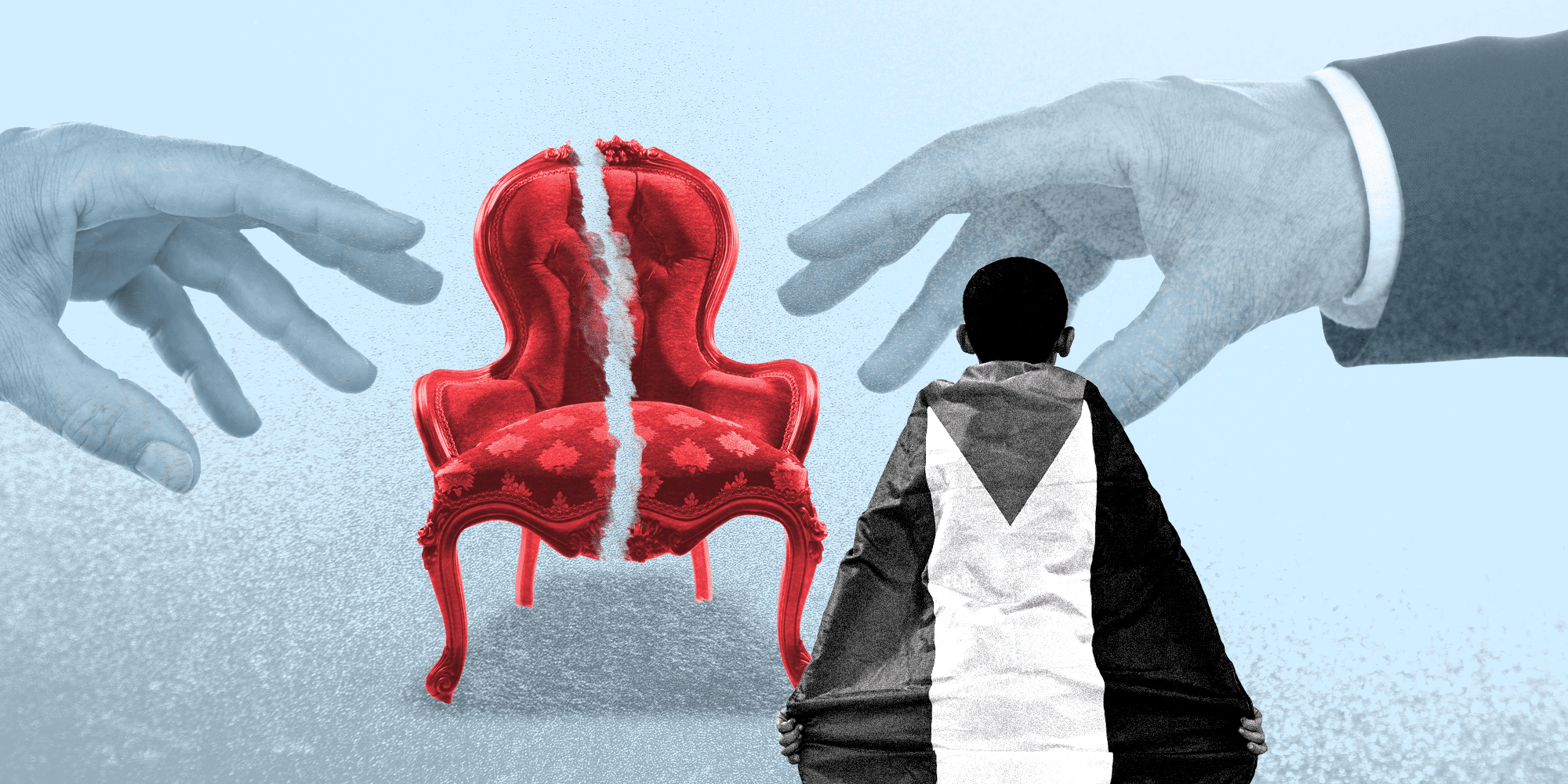
After 7 October 2023, the eruption in Gaza spilled far beyond the Strip, unleashing a wave of changes that stretched across Gaza, Palestine, and the Middle East. It went further still, reshaping political and media landscapes around the world, until it penetrated the heart of American political life and its political movements. The shock was enough to rattle the foundations of the United States’ two main parties, the Democratic Party and the Republican Party, and to split each from within.
If we are now seeing the first signs of division inside the Democratic Party, following the election of New York City’s first Muslim mayor to openly stand in solidarity with Palestine, a development that could foreshadow a new political movement emerging from within the party in the near future, then the fracture on the American right, particularly within the MAGA movement, has been clearer. The surprises have been larger. This rupture surfaced plainly at AmericaFest 2025.
So what happened at the American right-wing conference?
AmericaFest 2025 is an annual right-wing conference traditionally held in Phoenix, Arizona. It is organised by Turning Point USA, an American non-profit organisation founded in 2012 by the right-wing activist Charlie Kirk, with the aim of promoting conservative policies among young people in schools, universities, and public life. Over the following years, the organisation became one of the most effective instruments of soft influence for Republicans, and one of the factors that helped Donald Trump reach the White House in 2016.
The latest edition of the conference was the first since the assassination of its founder, Charlie Kirk, during a public gathering at Utah Valley University. The killing sent a profound shock through the movement and across the American right more broadly. The conference shifted from a space of mourning and tribute into something closer to a Republican circus, after it drifted from its stated purpose and became an arena for public trials among prominent right-wing media and political figures.
While Erika Kirk, the founder’s widow, tried to play the role of mediator, the reality on stage was entirely different. the pro-Israel Zionist commentator Ben Shapiro delivered scathing criticism of several parties, prompting a response from the broadcaster Megyn Kelly. The atmosphere then settled briefly, before Tucker Carlson, a Fox News alumnus, took the stage with a sharply different speech. For his part, the right-wing hawk Steve Bannon escalated the attacks further. Meanwhile, the presence of both Candace Owens and Nick Fuentes remained strongly felt despite their absence from the hall. I will return later to detail the shifts in these figures and their positions.
At this point, a central question emerges. How did we get here, and What does 7 October have to do with all of this?
To answer, we need to step back slightly and put a few points into context. This shift took place at a highly specific moment in global media, when political capital appeared to dominate discourse almost completely, particularly in American media.
At the outset, political capital came to control much of the media landscape in the United States, a trend partly linked to the Telecommunications Act passed under President Bill Clinton in 1996. This was followed by a surge in the influence of political money in public life, especially after the Supreme Court decision in Citizens United in 2010, which allowed unlimited independent spending by entities outside election campaigns. The ruling raised serious questions about the state of democracy in the United States.
As outside spending increased and the phenomenon of dark money grew, with funders kept undisclosed, the impact of political advertising and paid messaging expanded in shaping media agendas. This did not stop at adverts. It also extended to pressure on media outlets to adopt harsher lines.
In this context, alongside the growing role of social media platforms, the integration of traditional media into polarised, money fuelled politics, and rising resentment towards platform policies, the idea of cancel culture emerged, first as a form of resistance, then as a tool for accountability and rapid social punishment.
Cancel culture is a collective social practice that seeks to withdraw legitimacy and support from a person or organisation because of a statement or action deemed offensive or unacceptable, through public pressure and boycotts in digital spaces and in public life. The term spread widely in the late 2010s, then became part of the political and media lexicon in the early years of this decade, forming one of the clearest fault lines between the American left and right.
Despite my strong reservations about exclusionary logic and cancel culture, I see it as one of the last lines of confrontation with the right-wing current. In response, the right adopted a strategy that centred identity issues within this debate, using repetition and moral framing to dominate a large share of media coverage and public argument.
In this way, these issues crowded out more complex files such as the economy, healthcare, and widening social inequality, and were used as electoral mobilisation tools, rallying bases and diverting attention towards symbolic conflicts. The left and the Democrats fell into the trap.
In this atmosphere, non-traditional media platforms began to rise, drawing in those who refused to align themselves with cancel culture. Perhaps the British broadcaster Piers Morgan was among the first to recognise this shift, by launching his platform Piers Morgan Uncensored, whose trajectory after 7 October we will see more clearly.
The Right Prepares for the Post Television Media Landscape
Politicians and those backing them sensed the scale of the threat ahead. Several institutions moved quickly to establish alternatives to traditional media. The most prominent was The Daily Wire, which became closely associated with one of the most influential pro-Israel voices on the American right, Benjamin Aaron Shapiro, known as Ben Shapiro. The platform assumed the role of steering the media conversation, defining what could be said, where the limits lay, and how it should be said.
It attracted a number of commentators and opinion formers, whether directly or through partnerships and reciprocal appearances. It helped draw a line between what was permissible to discuss and what was best avoided, as well as shaping how arguments were framed. Among the most prominent names linked to it were Matt Walsh, Jeremy Boreing, and Dr Jordan Peterson. Peterson gained broad influence as one of the leading voices opposing cancel culture, with support stretching from the centre right to more hardline currents. Candace Owens also rose in this space alongside other figures, with indirect overlap across multiple networks of influence and institutions.
The Daily Wire did not limit itself to competing with traditional media. It went further, reshaping the public sphere by turning political polarisation into an organised media product, where ideological messaging meets the mechanics of the digital market and modern platforms. At the heart of this landscape, the influence of political money and lobbying groups is clear, particularly pro-Israel groups that shape priorities and narratives in both politics and media.
Against this reality, it becomes difficult to rein in the most extreme currents on the right. Forces that believed they could contain them within tightly controlled media frameworks instead reproduced them and amplified their presence in public life, leaving them more able to slip beyond control.
In parallel, we witnessed a dramatic shift after Elon Musk effectively ‘freed’ Twitter from its previous moderation regime. The blue bird disappeared, replaced by the black X, signalling the start of a new era of open expression.
On 24 April 2023, tensions reached breaking point between Fox News, long associated with backing the right, and one of its leading faces, Tucker Carlson.
Carlson’s departure from Fox was not merely a media story. It was a declaration that the centre of gravity had moved from television to open digital space. When a star of his size leaves a major institution, he does not go alone. He takes with him an audience that has grown accustomed to consuming politics the way fast food is consumed.
With the rise of podcasts, a new arena emerged. There was more time, less disciplined language, guests who were more shocking or more extreme, and conspiracy theories stripped of their aura and aired openly again. Tucker Carlson, as a conventional right-winger, had maintained a degree of discipline inside an institution owned by one of the most powerful pro-Israel media magnates, Rupert Murdoch. His exit from that framework would carry heavy consequences within the organisation and beyond it.
7 October Arrives
Al Aqsa Flood came at a moment when the American media landscape was thought to be under complete control, but the event upended the table and opened the door to rapid and dramatic transformation. Under the weight of what happened, media coverage exploded across screens and social platforms, filling them with debate and sharp confrontation. It became clear that the Israeli side, caught off guard, was unprepared in both messaging and organisation. Hasbara, the propaganda apparatus aimed at Western audiences, failed to produce unofficial spokespeople capable of defending the Israeli narrative and, to this day, remains mired in confusion.
The narrowing political horizon of the Israeli camp, the weakening credibility of its narrative, and the contradictions in its messaging all contributed to it losing many media confrontations. In contrast, platforms emerged that played a pivotal role in exposing this disarray, chief among them Piers Morgan Uncensored. Piers Morgan is not part of the American media scene, yet his position outside Murdoch’s direct dominance, while News UK retained a share of returns through a revenue sharing arrangement, gave him wider room to manoeuvre. His programme became one of the most important arenas in which the shift in his tone towards the Israeli assault could be seen as images of mass killing in Gaza intensified.
A look at the most prominent figures hosted by the programme shows the contrast between the two camps. The pro-Israel side was represented by Douglas Murray, who advanced the Israeli narrative through a rigid ideological lens, Alan Dershowitz, Jeffrey Epstein’s personal lawyer, Jonathan Conricus, the former military spokesperson, and Rabbi Shmuley Boteach. On the other side stood defenders of the Palestinian cause. Mehdi Hasan dismantled Israeli messaging with skill. Norman Finkelstein offered, in each appearance, a legal and historical reading that unsettled his opponents. Francesca Albanese, in her capacity as a United Nations rapporteur, laid out violations through a clear human rights lens.
Nor can the pivotal interview with Bassem Youssef in the first weeks of the war be ignored. Whatever one’s view of his earlier career, it marked a turning point in the global media narrative on Gaza.
A simple comparison between the two teams highlights the paradox. A pro-Israel camp struggling with weak preparation and a disordered message faced damning images from Gaza, escalating brutality on the ground in the West Bank, a legal crisis tightening around Benjamin Netanyahu, and extremist statements by ministers such as Naftali Bennett and Itamar Ben Gvir. All of this pushed the balance of the narrative clearly towards the Palestinians.
Has Trump the Saviour Really Arrived, or Has He Deepened the Right’s Divisions
Donald Trump won the November 2024 election as the candidate who would stop the wars in Gaza and Ukraine within days. Yet his promises quickly collided with reality, and divisions within the MAGA movement deepened rather than receded. When the International Court of Justice issued provisional measures on 24 May 2024 concerning genocide in Gaza, conservative pro-Israel discourse faced an unprecedented legal and moral test. That moment opened the door for voices on the right that had previously stayed silent to declare their objections publicly.
This rift did not remain purely political. It spread into the conservative media structure itself. Candace Owens leaving her platform, The Daily Wire, was a clear signal that the dispute had moved beyond opinion and become a structural crisis within right-wing media. Then came US measures against the United Nations rapporteur Francesca Albanese because of how she described what was happening in Gaza, deepening the gap between the political establishment and a popular base that saw it as the suppression of critical voices, particularly within a camp that had long presented itself as an opponent of cancel culture. After that came the greatest shock of all, the assassination of Charlie Kirk, one of the most important organisers of conservative youth, ushering in a new phase of turbulence.
In October 2025, the media scene erupted in an unprecedented way after Nick Fuentes’s controversial interview with Tucker Carlson on The Tucker Carlson Show podcast. Fuentes’s remarks before the interview and after it redrew the boundaries inside MAGA and pushed conservative institutions to reposition themselves. By December 2025, the division had moved into the open through major stages and think tanks. Palestine revealed the depth of fractures within the identity of the American far right, not merely a passing cause of disagreement.
This shift also accompanied the departure of some of the most prominent conservative voices from the traditional television framework. Tucker Carlson, Piers Morgan, then Megyn Kelly moved into the alternative media space, through podcasts, video platforms, and series on X. For wide segments of the public, these platforms have become more influential than news bulletins.
In contrast, Palestine was almost entirely absent from late night comedy programmes, widely seen as the main source of information for American youth, with the exception of Jon Stewart’s weekly appearances. With the weakening of traditional news coverage, right-wing alternative media became the most widespread source for narratives about the Middle East, ahead of its left-wing counterpart, which lacks similar reach on these platforms.
Here the real struggle for the throne inside the right begins. The MAGA movement was never a unified front, but a fragile alliance held together by Trump’s populist promises. Over time, rival camps began to fight over leadership and direction. Candace Owens became a symbol of the split that erupted after the Gaza war, while a background of conflict accumulated, fuelled by Trump himself after the collapse of a number of his election pledges and his economic policies, led by his sweeping tariff policies that weighed heavily on the American citizen and raised a straightforward populist question. Why do we keep fighting other people’s wars, from Ukraine and Russia to Gaza, where many see what is happening as genocide after 7 October.
As awareness grows of the influence of lobbying groups on both the Democratic and Republican parties, led by the country’s most powerful pro-Israel lobby, AIPAC, trust in political institutions is eroding. Old files return to the surface, summoned as evidence of the depth of the crisis. The Jeffrey Epstein case and his ties to elites, the assassination of John F Kennedy as an emblem of the deep state’s alleged capacity, the 9/11 attacks that reshaped the world, and the Iran Contra scandal, with its symbolism of covert operations and historical abuses, are all being revived within a rising narrative that rereads American political history through a lens of doubt and reassessment.
The world has reached a moment of renewed repositioning. Suddenly, a broad part of the American conservative right began speaking about Palestine in a tone that, for decades, had been associated only with the left. Within this current, questions emerged about the value of unconditional support for Israel, alongside rhetoric focused solely on American interests under the America First slogan. With this shift came growing boldness in reopening files long buried in drawers, bringing to the surface accounts that had often been dismissed as conspiracy theories, before it became clear that many were closer to facts than to fantasy. Among the most prominent is the 1967 USS Liberty incident, still invoked as a wound in American consciousness and used on both the right and the left as proof that alliances are not always innocent.
In this context, the Palestinian Israeli conflict is no longer merely a foreign policy file. It has become a key to understanding networks of influence, money, and politics in the United States. As the circle of suspicion widens, political archives begin to function like a machine for producing meaning. What appears realistic begins to eclipse what is true, and what can be believed advances ahead of what can be proven. Stories multiply because algorithms reward persuasion rather than truth. Here an acute moral question emerges. Are we facing new political knowledge, or a renewed marketplace for recycling obsession.
At the same time, pro-Israel forces continue trying to resist facts on the ground, and a number of wealthy figures close to Israel have begun buying influential media institutions, reaching even platforms such as TikTok. This has placed defenders of the Palestinian cause, in media and digital terms, in the same trench as the far right, confronting entrenched pro-Israel media influence. This dramatic shift within parts of the American right towards Palestine, despite overturning longstanding assumptions, confronts us with a strategic and moral dilemma. A voice criticising blind support for Israel, emerging from within strongholds once thought impenetrable, is welcomed by anyone who defends justice. Yet it also arrives loaded with the far right’s agenda, anti-establishment populism, an isolationist impulse, and racist positions towards other identities. It is a temporary convergence of interests, built on distrust of elites rather than on human solidarity or recognition of rights.
Even so, this struggle inside the American right opens an important window for exposing its contradictions and forcing the Palestinian narrative into public debate. Turning that window into a lasting gain can only be achieved by building on rights, law, and cross border human solidarity, not on fragile alignments that may drag us into paths we do not want.
Perhaps the most mature route for confronting the influence of the pro-Israel lobby in the United States, without sliding into support for the far right, is the new progressive alliance Reject AIPAC, which emerged as an organised attempt to curb the impact of political money on the democratic process. The alliance includes dozens of organisations, among them Justice Democrats, the Institute for Middle East Understanding, and the Adalah Justice Project, alongside groups active in social justice causes. It rests on a clear principle, backing politicians who publicly refuse any funding or endorsement from this lobby, and launching large scale electoral defence campaigns to protect progressive candidates from the pressure of political money.
Because is ours to claim, in the end, are the cracks that disrupt the machinery of financial and political influence and open a window for the Palestinian narrative. What we must refuse is confusing a window for speech with a doorway to alliance. Palestine does not need temporary allies. It needs an independent discourse and positions that do not shift with the algorithms.
The Syrian Observer has not verified the content of this story. Responsibility for the information and views set out in this article lies entirely with the author.
