
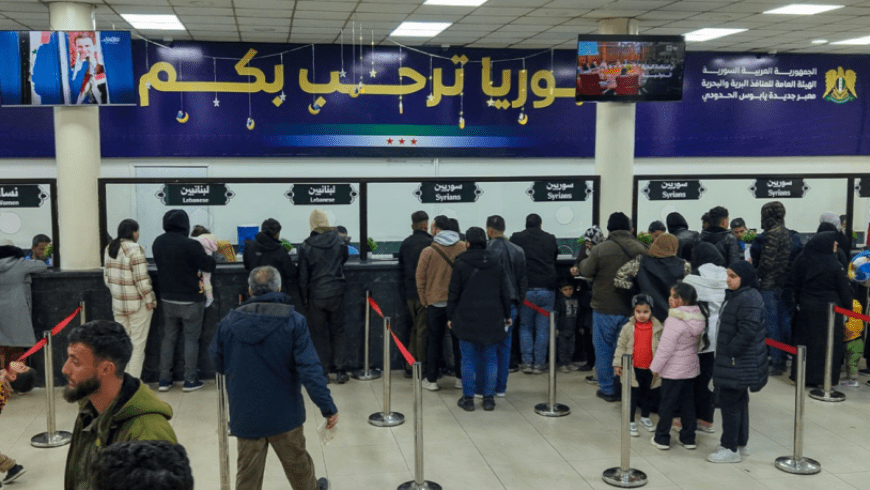
As Israeli strikes on Lebanon escalate, approximately 11,000 people—the vast majority of them Syrians—crossed from Lebanon into Syria on Monday, according to UNHCR. The sudden movement marks a dramatic reversal of the displacement patterns that have shaped the region for more than a decade.
Mass Displacement Amid Escalation
Israel has intensified its bombardment of Lebanese territory, targeting Hezbollah positions in the south, the Bekaa Valley, and Beirut’s southern suburbs. More than 31,000 people are now registered in government-designated shelters across Lebanon, while thousands more are sleeping in cars or stranded on roads fleeing the south.
At the Al-Masnaa border crossing, long lines formed as thousands attempted to enter Syria. Among them were two brothers from Aleppo who had lived in Lebanon for 13 years. “They’re not letting us cross—only the Lebanese,” one told The Irish Times. “When we fled the war at home, they tried to stop us coming. Now there is war here, they’re not letting us leave.”
Syrian Government Response
Syrian authorities have activated emergency procedures across multiple agencies to manage the influx and support returning families. Emergency and Disaster Management Minister Raed al-Saleh said Syrian Civil Defense teams have launched a humanitarian response plan at the Jdeidet Yabous crossing, where arrivals continue to increase.
The Jousieh crossing in Homs province has also become one of the busiest entry points. Officials there say procedures have been organized to facilitate entry and provide essential services. Louay Suleiman, head of passenger affairs at the crossing, said movement remains “normal” and that traffic between the two countries continues without disruption despite regional tensions.
Regional Fallout
The displacement wave is part of a broader regional crisis triggered by US-Israeli strikes on Iran on Saturday that killed Iranian Supreme Leader Ali Khamenei. Hezbollah has since entered the conflict, firing rockets toward Haifa and prompting intensified Israeli retaliation.
The conflict has also disrupted essential services in Syria. Jordan temporarily halted gas deliveries to Syria after Israel cut off gas supplies to Jordan, forcing Amman to prioritize domestic needs. The interruption has contributed to renewed electricity outages and shortages of household cooking gas, adding strain to daily life.
Meanwhile, missile debris from exchanges between Israel and Iran has fallen across southern Syria and the Damascus countryside, injuring civilians, damaging infrastructure, and prompting school closures in several areas.
UNHCR said it has contingency plans for any further influx from Lebanon, with pre-positioned supplies inside Syria and staff deployed at border points.
This article was translated and edited by The Syrian Observer. The Syrian Observer has not verified the content of this story. Responsibility for the information and views set out in this article lies entirely with the author.