
Since the day after the fall of the former regime, Syria’s prisons and courts have entered a transitional phase marked by clear disorder in the handling of judicial files and by overlapping authority between security bodies and the judiciary.
Although the transitional government has announced plans to restructure judicial institutions and overhaul the court system, detention centers continue to operate under the same old procedures. Detention without judicial warrants persists, and referrals to the public prosecution remain subject to delay.
This turmoil has directly affected the work of lawyers, who find themselves dealing with judicial, security, and police entities that continue to restrict visitation, attendance, and legal representation despite the political changes in the country. While some courts have resumed operations, many files remain suspended, particularly those related to smuggling or violations committed under the former regime. Clear mechanisms for addressing old confessions or reviewing pre-transition rulings are still absent, according to statements obtained by Enab Baladi.
This report examines the operations of detention units and police stations, the procedures applied in dealing with lawyers and detainees’ families, and the extent to which the Criminal and Civil Procedure Codes are implemented in practice. Enab Baladi has repeatedly sought answers from the Ministry of Justice regarding the questions and complaints raised, but the Ministry has not responded as of the date of publication.
The Minister of Justice on the State of the Courts
A review of statements by officials in the Syrian Ministry of Justice shows the Ministry acknowledging a significant backlog of cases and slow judicial procedures. Despite official talk of improving services, there is no mention of arbitrary detention or the continued prevention of lawyers from accessing their clients.
Ministry circulars issued after the regime’s fall have focused more on controlling prisons than on reinforcing defense rights or detention guarantees.
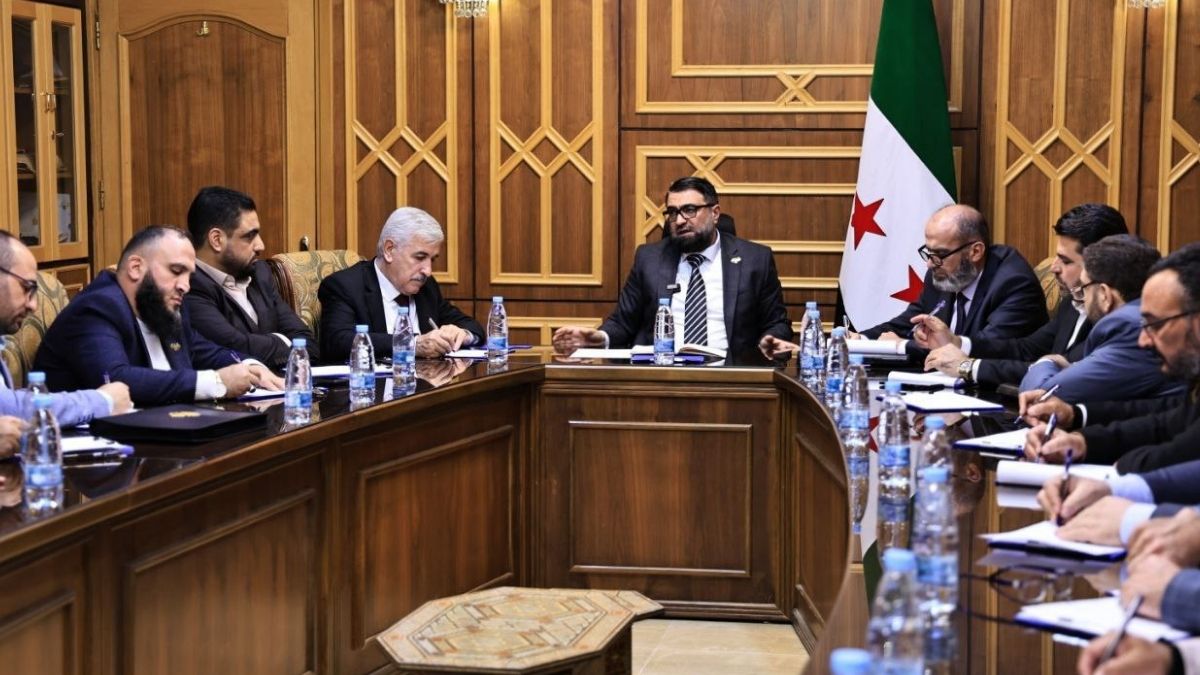
Last July, during an expanded meeting with public prosecutors and court presidents, Minister of Justice Mazhar al-Wais stated that:
- the judicial system is functioning in all provinces despite difficulties
- judicial services provided to citizens have improved
- a “clear change in work dynamics and sense of responsibility” has taken place
These remarks, reported by the state news agency SANA, came during a meeting in Damascus where interventions focused on accelerating judicial work and addressing the backlog of cases.
Lawyer Barred from Attendance, Representation, and Visitation
Lawyer “A. Z.”, who requested anonymity, told Enab Baladi that lawyers are not permitted to attend interrogations conducted in security branches until detainees are transferred to court. They are also barred from obtaining a power of attorney from detainees held in these branches without explicit permission from the public prosecutor, and they are denied visitation rights altogether.
According to the lawyer, some detainees do not even know why they were arrested. Detention during investigation can extend to three months, with no clarity on procedures or legal fate.
He added that lawyers are also prevented from seeing detainees held in the “detention rooms” of police stations in Damascus and its countryside, and are not allowed to review arrest records or obtain a power of attorney for defense. Lawyers are often asked to leave the station and are sometimes prevented from entering the building altogether.
The Lawyer on the Periphery
“A. Z.” noted that police stations refuse to provide lawyers with any information, creating a state of opacity around detentions. This obstructs defense work and undermines detainees’ legal guarantees.
He added that meeting the public prosecutor at the Damascus Justice Palace is extremely difficult due to heavy pressure on his office and the large number of personal visitors, making access nearly impossible at times.
The lawyer stressed that this situation requires urgent organization, as the public prosecutor’s work is directly tied to detention units and prisons. Lawyers, he said, are marginalized within the Justice Palace and public prosecution circles, despite their essential role in defending detainees’ rights.
“Remnants” Deprived of Legal Representation
Lawyer “M. A.”, also speaking anonymously, said that lawyers are unable to obtain powers of attorney from detainees labeled as “remnants” of the former regime and held in Military Police and Political Security prisons. Lawyers are prevented from accessing investigation records, following up on detainees’ cases, or even inquiring about them, even when they hold a power of attorney from the detainees’ families.
He asked: What is the fate of these detainees? How will their cases be resolved? When will they be referred to the competent judiciary? What are the permissible detention periods? And on what legal basis are detention, investigation, and trial being conducted?
Ambiguous Financial Bail
Lawyer “I. H.” questioned the fate of financial bail payments made by detainees seeking release pending trial from Military Police detention centers. She asked whose benefit these funds serve, where the money—mostly in US dollars—is deposited, and under what legal authority the bail is collected. She also questioned why the funds are not deposited in the Central Bank or its branches, raising concerns about transparency and oversight.
No Trials in Smuggling Cases; Fines Imposed Directly
A lawyer specializing in customs cases told Enab Baladi that only pre-transition cases are currently being heard by customs courts. No new smuggling cases have been tried since the beginning of the year.
He explained that the General Authority for Land and Sea Ports has not referred any new cases to the Customs Court. Instead, when a smuggling case is discovered, a violation report is issued and the accused is either compelled to pay a fine and released or remains detained.
He noted that many defendants have no connection to the smuggling operation and have the right to defend themselves before the competent judiciary. No authority, he said, has the right to compel them to pay fines without allowing them to pursue legal channels.
A recent decision by the Ministry of Justice merged the Customs Appeal Court and the Customs Court of First Instance with the Civil Appeal and Civil First Instance courts. Days ago, another decision merged customs courts, customs appeal courts, and customs enforcement departments in all provinces with their counterparts in the Damascus judiciary. The Ministry based this decision on the Judicial Authority Law.
The lawyer added that this decision has altered the course of customs cases. Some detainees in smuggling cases are now referred to the Criminal Court and investigative judges rather than to the Customs Court.
Old Confessions and New Verdicts
The same lawyer explained that in older cases involving goods released from seizure—whether weapons, drugs, or cases involving military entities—courts continue to rely on old security confessions extracted under the former regime. Trials are conducted on this basis, raising serious concerns about fairness. How can confessions extracted under torture by former security agencies be used as evidence? How can those who once conducted these investigations—interrogators, torturers, and individuals implicated in bloodshed—now serve as both party and judge?
Regarding final decisions imposing fines, the lawyer noted that exemptions are granted without extinguishing the enforcement department’s right to pursue the fines later. This raises a legal question: What guarantees exist to prevent a person from being fined again for the same case if the right has not been judicially extinguished?
This article was translated and edited by The Syrian Observer. The Syrian Observer has not verified the content of this story. Responsibility for the information and views set out in this article lies entirely with the author.
