
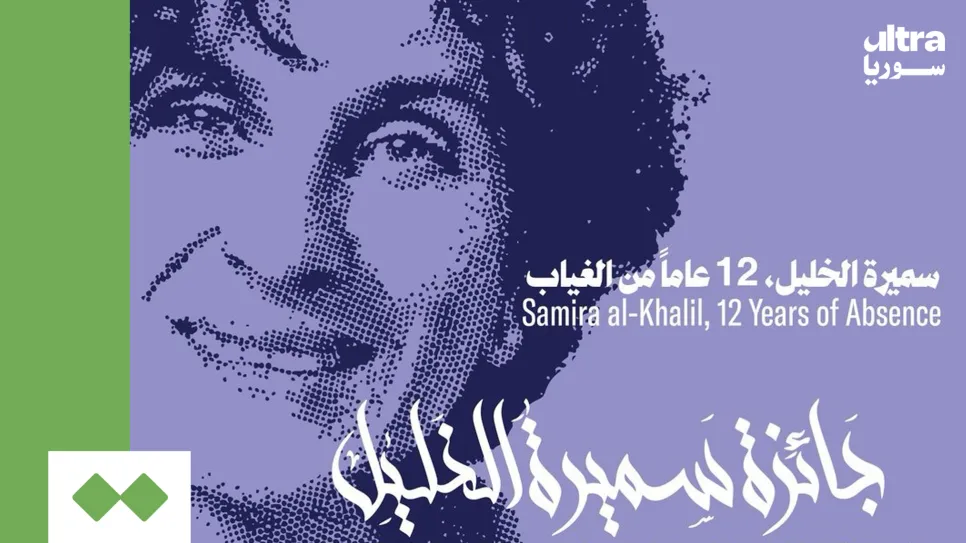
At the third edition of the Samira al-Khalil Prize, held in Berlin on 9 December, the spotlight fell with particular poignancy on Hanadi Zahlout, the Syrian journalist and activist from the village of Sanawbar near Jableh. While the prize was shared with fellow laureates Wafa Ali Mustafa and Laila Soueif, it was Hanadi’s presence that embodied the raw pain of Syria’s tragedy and the enduring courage of those who continue to resist it.
A Life Marked by Struggle
Hanadi has long stood as a defiant voice against tyranny. Arrested three times by the Assad regime during the revolution, she endured the full force of its repressive machinery. Yet her deepest scars came only months ago, when her three brothers were killed during the massacres that swept through Syria’s coastal region. Her activism is inseparable from her grief, and her words at the Berlin ceremony bore the weight of both personal loss and collective memory.
Speaking Through Tears
As her name was announced, Hanadi struggled to hold back tears. “It took immense strength to speak today. Loss tears us apart. The memory of the four abducted activists is a day of mourning, a day of grief, a day to console one another,” she said.
Quoting from Samira al-Khalil’s own writings during the siege of Douma, she reminded the audience: “The regime is a knife in the country’s side, and that knife must be removed lest Syria die.” Then, with solemn clarity, she added: “We have removed the knife, Samira, but it left the country bleeding. We must summon all who love this land, and experts too, to staunch the blood and return the country to its people.”
Memory as Resistance
For Hanadi, remembrance is not an act of passive mourning—it is resistance. She stressed that the fate of the four abducted activists is inextricable from that of all forcibly disappeared Syrians. “We shall never cease pressing to know their fate,” she declared.
Surrounded by friends and fellow activists, she found solace in their solidarity—what she called “a consolation for my heart and my family, which, like thousands of others, could not hold funerals for its martyrs or bury them with dignity.”
Lighting a candle for the innocent souls lost on Syria’s coast, she invoked the name of Murad Mahrez, killed that very day in Syria. Her words carried a haunting question: “Was it truly coincidence that Samira was abducted by the same ignorant hands that killed my brothers? I do not believe so. The struggle has always been one: against tyranny, against ignorance, against hatred.”
A Symbol of Syria’s Wound
Hanadi Zahlout’s testimony transformed the evening from a simple award presentation into a vigil—one for Syria’s countless victims. Her voice, fragile yet resolute, became a symbol of a nation’s wound, and of its refusal to forget, to surrender, or to forsake dignity.
In bearing witness through her pain, Hanadi reminded the world that the fight for justice in Syria is not over. It continues in the memory of the disappeared, in the defiance of survivors, and in the voices—like hers—that refuse to be silenced.
This article was translated and edited by The Syrian Observer. The Syrian Observer has not verified the content of this story. Responsibility for the information and views set out in this article lies entirely with the author.