
Syria’s transitional government continues to impose a dual reality: official promises of rising production capacity and major investments on one side, and sudden utility bills demanding impossible sums from citizens on the other—all amid shrinking prospects for a dignified life.
In recent days, Syrians have been hit by an unprecedented economic shock: the largest electricity price increase in the country’s modern history. The new tariff system did not simply adjust figures on paper; it delivered an economic blow to households already pushed to the edge.
A Reform in Name Only
The drastic increase—approved by the Ministries of Energy and Economy—was presented as a technical step to address deficits. In practice, it exposed a deep rift between official rhetoric and daily reality. Terms such as “structural reform” and “sustainability” became a veneer for policies that strip citizens of their remaining means of survival.
The crisis now extends far beyond the energy sector. It threatens to ignite social unrest amid growing questions about transparency, accountability, and the expanding influence of foreign companies and well-connected businessmen over Syria’s energy future—undermining both national sovereignty and social justice.
Pricing Beyond Reach
The new tiered tariff system has placed an unbearable burden on households and small businesses already struggling to stay above the poverty line—a condition affecting an estimated 90% of Syrians, according to the UN.
Rates now range from 600 Syrian pounds per kilowatt-hour for low-income consumers—supposedly with a 60% subsidy—to 1,400 for middle-income households and small businesses, 1,700 for government and industrial sectors, and up to 1,800 for high-consumption users.
With billing cycles covering two months, Syrians entered 2026 facing staggering bills at the height of winter, when heating and hot water are essential. Electricity has become a luxury reserved for the wealthy.
A Series of Blows
The electricity hike did not come in isolation. Days earlier, the government raised the price of subsidized bread to 4,000 Syrian pounds and commercial bread to 6,000, while reducing the number of loaves per bundle.
This dual assault on bread and electricity—two pillars of basic survival—was justified with language borrowed from international financial institutions, invoking “price distortion corrections” and “service continuity.” Officials claimed the electricity sector drains $1 billion annually from the state budget.
While figures such as Abdel Hamid Slat, the Ministry of Energy’s media director, insisted the goal was to “save the sector from collapse,” promises of reform and smart-meter installation rang hollow for citizens who can no longer afford bread.
Privatization in Disguise
The explanations offered by Energy Minister Mohamed Al-Bashir and Economy Minister Nidal Al-Shaar—who accused previous governments of appeasing the public with “artificial prices”—no longer convince a population demanding transparency on real production costs and the fate of foreign aid allocated in Syria’s name.
Behind the new pricing structure lies a clear shift toward privatizing the energy sector, handing it to foreign investors—particularly Turkish—and influential businessmen whose private power stations are becoming increasingly visible.
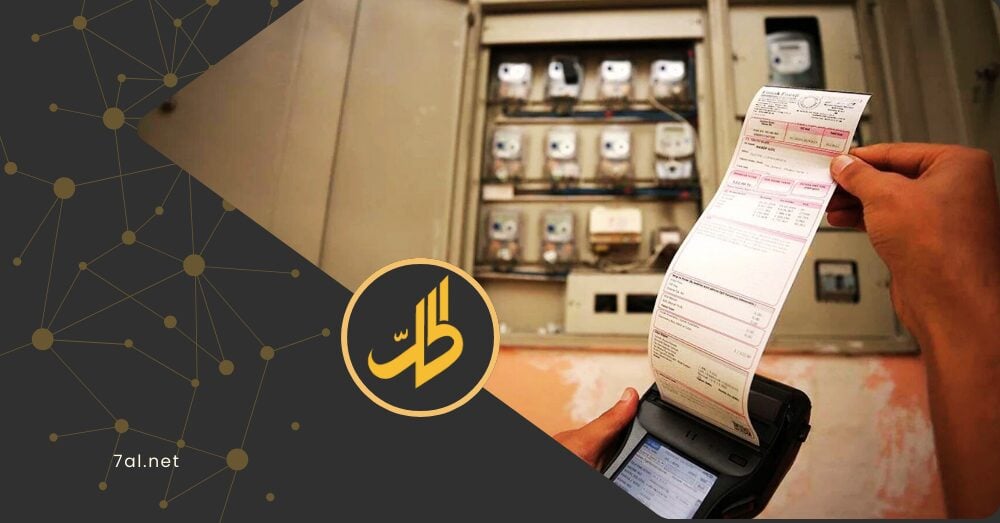
When the first bills arrived, public anger erupted. Charges ranged from 600,000 to more than 2 million Syrian pounds—often more than double the monthly salary of public employees, which averages 1.5 million. Retirees, with pensions below 1 million, face complete financial collapse.
Unanswered Questions
Economic expert Younis Al-Karim has dismantled the official narrative, describing it as inflated and detached from lived reality. In a Facebook post, he questioned how Minister Al-Bashir could claim a production capacity of 4,500 megawatts—enough for 20 hours of daily civilian supply—while prices continue to soar.
Al-Karim asked why citizens are forced to shoulder the cost of black-market dealings while state power plants serve narrow interests. He emphasized that the core problem lies in distribution, noting that while civilians face crushing bills, production capacity is directed toward power stations owned by investors and businessmen such as the Al-Khayyat brothers, who operate the sector purely for profit at the expense of public ownership.
From Welfare State to Extraction State
Al-Karim argued that Syria is shifting from a “welfare state” to an “extraction state” serving a new oligarchy—a structural distortion in which the interests of a select few dictate economic policy.
He added that official claims of a 60% subsidy exist only in government statements, as Syrians experience neither reliable supply nor affordable bills. This disconnect has fueled both quiet and open defiance: citizens now threaten non-payment, meter removal, and illegal connections as a final act of financial resistance.
Amid the Ministry of Energy’s silence and evasive responses, calls for public protest are growing. Lawyer Basil Saeed Manaa has urged citizens to demonstrate and demand the reversal of these unjust decisions, warning that public patience has run out and that government institutions are not insulated from the anger of a hungry population.
This article was translated and edited by The Syrian Observer. The Syrian Observer has not verified the content of this story. Responsibility for the information and views set out in this article lies entirely with the author.