
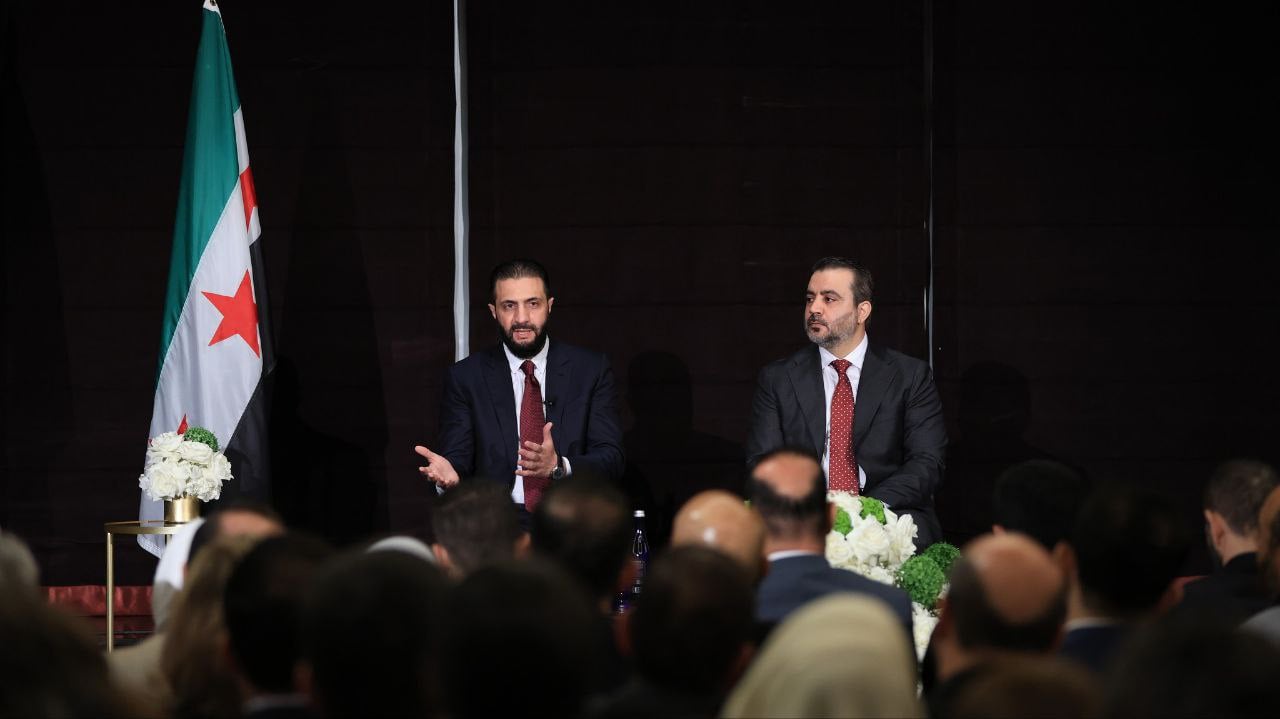
On the sidelines of the 80th session of the United Nations General Assembly in New York, Syria’s Transitional President Ahmad Sharaa has launched a high-profile economic and diplomatic campaign to re-establish Syria’s role in the global economy after years of conflict and isolation. The visit, exceeding standard protocol in both scope and ambition, clearly signals a strategic bid to dismantle the long-standing wall of political and economic exclusion surrounding the country.
Roundtable with Global Economic Powerhouses
The meetings led by President Sharaa and his delegation over the past two days have been described as a potential turning point—presenting Syria as a credible destination for foreign investment. Chief among these was a pivotal roundtable organised by the U.S. Chamber of Commerce, which convened representatives from 39 major American and international corporations.
The Syrian delegation presented a wide array of investment opportunities, with a strong emphasis on the energy sector. Industry giants such as Shell, Chevron and TotalEnergies participated, highlighting interest in rehabilitating Syria’s oil infrastructure and introducing advanced drilling and production technologies. Their involvement signals a potential re-entry for Syria into regional and global energy markets.
Infrastructure and Industry: Rebuilding from the Ground Up
Significant attention was also given to the infrastructure and industrial sectors, with companies like Caterpillar, Boeing and Parsons seen as strategic partners in the national reconstruction effort. These firms bring expertise in developing critical infrastructure—airports, bridges and road networks—that form the backbone of any sustainable economic revival.
In the health and biotechnology sphere, leading players including Abbott, Siemens Healthineers, GE Healthcare and Illumina were present. Their capabilities could play a key role in rehabilitating Syria’s healthcare system by supplying modern diagnostic tools, pharmaceutical solutions and hospital equipment to raise service quality and accessibility.
Further interest was noted in consumer and food goods, with participation from Procter & Gamble, PepsiCo and Sun-Rise Foods. Their presence reflects an economic strategy focused on revitalising domestic markets, job creation and supporting local production and distribution networks.
In the financial services and consultancy sector, companies such as Citigroup, DLA Piper and AECO discussed potential avenues to reconnect Syria’s banking system with global markets and provide the legal and financial frameworks necessary to ease re-entry into international commerce.
Technology and digital transformation were also key themes, with global leaders such as Google, Microsoft, Visa, Uber and Motorola attending. Their involvement opens the door to modernising Syria’s telecommunications infrastructure, expanding internet access and introducing electronic payment systems—crucial steps in integrating the country into the global digital economy.
Political Priorities and Western Re-engagement
The economic diplomacy was reinforced by broader political engagement. President Sharaa also took part in the Concordia Summit, held in parallel with the UN Assembly. There, he met with international investors and economic experts in private sessions focused on strengthening public-private partnerships in the reconstruction phase. One of the most notable exchanges took place during a dialogue with former CIA Director David Petraeus, where Sharaare reiterated that Syria’s top priority remains securing peace and stability through national unity and inclusive economic growth.
Following these engagements, several statements from American and European officials suggest a tentative but growing openness to re-engagement. US Secretary of State Marco Rubio confirmed discussions with Sharaaregarding shared objectives of sovereignty, security and prosperity, in alignment with President Donald Trump’s recent statement supporting sanctions relief.
In parallel, members of the US Congress voiced support for lifting sanctions, including those imposed under the Caesar Act. European leaders, including European Commission President Ursula von der Leyen and European Council President António Costa, affirmed their support for deepened political dialogue and expanded humanitarian and economic assistance for Syria’s rebuilding efforts.
Syria’s Foreign Minister Assad al-Shibani, who raised the Syrian flag over the embassy in Washington on 19 September, expressed confidence that full sanctions removal was on the horizon. Political economist Mohammad al-Mousa described President al-Shar’s visit as a “historic economic shift”, marking the first time Syria has been openly presented as a direct investment opportunity to the American private sector. He added that political progress would directly fuel economic development, significantly enhancing the country’s investment profile.
This article was translated and edited by The Syrian Observer. The Syrian Observer has not verified the content of this story. Responsibility for the information and views set out in this article lies entirely with the author.