
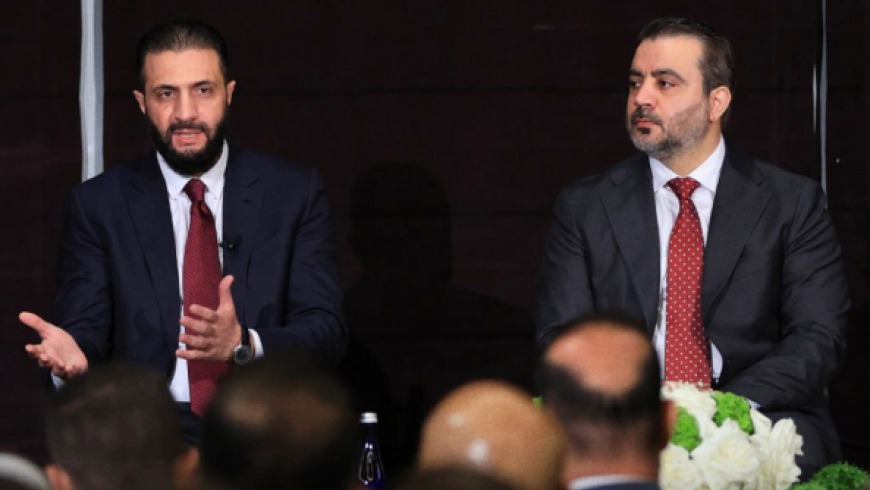
Syrian President Ahmad al-Sharaa has arrived in the United States on a visit laden with historical symbolism, marking one of the rare occasions a Syrian head of state has travelled to New York to address the United Nations General Assembly. The last such appearance by a Syrian leader dates back to 1967—prior to the Assad family’s decades-long rule, which ended abruptly in December 2024 with the ousting of Bashar al-Assad in a swift opposition-led campaign headed by Sharaa himself.
This visit unfolds amid a sensitive geopolitical moment and has drawn widespread attention from local, Arab and international observers. All eyes are on the potential outcomes and diplomatic signals that may shape Syria’s foreign relations in the period ahead. President Sharaa’s agenda includes several critical issues: security and counterterrorism, regional agreements, economic recovery, and complex humanitarian concerns such as the fate of detainees, the missing, and the return of refugees.
The trip represents Syria’s first official presence at the UN since 1967, featuring anticipated meetings with U.S. President Donald Trump and key figures from Arab and international delegations. It serves as a platform to present a revitalised image of Syria and explore opportunities for cooperation in security, investment and reconstruction amid formidable challenges confronting the fledgling Syrian state.
The Significance of President Sharaa’s Visit to New York
President Sharaa’s address to the UN General Assembly carries deep historical resonance, according to Riad Ziada, a researcher at the Arab Centre for Research and Policy Studies.
In an interview with Syria TV, Ziada outlined three key dimensions of the visit: firstly, its historic weight as the first appearance by a Syrian president at the UN since 1967; secondly, the possibility of a meeting with the U.S. president—unprecedented since the time of Hafez al-Assad; and thirdly, the diplomatic boldness displayed by Sharaa in reshaping foreign policy, including this visit to Washington, less than a year into his presidency—despite his former inclusion on the U.S. terrorism list.
Ziada noted that the visit signifies a major shift in Syria’s foreign policy orientation, potentially paving the way for improved international and economic relations. It highlights the United States’ central role in global affairs, requiring careful yet assertive Syrian diplomacy to build constructive ties on various fronts.
The visit, he added, seeks to “rebrand Syria after decades of being depicted as a state sponsor of terrorism”, opening doors to engagement with numerous Arab and international leaders and enhancing prospects for collaboration and investment.
A New Trajectory or Diplomatic Formality?
President Sharaa’s itinerary covers several key issues. On the security front, discussions reportedly include a potential U.S.-brokered agreement with Israel—an extremely sensitive matter that touches on borders and internal stability, evoking memories of the 1974 disengagement accord.
Economically, attention is focused on U.S. sanctions, particularly the Caesar Act, which hinders reconstruction and foreign investment. Humanitarian priorities—especially the return of refugees and the issues of detainees and the missing—feature prominently, with Damascus proposing a phased resolution to demonstrate its commitment.
Hazem al-Ghabra, a former advisor at the U.S. State Department, told Syria TV that the visit transcends protocol, serving as a test of mutual political intent. It will determine whether the meetings lead to substantive progress or remain limited to diplomatic gestures.
Ghabra emphasised that internal challenges—counterterrorism, Iranian influence and economic stagnation—require consistent follow-through by the Syrian government. The U.S., he observed, prioritises easing sanctions and promoting regional peace to ensure long-term stability.
“This visit is a historic moment after more than half a century without a Syrian president at the UN,” Ghabra said, warning that it is “no time for complacency, but rather a moment for intensified efforts to resolve internal issues before they are exploited externally.” He identified the potential Israel meeting as a critical step toward securing a security pact that would prevent further incursions, stabilise the investment climate, and bolster internal security. While these engagements offer Syria a chance to reintroduce itself to the international community, they will not instantly resolve its numerous challenges.
Former diplomat Tahsin al-Faqir echoed these views, describing the visit as “more than a formality—it is a pivotal moment carrying key messages to both domestic audiences and the wider international sphere.” He stressed that the lifting of sanctions is vital for reconstruction, and that the U.S. appears serious about using this as leverage to achieve shared interests.
Faqir added that future investment will require clear legal and security frameworks, alongside education and training initiatives aligned with international market needs. “The Syrian citizen must be an active partner in the rebuilding process,” he said, urging the engagement of the diaspora and external experts.
Economic Outlook and Sanctions Relief
The top economic priority is the lifting of sanctions—chiefly the Caesar Act—which requires coordination between the U.S. executive and Congress. Faqir told Syria TV that the ongoing sanctions severely restrict reconstruction efforts, and that their removal would accelerate Syria’s re-engagement with global markets.
The U.S. has expressed genuine interest in lifting sanctions, though this would require legal safeguards to reassure potential investors in a still-volatile political environment.
Researcher Ziada underscored that the visit is an opportunity to present Syria not as a pariah, but as a renewed state poised for recovery. Years of war and isolation have tainted its image in both Western and Arab media; Sharaa’s appearance at the UN allows Syria to highlight relative stability, economic opportunity, educational capacity and cultural openness.
Domestic Challenges and Institutional Reform
Despite the visit’s symbolic and diplomatic weight, experts caution that Syria faces a myriad of internal challenges. Security concerns in the south, northeast and coastal regions—alongside the urgent need to rebuild legal and state institutions—remain key to validating any international agreements.
Ziada pointed to “significant challenges facing President Sharaa, particularly the need to reform domestic political structures and incorporate Syria’s diverse communities into the national process.” While the visit enhances Syria’s global image, it does not in itself resolve core domestic issues.
Ghabra reiterated that foreign policy successes must rest on domestic consensus. He called for a new social contract and an inclusive national dialogue to involve all factions in shaping Syria’s future and closing avenues for foreign exploitation.
Faqir believes the Syrian government is pursuing a deliberate, phased approach—prioritising security before embarking on deeper political or economic reforms, while being wary of external manipulation during moments of crisis.
A Historic Visit, a Long Road Ahead
In conclusion, President Sharaa’s visit to the United States is a landmark event, merging historical symbolism with complex political, economic and social implications. Addressing the UN General Assembly for the first time in over 50 years offers Syria an opportunity to re-enter the international arena, seek political understandings, and draw global attention to internal reconstruction needs—from education and security to counterterrorism and economic recovery.
Analysts agree that the visit’s true value lies not in ceremonial appearances, but in whether Syria’s leadership can translate this platform into tangible improvements in governance, stability and investment conditions—underpinned by legal and institutional reform. Meaningful international progress, they stress, requires a careful balancing of domestic and external priorities.
Lifting sanctions—particularly the Caesar Act—and brokering security understandings with Israel remain among the most pressing challenges facing Damascus. Yet, preliminary meetings and agreements indicate that serious efforts are under way to explore new diplomatic channels, safeguard national interests and chart a more stable future for the Syrian people.
Ultimately, President Sharaa’s historic visit is not merely a diplomatic stopover, but the start of a long-term dialogue in both political and economic spheres—one that could reshape Syria’s place in the world and unlock new possibilities at home and abroad.
This article was translated and edited by The Syrian Observer. The Syrian Observer has not verified the content of this story. Responsibility for the information and views set out in this article lies entirely with the author.
