
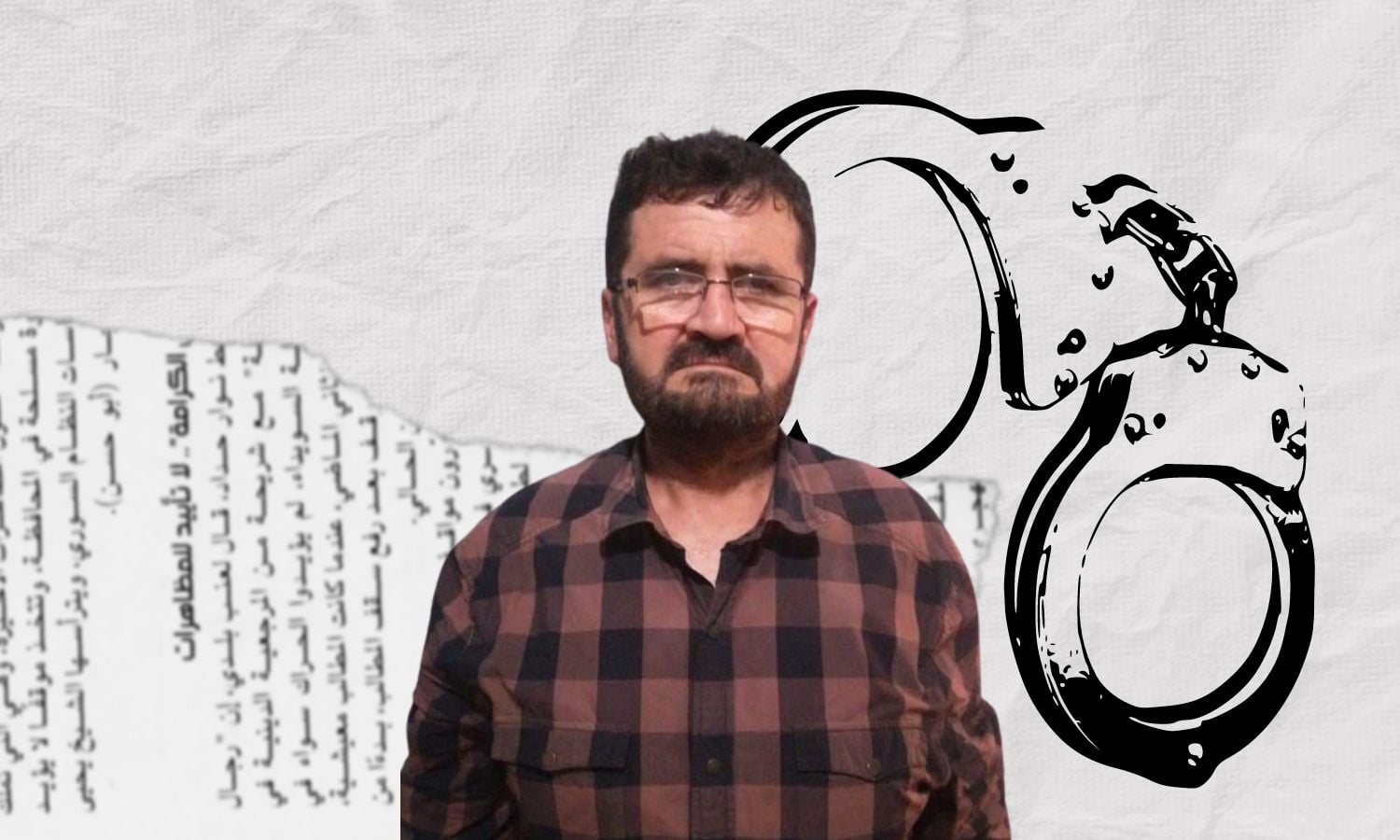
On Wednesday, a courtroom in The Hague will open its doors to a moment Syrians have waited for far too long. A former commander in the Syrian “National Defense” forces will stand before Dutch judges to answer for torture, sexual violence, and other crimes that scarred the lives of civilians during the darkest years of the conflict. His trial marks a historic first for the Netherlands and a stark reminder that justice, though delayed, has not been extinguished.
This case proceeds under Dutch international crimes legislation, which grants the judiciary the authority to prosecute war crimes and crimes against humanity regardless of where they occurred. The Netherlands is honoring its obligations under the Rome Statute with a clarity and resolve that many Syrians wish they could witness within their own borders.
The Case Against Rafiq Katrib
The defendant, Rafiq Katrib, once headed the investigation department of the National Defense militia in Salamiyah during 2013 and 2014. Dutch prosecutors accuse him of grave abuses against Syrian civilians, including torture and sexual assault that meet the legal threshold of crimes against humanity. Investigators believe he exercised direct authority over the machinery of abuse inside detention centers during a period defined by widespread brutality.
Katrib entered the Netherlands in July 2021, secured temporary asylum, and settled with his family in the town of Druten the following year. His anonymity ended on December 8, 2023, when the International Crimes Unit of the Dutch National Police arrested him. The charges he now faces reflect the testimonies of survivors who refused to let their suffering be erased.
A Trial With Global Weight
The prosecution has built its case around twenty-four criminal acts committed against nine victims. The court has scheduled a demanding series of hearings throughout April and May 2026, with proceedings broadcast in Dutch, Arabic, and English to ensure full transparency. Closing arguments are expected by April 21, and a verdict is scheduled for June 9.
Human rights advocate Michel Shammas underscores the magnitude of this moment. The Syrian Center for Legal Studies and Research spent five years assembling this case, gathering testimonies, supporting survivors, and protecting witnesses. Their persistence reflects a truth Syrians know well: justice rarely arrives without relentless effort.
International criminal law expert Al-Mutassim Al-Kilani places this trial within a broader European movement to confront the atrocities committed in Syria. With global mechanisms stalled, European courts have stepped forward to challenge impunity and offer victims a measure of recognition and dignity.
Germany, France, and the Netherlands now form the frontline of accountability for Syrian crimes. Their courts have become the only venues where survivors can hope to see perpetrators answer for their actions. Meanwhile, Syria itself has yet to construct a credible framework for transitional justice. The country’s future depends on such a framework, yet its absence leaves the scales of justice balanced on foreign soil.
For now, The Hague carries a burden that should have been Syria’s own. The world is watching, and so are Syrians who continue to wait for the day when justice is not outsourced, but rooted in their homeland.
This article was translated and edited by The Syrian Observer. The Syrian Observer has not verified the content of this story. Responsibility for the information and views set out in this article lies entirely with the author.