
Recent remarks by German Chancellor Friedrich Merz on the potential return of nearly eighty percent of Syrians residing in Germany have opened a deep fissure in the country’s political and social landscape. The future of the largest Syrian community in the European Union now hangs in the balance, as Germany’s long-standing posture of welcome appears to be undergoing a decisive transformation.
Standing beside Syrian Transitional President Ahmed al-Sharaa at a joint press conference, Merz outlined a three-year framework for large-scale repatriation. He presented the initiative as a response to Syria’s need for reconstruction and to what he described as an explicit request from Damascus. The proposal, however, has drawn immediate criticism from within the governing coalition. Parties such as the Greens have rejected the target as implausible, warning that such declarations jeopardize years of integration work and disregard the legal and humanitarian constraints imposed by Syria’s fragile security conditions.
Divergent Perspectives within the Diaspora
The Syrian community in Germany remains sharply divided. Some believe that return is conceivable only when security and economic stability are demonstrably restored. Others feel increasingly alienated as immigration and asylum procedures grow more restrictive.
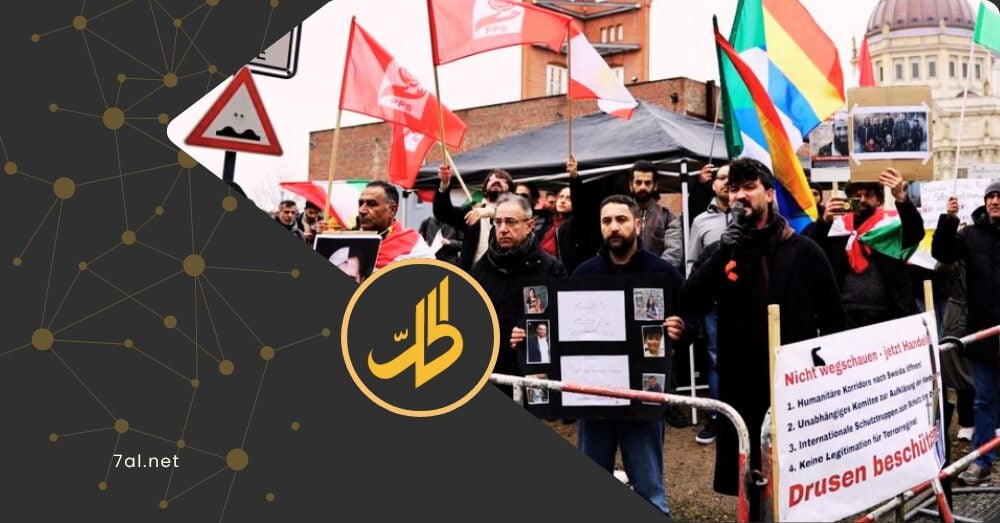
Statistics from 2025 illustrate this tension. Out of 5,976 formal applicants, 3,678 Syrians chose voluntary repatriation. These decisions unfolded against a backdrop of tightening policies, including the government’s earlier suspension of family reunification for holders of subsidiary protection. Thousands of families remain separated as a result. Many refugees also argue that conditions in regions such as the Syrian coast and Suwayda remain inhospitable, a reality that stands in stark contrast to the ceremonial welcome extended to the transitional Syrian leadership in Berlin.
The Intersection of Law and Political Expediency
Criticism of the repatriation plan extends well beyond the refugee community. German political figures and legal experts contend that the emphasis on mass return undermines the substantial integration gains achieved since 2015, when Germany admitted more than one million refugees.
Legal scholars and human rights advocates underscore that German law offers no pathway for the forced removal of individuals who have committed no crime. They insist that any return must remain voluntary and anchored in firm legal and humanitarian guarantees. As government rhetoric shifts toward austerity and political recalibration, the question of Syrian repatriation stands at a volatile crossroads where statutory obligations, geopolitical considerations, and the lived experience of hundreds of thousands of Syrians converge.